A comprehensive ₹255 crore credit distribution drive has been completed to empower rural women entrepreneurs and Self-Help Groups (SHGs). Executed via commercial banking networks, this capital injection supports the transition of grassroots workers into full enterprise owners, aligning directly with the government's Union Budget 2026 SHE-Marts initiative.
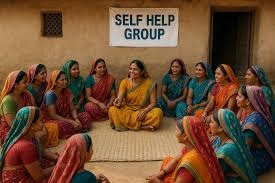
CHENNAI — In a major push for grassroots economic empowerment, a consolidated credit disbursement package worth ₹255 crore ($2.55 billion) has been systematically distributed to women entrepreneurs and Self-Help Groups (SHGs). The large-scale capital distribution drive, organized under the national financial inclusion framework, aims to directly scale micro-enterprises and transition rural women from credit-linked livelihoods into structural enterprise owners.
The distribution event highlights the government's accelerating focus on structural credit delivery systems. By equipping women-led joint liability networks with immediate operational working capital, the commercial initiative addresses localized liquidity blockages and fosters employment generation within rural and semi-urban ecosystems.
Strategic Loan Distribution Structure and Allotment
According to official releases from institutional banking desks, the ₹255 crore capitalization drive was executed via a multi-tier allotment strategy designed to reach the most economically vulnerable yet productive segments of the market. The capital has been distributed through various regional rural banks (RRBs), state cooperative banks, and prominent public sector lenders.
The institutional credit framework segmented the ₹255 crore pool into targeted delivery tranches:
Self-Help Group (SHG) Bank Linkage: Over 60% of the total fund was disbursed directly to registered SHGs to manage recurring collective expenses and micro-manufacturing projects.
Individual Micro-Enterprise Loans: Tailored individual credit lines allocated under national schemes like the Mudra and Stand-Up India programs to expand existing retail, textile, and agricultural allied units.
Lakhpati Didi Scale-Up Funds: Specific financing packets targeted at upgrading high-performing women entrepreneurs whose household income tracks above ₹1 lakh annually.
Interception with Union Budget 2026 Schemes
The implementation of this massive loan outreach aligns with structural reforms laid down in the Union Budget 2026–27. The Ministry of Finance recently unveiled the "Self Help Entrepreneur (SHE) Marts" initiative, intended to establish community-owned retail storefronts managed directly by cluster-level SHG federations.
By linking the immediate injection of the ₹255 crore loan pool with these newly mandated retail sales channels, lenders ensure that women-led cooperatives possess both the upfront manufacturing liquidity and the downstream infrastructure to bring competitive consumer goods to open markets.
Official Sources Section
The underlying financial figures, tranche divisions, and systemic policy details outlined in this report have been collated from official press releases by the Ministry of Rural Development, regulatory updates from the Securities and Exchange Board of India (SEBI), and statutory transaction records kept by major public sector banking portals like Canara Bank and the State Bank of India.
Quote Section
"According to officials overseing the state credit delivery pipeline, the direct transfer of ₹255 crore represents an essential step toward achieving financial autonomy at the block level. Organizers stated that credit deployment will be strictly monitored alongside digital auditing platforms to prevent fund diversion and guarantee high collection efficiencies."
Why It Matters
For female micro-entrepreneurs, traders, and agricultural artisans, this massive credit distribution breaks dependency on high-interest informal lenders, bringing them into the formal banking folds. For consumer markets, it translates directly into a broader, more diversified supply of hyper-local processed foods, handlooms, and organic produce, boosting the rural economy.
Key Facts at a Glance
Total Disbursed Capital: Formally locked at ₹255 crore in single-cycle distribution.
Primary Target Base: Women entrepreneurs, joint liability units, and registered SHGs.
Policy Integration: Tied directly to the newly announced SHE-Mart enterprise blueprint.
National Base Context: Connects to a broader ecosystem of 90.91 lakh active SHGs.
FAQ Section
What programs govern these specific allocations?
The allocations are structured under the Deendayal Antyodaya Yojana-National Rural Livelihoods Mission (DAY-NRLM), backed by co-lending parameters from commercial banks.
How do these credit injections tie into the Lakhpati Didi scheme?
The loans provide the asset-building capital required for women to scale their operations, helping them meet the target threshold of ₹1 lakh in annual net household income.
Are these loans collateral-free for the beneficiaries?
Yes, standard loans issued to registered SHGs up to specified limits under government mandates operate on a collateral-free basis to encourage inclusive economic participation.
Source: Press Information Bureau (PIB) India, Ministry of Rural Development, and National Stock Exchange of India (NSE) Institutional Data Desks.