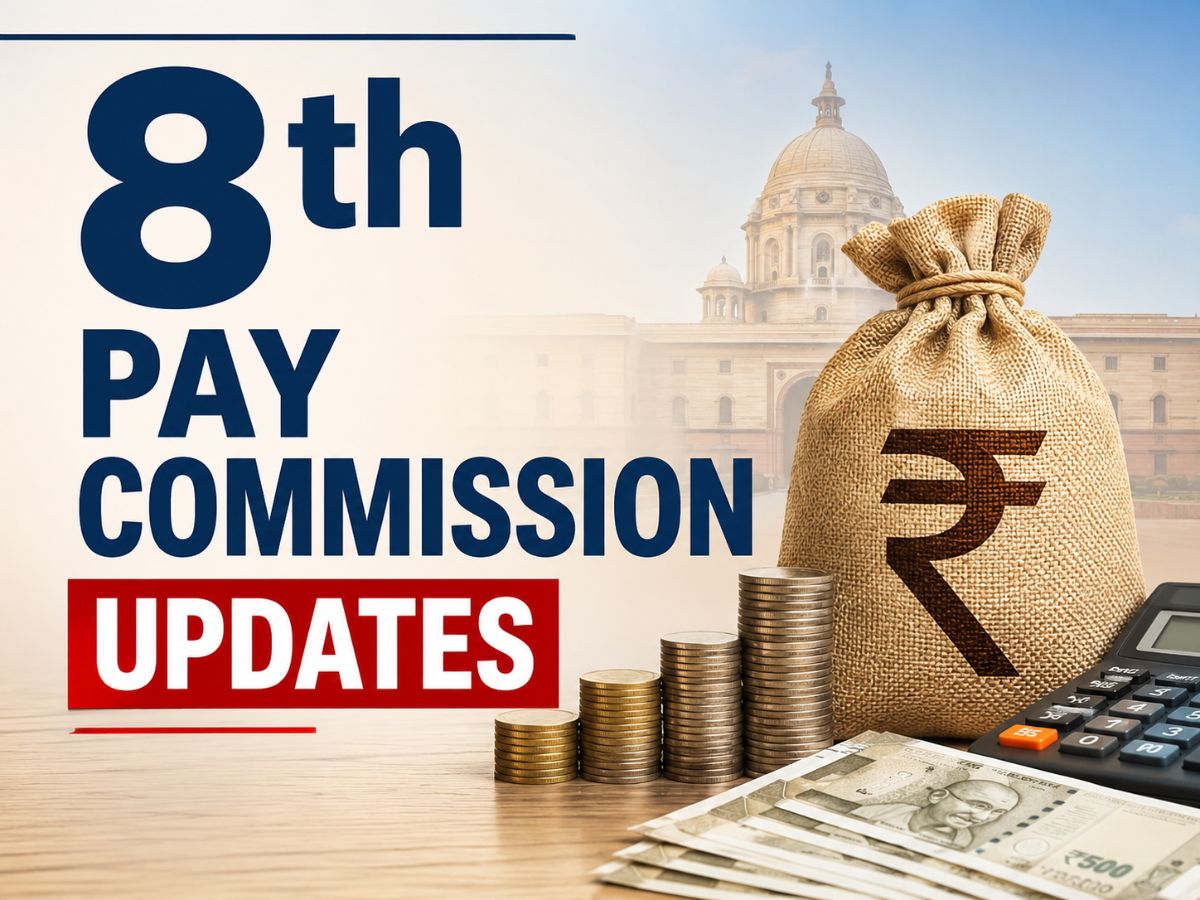
The Staff Side of the NC-JCM has submitted new demands to the 8th Pay Commission, requesting a ₹10 lakh interest-free car loan, alongside restored interest-free festival and natural calamity advances. If accepted, these changes will significantly boost purchasing power and financial security for over 1.1 crore central government employees and pensioners.
NEW DELHI — The ongoing consultations for the 8th Pay Commission have intensified as central government employee unions submit sweeping new financial demands to the pay panel. In a comprehensive memorandum presented by the Staff Side of the National Council of Joint Consultative Machinery (NC-JCM), representatives have formally requested the introduction of a ₹10 lakh interest-free car loan, the restoration of an interest-free festival advance, and emergency financial relief for natural disasters.
These developments come at a crucial time as the 8th Pay Commission panel, which was officially constituted by the Union Cabinet on November 3, 2025, continues its nationwide stakeholder consultations through June 2026. The decisions made by the commission will directly dictate the salary, pension, and allowance structures for more than 1.1 crore active employees, retirees, and their families across India, establishing a baseline that historically influences state-level public sector compensation as well.
Unions Push for Multi-Lakh Vehicle Advances and Interest-Free Relief
In its formal pitch to the panel, the NC-JCM Staff Side highlighted that personal mobility should no longer be categorized as an upper-tier luxury. Given the evolving infrastructure and urban realities in India, employee representatives argued that entry-to-mid-level officials require reliable transport options to manage commuting and family responsibilities.
According to the submitted memorandum, the unions have specifically requested a maximum four-wheeler advance of up to ₹10 lakh. Crucially, the Staff Side has strongly advocated that the entire amount of this vehicle loan should be interest-free for eligible central government personnel. This marks a major departure from existing policies, where interest-bearing mechanisms or private financing have driven up personal debt loads for public servants.
Beyond personal mobility, the employee unions are demanding the immediate restoration of short-term interest-free financial cushions that were phased out under previous administrative overhauls.
The Festival Advance: The union body has called for a festival advance equivalent to exactly one month of an employee's basic pay, to be systematically recovered over ten monthly installments. The NC-JCM noted that during previous standing committee sessions, the official administrative side had indicated a willingness to consider restoring this facility, though formal reinstatement has languished.
The Natural Calamity Advance: Citing frequent disruptions caused by unseasonal monsoon rains, severe flooding, cyclones, and regional droughts across India, the memorandum urges the panel to bring back interest-free disaster relief. The proposed framework would grant an emergency payout equivalent to one month's basic pay, repayable comfortably over 24 installments.
Escalating Scales: Basic Pay and Fitment Factor Targets
While short-term advances occupy immediate attention, the core debate within the 8th Pay Commission remains centered on the fitment factor—the mathematical multiplier used to transition employees from the 7th Central Pay Commission (CPC) matrix into the new framework.
Financial analysts at ClearTax report that while conservative government baseline estimates project a fitment factor ranging between 1.83 and 2.46, major employee federations are aggressively lobbying for a multiplier as high as 3.83. A higher fitment factor would reset the minimum basic salary from the current ₹18,000 up toward a projected baseline of ₹32,000 to ₹54,000 depending on the eventual compromise reached between the Ministry of Finance and union leadership.
Concurrently, bodies like the Railway Senior Citizens Welfare Society (RSCWS) have separate, detailed petitions demanding an increase in the annual salary increment rate from the long-standing 3% up to 5%. Retiree groups are matching these demands with pleas to compress the pension commutation recovery timeline down to 10 or 12 years from the current 15-year mandate.
Official Sources Section
The emerging details of these financial demands are officially documented via the formal memoranda submitted directly by the Staff Side of the National Council of Joint Consultative Machinery (NC-JCM) and allied public sector unions to the 8th Central Pay Commission panel.
The timeline for administrative review remains bound to the terms outlined by the Ministry of Finance, which initially granted the commission an 18-month window from late 2025 to collect data, conduct pan-India city consultations, and formulate its final recommendation report. The formal deadline for regional memorandum submissions from public associations was extended to June 15, 2026.
Quote Section
"At present, a four-wheeler is not considered to be a luxury; rather, it has become an essential vehicle for everybody to travel with family. Therefore, the 8th CPC may recommend a Four-Wheeler Advance with a maximum of ₹10,00,000. The entire loan may be interest free," the NC-JCM Staff Side stated in its official memorandum.
"In a country like ours where every religious community has its festivals and celebrations, and considering the expenditure involved, it is proposed that the 8th CPC may recommend the restoration of a Festival Advance equivalent to one month's Basic Pay," union organizers added regarding seasonal bonuses.
Why It Matters
For everyday consumers and working households within the central framework, these provisions offer structural relief against stubborn inflationary trends. If accepted, an interest-free car loan up to ₹10 lakh eliminates thousands of rupees in monthly interest outlays, fundamentally changing domestic purchasing power.
For the broader economy, a simultaneous rollout of a one-month basic pay festival advance would inject massive, predictable liquidity into the retail, automotive, and consumer goods sectors during peak festive seasons. However, macroeconomic observers note that the Union Treasury will have to carefully weigh these multi-billion-rupee liquidity injections against national fiscal deficit targets.
Key Facts at a Glance
Car Loan Proposal: A demand for a brand-new, completely interest-free vehicle advance capped at ₹10,00,000 per eligible employee.
Festival Cushion: Reinstatement of a festival advance worth one full month of basic pay, structured to be paid back over a 10-month window.
Disaster Insurance: A proposed interest-free Natural Calamity Advance to offset climate and weather damages, repayable in 24 installments.
Fitment Multiplier: Unions are pushing for aggressive fitment factors up to 3.83, while conservative financial models forecast a settlement closer to 2.5x.
Implementation Target: While the technical reference date for structural shifts is retroactive to January 1, 2026, actual payouts and accumulated arrears are anticipated to clear late into 2026 or mid-2027.
FAQ Section
Q1: Is the ₹10 lakh car loan officially approved by the government?
A1: No. At this stage, the ₹10 lakh interest-free car loan is a formal proposal submitted by employee unions within their official memorandum to the 8th Pay Commission. The panel must review the fiscal feasibility before deciding whether to include it in their final recommendations to the Cabinet.
Q2: Who will benefit from the decisions of the 8th Pay Commission?
A2: Over 1.1 crore individuals, comprising active central government employees, railway staff, defense personnel, and pensioners, will be directly impacted. Historically, state government bodies eventually mirror these changes for their own workforces.
Q3: What is the difference between a festival bonus and the proposed festival advance?
A3: A bonus is a non-repayable ex-gratia financial award given by an employer. The proposed festival advance is an interest-free, short-term loan equivalent to one month's basic salary that an employee utilizes for holiday expenses and pays back to the treasury across 10 months.
Q4: When will the new pay scales and advances take effect?
A4: The formal effective benchmark date is set for January 1, 2026. However, because the commission has an 18-month operational window to submit its final report, actual structural implementation and the distribution of related salary arrears will likely occur around mid-to-late 2027.
Source: National Council of Joint Consultative Machinery (NC-JCM) Staff Side Memoranda, Ministry of Finance Administrative Notifications, and ClearTax 8th CPC Report Analysis.