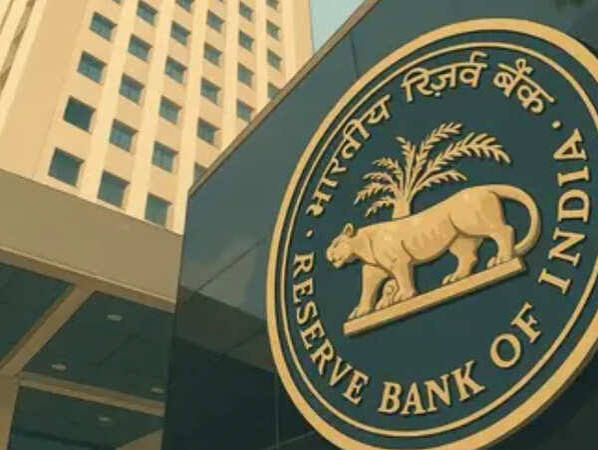
The Reserve Bank of India proposed principle-based uniform lending rate rules to standardize interest rate calculations, reset schedules, and disclosures across banks and NBFCs. Aimed at enhancing transparency and consumer protection, the framework eliminates operational variances in loan pricing while strengthening monetary policy transmission.
MUMBAI, India — The Reserve Bank of India (RBI) officially proposed a principle-based framework on August 5, 2026, to standardize how commercial banks, non-banking financial companies (NBFCs), and housing finance institutions establish lending rates. Speaking at a post-policy media briefing in Mumbai, RBI Governor Sanjay Malhotra announced that the new uniform lending rate rules will harmonize interest-setting mechanisms across all regulated financial entities. The central bank's initiative aims to streamline operational aspects of existing benchmarks—such as the Marginal Cost of Funds-Based Lending Rate (MCLR) and External Benchmark-Linked Rate (EBLR)—while eliminating hidden costs and standardized market variances for retail and commercial borrowers.
Standardizing Interest Setting Across Regulated Financial Entities
The central bank’s proposal addresses long-standing disparities in how different lending institutions calculate interest, apply benchmark reset dates, and compute day-count conventions. Under the draft guidelines, the implementation of uniform lending rate rules will bring consistency to loan pricing models without disrupting the fundamental operational structures of Non-Banking Financial Companies (NBFCs) or forcing them directly into the bank-centric EBLR framework.
According to regulatory disclosures released alongside the monetary policy review, the standardized rules will address divergent market practices concerning interest charging. By creating a harmonized pricing architecture, the RBI seeks to strengthen monetary policy transmission, ensuring that policy rate adjustments pass through to end borrowers more predictably across both public and private credit providers.
| Regulatory Domain | Current Market Challenge | Proposed Policy Framework |
| Benchmark Rates | Fragmented calculation methods across banks and NBFCs | Principle-based harmonization of MCLR and EBLR operational guidelines |
| Reset Dates | Inconsistent interest rate reset intervals for floating loans | Standardized reset schedules across loan product categories |
| Interest Computation | Divergent day-count conventions across lenders | Uniform calculation metrics for interest accrual |
| Disclosure Standards | Opaque fee structures and variable administrative charges | Complete upfront disclosure via mandatory Key Facts Statements (KFS) |
Operational Reforms for MCLR, EBLR, and Interest Computation
A central objective of the proposed uniform lending rate rules is reforming key operational mechanics that affect floating-rate credit products. In recent years, borrowers holding home, auto, and personal loans have faced unequal reset timelines when central bank policy rates fluctuated. The revised framework mandates clear, standardized reset schedules, preventing lenders from delaying interest rate reductions while swiftly applying rate hikes.
Furthermore, the central bank is standardizing day-count conventions—the mathematical formula used to calculate interest accrued between payment dates. Different financial institutions historically utilized varying day-count baselines (e.g., 360 days versus 365 days), resulting in subtle discrepancies in effective annual interest charges. The harmonized approach removes these structural variances, ensuring identical interest accounting across competing institutions.
Implications for Borrowers, Consumers, and Financial Markets
For individual consumers, home loan applicants, and Small and Medium Enterprises (SMEs), the introduction of uniform lending rate rules significantly reduces loan comparison complexity. Standardized disclosures, coupled with the existing requirement for Key Facts Statements (KFS), mean borrowers can evaluate loan offers from banks and NBFCs on a direct, apples-to-apples basis without encountering undisclosed administrative fees or opaque spread additions.
For institutional investors and banking sector analysts, the regulatory rationalization provides greater visibility into loan book yields and net interest margins (NIMs). While the rules do not artificially ceiling interest rates or alter the underlying risk-based pricing models used by NBFCs, they enforce operational discipline and conduct-related compliance across all lending desks.
Official Sources Section
Regulatory proposals, policy statements, and executive briefing details referenced in this news report were compiled from official disclosures published by the Reserve Bank of India (RBI), statutory releases issued by the Press Information Bureau (PIB), and post-policy transcripts released by the central bank's communications division.
Official Quote Section
During the official post-policy media briefing in Mumbai, central bank leadership detailed the scope and rationale behind the regulatory overhaul.
Reserve Bank of India Governor Sanjay Malhotra stated: "The interest rate rules are designed to standardize different rules for different regulated entities. This will improve transparency because people will know what interest rates are and how they are set. So this is more of a rationalization move which will improve consumer protection."
RBI Deputy Governor Shirish Chandra Murmu added that "the emphasis is on transparency and conduct-related measures in the new framework, ensuring fair treatment for all borrowers."
Why It Matters
Implementing uniform lending rate rules addresses structural information asymmetries that have long disadvantaged credit consumers in India. By enforcing standard calculation methods, uniform reset timelines, and clear disclosure protocols across both banks and NBFCs, the RBI ensures that borrowers benefit from genuine market competition, transparent loan pricing, and enhanced consumer protection standards.
Key Facts at a Glance
Framework Objective: The RBI proposed principle-based uniform lending rate rules to standardize interest-setting across all regulated entities.
Core Operations Covered: Harmonizes operational mechanics of MCLR and EBLR, benchmark reset dates, and day-count conventions.
Entity Coverage: Applies to commercial banks, small finance banks, NBFCs, and housing finance companies while preserving risk-based pricing flexibility.
Consumer Protection: Prevents surprise fees, standardizes interest calculation formulas, and accelerates monetary policy transmission.
Frequently Asked Questions (FAQ)
What are the RBI's proposed uniform lending rate rules?
The proposed uniform lending rate rules are a set of principle-based guidelines issued by the RBI to standardize how banks and NBFCs calculate, reset, and disclose interest rates on loans.
Will the new rules force NBFCs to adopt EBLR like commercial banks?
No. The RBI clarified that the rules rationalize existing interest-setting processes across institutions without forcing NBFCs into the bank-centric EBLR framework.
How do these rules protect home loan and personal loan borrowers?
The guidelines standardize interest reset dates and day-count calculation formulas, preventing lenders from using opaque interest calculation methods or delaying rate cuts for floating-rate loans.
Where can citizens inspect official regulatory releases from the RBI?
Official policy papers, draft circulars, and press releases are published directly on the official portal of the Reserve Bank of India (RBI).
Source: Statutory press releases and official transcripts from the Reserve Bank of India (RBI) and notifications published by the Press Information Bureau (PIB).