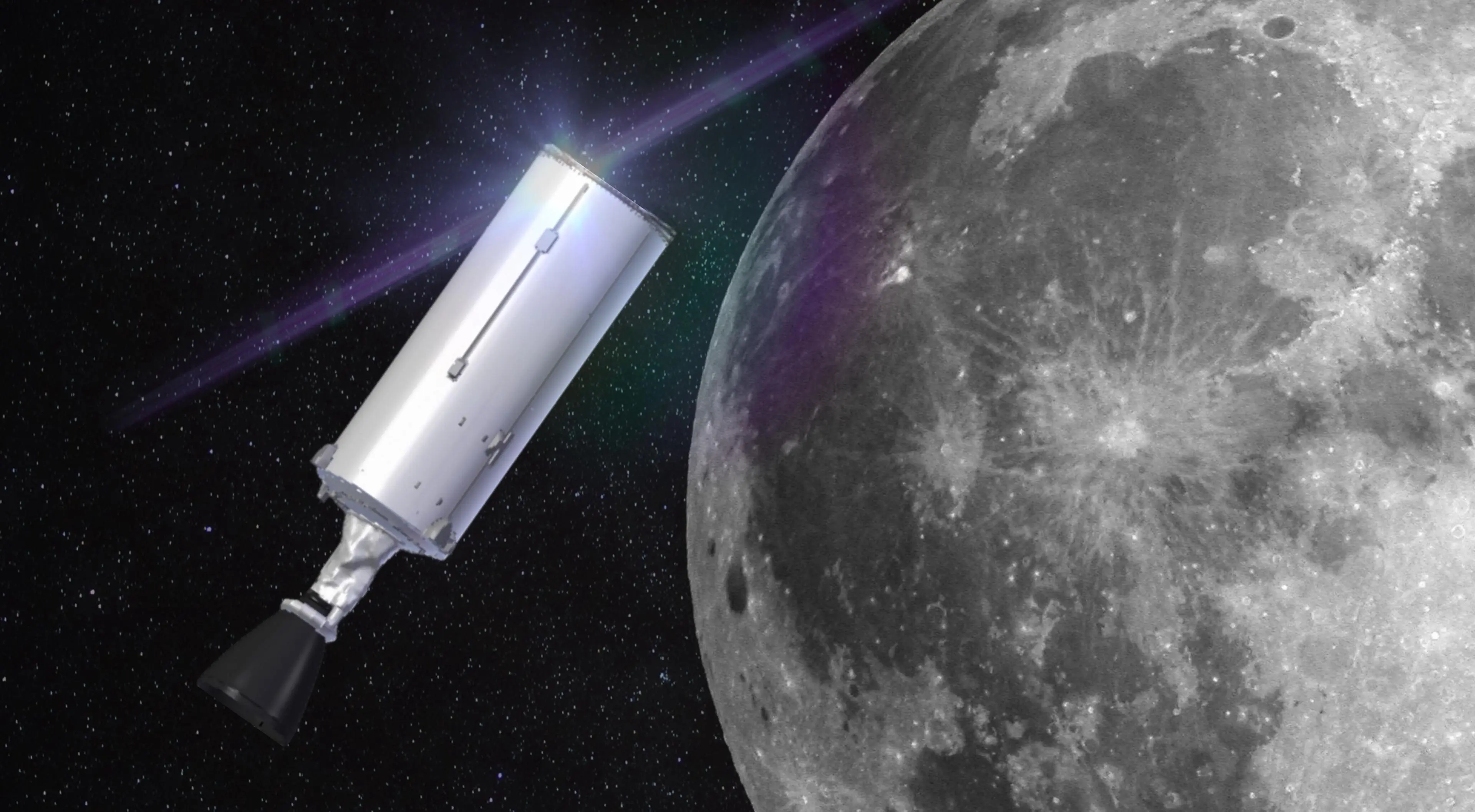
Astronomers from the Main Astronomical Observatory of the National Academy of Sciences of Ukraine documented over 20 unidentified aerial objects near the Moon using high-speed telescope recording in the Kyiv region. The study detailed objects measuring 14 to 36 kilometers moving at speeds up to 11 km/s, establishing an empirical framework for UAP observation.
KYIV, Ukraine — A team of Ukrainian astronomers at the Main Astronomical Observatory of the National Academy of Sciences (NAS) of Ukraine has documented over 20 unidentified flying objects traversing the sky near the Moon. Led by principal investigator Dr. Boris Zhilyaev, the researchers conducted high-speed optical observations from Vinarivka in the southern Kyiv region, capturing fast-moving anomalous bodies using specialized digital sensors. The scientific paper, titled "Observations of Unidentified Flying Objects on the Moon," details observational metrics including sizes ranging from 14 to 36 kilometers and speeds reaching 6 to 11 kilometers per second, marking a major empirical effort to analyze unidentified aerial phenomena (UAP) through rigorous optical data collection.
High-Speed Optical Setup and Observational Methodology
The research team deployed an Intes-Alter M603 telescope integrated with an ASI 294 Pro high-speed digital camera to monitor the lunar surface and adjacent sky. The camera system recorded data at a temporal resolution of 0.05 seconds (20 frames per second), enabling the capture of transient flight paths undetectable by conventional video equipment or human observation.
To ensure high data fidelity, the astronomers applied comprehensive digital calibration protocols, including offset correction, dark frame subtraction, and flat-field frame adjustments to eliminate dark current noise and pixel sensitivity variations across the sensor. Recording was managed using SharpCap 4.0 software, providing precise frame-by-frame light curve analysis and signal-to-noise ratio verification.
| Technical Parameter | Specification / Measured Metric |
| Observation Site | Vinarivka, Kyiv region, Ukraine |
| Primary Telescope | Intes-Alter M603 |
| Camera Sensor | ASI 294 Pro high-speed CCD |
| Time Resolution | 0.05 seconds (20 Hz capture rate) |
| Object Speed Range | 6 to 11 kilometers per second |
| Estimated Object Sizes | 14 to 36 kilometers |
Classification of Atmospheric and Continental Aerial Objects
In their analysis, the researchers divided the observed entities into two primary operational categories: "atmospheric" and "continental" objects. Atmospheric objects remained relatively anchored or synchronized in position near the observer's line of sight, whereas continental objects were observed moving directly across the background of the lunar disk along distinct trajectories.
The documented continental objects demonstrated low optical contrast, matching the brightness and color characteristics of the lunar surface. According to the study, this natural camouflage makes detection exceptionally difficult without specialized light-curve processing. Fourier spectrum analysis revealed that several objects exhibited periodic brightness variations at multiple frequencies between 1 Hz and 9 Hz, indicating active rotation or surface reflection shifts during transit.
Toroidal Objects and Kinematic Calculations
One of the prominent structures analyzed in the study was a large toroidal (donut-shaped) object measuring approximately 36 kilometers in diameter. Light-curve observations showed that the toroidal object rotated at a rate of 4.3 degrees every two seconds, yielding an estimated full rotational period of 157 seconds.
The mathematical analysis calculated a linear rim velocity of 0.720 kilometers per second and a centrifugal acceleration of 461.0 cm/s², approximately half of Earth's gravitational acceleration ($9.81\text{ m/s}^2$). The researchers noted these rotational properties as empirical measurements derived from frame sequences, avoiding speculative assertions regarding the origin or artificial nature of the objects.
Scientific Context and Global UAP Studies
This lunar investigation follows previous research published by the Main Astronomical Observatory of NAS of Ukraine examining daytime atmospheric phenomena over Kyiv. In earlier studies, the observatory identified two main categories of anomalous objects: "Cosmics" (luminous bodies brighter than the sky) and "Phantoms" (dark bodies absorbing background light).
The scientific focus on unidentified aerial phenomena has expanded globally in recent years, with formal research initiatives launched by NASA and the U.S. All-domain Anomaly Resolution Office (AARO). The Ukrainian team emphasized that applying standardized astronomical methodologies—such as calibrated sensor arrays, high frame rates, and colorimetry—provides an objective framework for studying unexplained aerial and space phenomena.
Official Sources Section
Observational data, technical methodology, and mathematical calculations cited in this article were verified through official research publications authored by researchers at the Main Astronomical Observatory of NAS of Ukraine. Technical papers detailing the findings are archived publicly on the arXiv Repository and ResearchGate.
Official Quote Section
According to official research documentation published by the lead investigators, systematic optical tracking is essential for capturing high-speed atmospheric and celestial anomalies.
Lead researcher Dr. Boris Zhilyaev stated in the study documentation: "High-speed video recordings of the sky near the Moon were studied, which allowed us to detect numerous UFOs: more than 20 objects were counted in the frames. The objects demonstrate variable brightness and high movement speeds, requiring fine-tuned equipment and calibrated time resolution to verify their physical characteristics."
Why It Matters
The application of calibrated astronomical instruments to monitor unidentified aerial phenomena shifts the domain from anecdotal reporting to peer-reviewable physical science. Establishing reproducible optical tracking methodologies helps scientists differentiate natural atmospheric events, satellite debris, and sensor artifacts from genuinely anomalous aerial occurrences.
Key Facts at a Glance
Observational Count: Ukrainian astronomers documented over 20 unidentified aerial objects using high-speed telescope recording.
High-Speed Detection: Data was collected at 0.05-second intervals using an Intes-Alter M603 telescope and ASI 294 Pro camera.
Speed and Size Metrics: Continental objects measured between 14 and 36 kilometers, with observed speeds ranging from 6 to 11 km/s.
Toroidal Structure: Frame-by-frame analysis identified a rotating toroidal object measuring 36 kilometers in diameter.
Frequently Asked Questions (FAQ)
What did the Ukrainian scientists observe near the Moon?
Researchers at the Main Astronomical Observatory of NAS of Ukraine captured over 20 unidentified aerial objects passing across or near the lunar disk during high-speed video monitoring.
What equipment was used to record these unidentified aerial objects?
The observation utilized an Intes-Alter M603 telescope paired with an ASI 294 Pro CCD camera operating at a high temporal resolution of 0.05 seconds per frame.
What were the calculated dimensions and speeds of the objects?
The study estimated object sizes between 14 and 36 kilometers, with transit speeds ranging from 6 to 11 kilometers per second.
Where can the public access the official research papers?
The complete scientific papers authored by Dr. Boris Zhilyaev and his colleagues are accessible on the official portal of the Main Astronomical Observatory of NAS of Ukraine, as well as academic repositories including ResearchGate and the arXiv Repository.
Source: Official research publications from the Main Astronomical Observatory of NAS of Ukraine, archived on the arXiv Repository and ResearchGate.