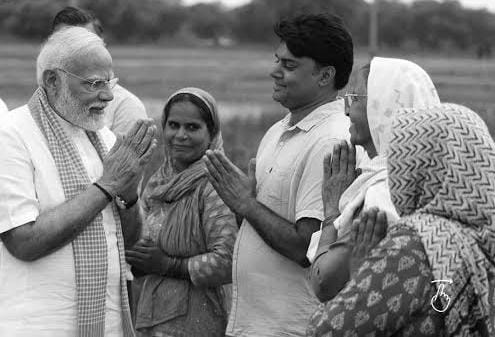
A dramatic expansion in basic public infrastructure and targeted social welfare programs has driven a structural decline in poverty across India. Official data confirms extreme poverty dropped to 5.3%, with over 25 crore citizens escaping multidimensional poverty through expanded access to clean water, housing, and financial inclusion.
NEW DELHI — A quiet revolution is lifting the poor across India, as a sustained decade-long rollout of basic infrastructure, digital public platforms, and targeted welfare transfers fundamentally transforms living standards in rural and marginalized communities. According to updated figures released by government agencies and international monitoring bodies, India’s extreme poverty rate dropped sharply to 5.3%, while multidimensional poverty fell to 11.28%.
The structural shift, accelerated by record fiscal commitments to rural development, has enabled nearly 25 crore individuals to move out of multidimensional poverty over the last twelve years. By replacing discretionary assistance with direct-to-benefit services, public policy has successfully broadened universal access to essential amenities including clean tap water, healthcare coverage, financial banking, and clean cooking fuel.
Infrastructure and Basic Services Drive Deprivation Reduction
The core driver behind this quiet revolution is the systematic elimination of fundamental household deprivations. Historically, rural households suffered severe multidimensional poverty caused by inadequate housing, absence of sanitation, reliance on hazardous cooking fuels, and lack of piped drinking water.
According to data compiled by the Ministry of Rural Development and NITI Aayog, public service coverage expanded at an unprecedented pace:
Clean Drinking Water: Household tap water connections under the Jal Jeevan Mission grew from 3.23 crore in August 2019 to 15.84 crore by mid-2026, reaching over 81.8% of all rural households.
Housing and Sanitation: More than 3.70 crore rural homes have been constructed under the Pradhan Mantri Awas Yojana - Grameen, alongside 12.11 crore household toilets built to ensure universal sanitation coverage.
Clean Energy: Over 10.57 crore free LPG connections provided under PM Ujjwala Yojana have increased national LPG access from 14.52 crore connections in 2014 to 33.39 crore.
Financial Inclusion and Women-Led Economic Mobilization
Beyond physical infrastructure, the quiet revolution relies heavily on financial technology and community-based micro-entrepreneurship. The integration of Pradhan Mantri Jan Dhan Yojana bank accounts, Aadhaar identification, and mobile transactions (the JAM trinity) created a leak-proof Direct Benefit Transfer (DBT) ecosystem that distributes welfare payments directly to beneficiaries without intermediary attrition.
Concurrently, women-led self-help groups (SHGs) have emerged as primary economic anchors in rural regions. Under the Deendayal Antyodaya Yojana - National Rural Livelihoods Mission (DAY-NRLM), more than 10.05 crore women have been mobilized across 90.09 lakh SHGs. Targeted initiatives like 'Lakhpati Didi' have enabled over 3.07 crore rural women to establish sustainable micro-enterprises and secure annual household incomes exceeding Rs 1 lakh.
Official Sources Confirm Impact of Social Protection
According to official releases from the Press Information Bureau and the World Bank’s Poverty and Equity data updates, social protection coverage in India expanded from 22% in 2016 to 64.3%.
Official announcements from NITI Aayog confirm that the sharpest declines in multidimensional poverty were recorded in historically socio-economically disadvantaged states, including Uttar Pradesh, Bihar, Madhya Pradesh, Maharashtra, and West Bengal. These regions accounted for nearly two-thirds of the total national poverty reduction recorded over the past decade.
Government and Official Statements
"A quiet revolution is lifting the poor through an unwavering policy shift toward universal basic service delivery and last-mile financial inclusion," stated government officials in a recent economic review. "The transition from fragmented welfare delivery to decentralized, direct-to-bank partnerships ensures that every citizen accesses housing, healthcare, clean water, and dignity without leakage or administrative delay."
World Bank analysts noted in their regional poverty assessment that India’s combination of sustained macroeconomic stability, controlled inflation, and targeted safety nets significantly accelerated extreme poverty eradication compared to global averages.
Why It Matters: Practical Economic Implications
The ongoing transformation carries direct implications for citizens, local economies, and international markets:
Domestic Demand Expansion: Higher disposable incomes among previously marginalized rural households boost consumer demand for fast-moving consumer goods (FMCG), agricultural technology, and retail goods.
Healthcare Cost Mitigation: Universal access to clean water and sanitation has significantly reduced waterborne diseases, while Ayushman Bharat health coverage protects low-income families from catastrophic out-of-pocket medical expenses.
Workforce Productivity: Improved nutrition, higher rural literacy, and expanded electricity access improve overall labor productivity, empowering rural youth to transition into higher-value skilled trades.
Key Facts at a Glance
Extreme Poverty Rate: Dropped to 5.3%, down from 27.1% in 2011–12.
Multidimensional Poverty: Reduced to 11.28%, lifting nearly 25 crore individuals out of poverty.
Tap Water Access: Reached 15.84 crore rural households (81.8% coverage).
Women Empowerment: Over 3.07 crore rural SHG women achieved 'Lakhpati Didi' status.
Social Protection Reach: Expanded to cover 64.3% of the eligible population.
Frequently Asked Questions (FAQ)
What is meant by the "quiet revolution" in poverty reduction?
The phrase refers to the steady, structural transformation of rural living standards achieved through universal public infrastructure delivery—such as tap water, toilets, housing, electricity, and clean fuel—combined with direct digital welfare transfers rather than short-term cash subsidies.
How is multidimensional poverty measured differently from income poverty?
Income poverty measures only daily spending capacity. Multidimensional poverty evaluates simultaneous deprivations experienced by a household across three equal dimensions: health (nutrition, child mortality), education (years of schooling, attendance), and standard of living (cooking fuel, sanitation, drinking water, electricity, housing, assets).
Which public schemes contributed most to this transformation?
Key programs include the Jal Jeevan Mission (drinking water), Pradhan Mantri Awas Yojana (housing), PM Ujjwala Yojana (clean cooking gas), PM Jan Dhan Yojana (banking access), and Ayushman Bharat (healthcare insurance).
Sources: Press Information Bureau (PIB), Government of India, NITI Aayog Official Portal