In a groundbreaking decade-long project, neuroscientists from Harvard University, collaborating closely with Google Research experts, have mapped an unprecedentedly detailed 3D model of a tiny fragment—just 1 cubic millimeter—of human brain tissue. This microscopic piece, roughly half...
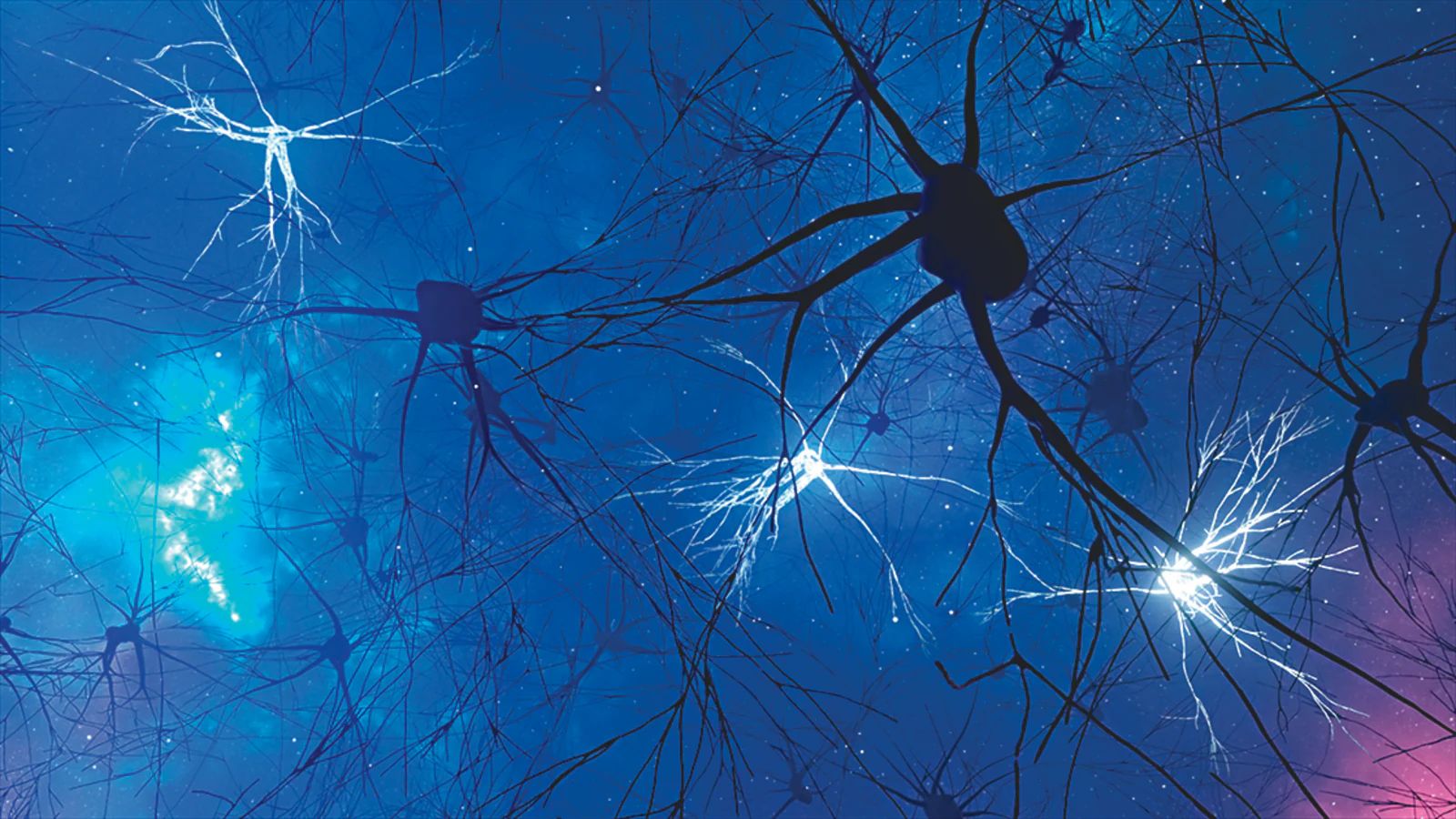
In a groundbreaking decade-long project, neuroscientists from Harvard University, collaborating closely with Google Research experts, have mapped an unprecedentedly detailed 3D model of a tiny fragment—just 1 cubic millimeter—of human brain tissue. This microscopic piece, roughly half the size of a grain of rice, contains a bustling “mini-universe” of biological complexity teeming with neurons, synapses, blood vessels, and support cells, revealing new insights into the intricate architecture of the brain.
Key Highlights of the Brain Tissue Discovery
The 1 cubic mm fragment, taken from the temporal cortex of a patient with severe epilepsy, underwent ultra-high resolution electron microscopy, with thousands of images computationally stitched to reconstruct the full 3D structure.
Inside this minute volume, researchers identified about 150 million synapses, the crucial communication points where neurons exchange signals.
An elaborate network of blood vessels, cumulatively extending approximately 9 inches, supplies nutrients and oxygen to this tiny region, underscoring the highly efficient vascular design of brain tissue.
Data generated to characterize the tissue alone filled around 1,400 terabytes, equivalent to millions of hours of high-definition video, highlighting the brain’s astonishing complexity.
Contrary to earlier simplified beliefs, scientists found some neurons linked by up to 50 synapses—far exceeding past assumptions of single or dual connections. This multi-synaptic bonding may enable rapid, reliable transmission crucial for reflexes and swift responses.
Each neuron is closely attended by a “maintenance crew” of glial cells—on average two per neuron—responsible for regulating chemical environments, repairing tissue damage, and clearing debris or pathogens, thereby sustaining healthy brain function.
This discovery alters prior notions of the brain’s internal wiring by revealing a richer and more robust connectivity schema.
The study’s 3D map provides a foundational resource for understanding neurodegenerative diseases, cognitive function, and brain disorders like autism, schizophrenia, and epilepsy.
AI-driven tools from Google Research facilitated the coloring, identification, and reconstruction of this complex biological network, representing a leap forward in neuroinformatics.
Methodology and Techniques
The research team used a diamond-edged blade to slice the minute brain fragment into ultrathin sections, then scanned these with electron microscopes at incredibly high resolution. Computational algorithms and artificial intelligence stitched these slices into a three-dimensional model that color-coded neurons, synapses, and glial cells for detailed analysis.
Why It Matters: Implications for Neuroscience and Medicine
The findings open new avenues to decipher how neurons interconnect and function in health and disease.
They improve understanding of brain plasticity—the capacity to intentionally rewire or repair connections.
Precise maps such as this facilitate better modeling for drug development targeting neuropsychiatric and neurodegenerative disorders.
They help elucidate the brain’s response to injury and its mechanisms of maintaining homeostasis.
This research bridges gaps between microscopic anatomy and functional neuroscience, offering new perspectives on brain complexity.
Future Directions
Scientists aim to replicate this mapping across larger brain volumes and different brain regions to build a comprehensive atlas of human brain connectivity. Such detailed understanding could herald breakthroughs in personalized brain therapies, neuroprosthetics, and the understanding of consciousness itself.
Conclusion
What was once considered an inscrutable black box—the human brain’s wiring—is now gradually unlocking its secrets through meticulous mapping efforts at the tiniest scales. This “mini-universe” inside just 1 cubic millimeter of brain tissue reveals a vibrant, layered ecosystem of synapses, neurons, blood vessels, and supportive cells, expanding our knowledge of the brain’s immense complexity and opening hopeful paths for confronting neurological diseases.
Sources: ScienceDaily, Hindustan Times