As India approaches Independence Day 2025, it is vital to remember the harrowing yet transformative moments marked by the Partition of British India in 1947. Among the most significant yet often overlooked aspects of this epochal event was the pivotal role that airplanes played in facilitating th...
As India approaches Independence Day 2025, it is vital to remember the harrowing yet transformative moments marked by the Partition of British India in 1947. Among the most significant yet often overlooked aspects of this epochal event was the pivotal role that airplanes played in facilitating the largest and most rapid population migration in human history. Spanning roughly three months from September to November 1947, this mass exchange reshaped nations and lives, with aviation emerging as a critical enabler in an otherwise chaotic and tragic saga.
Key Highlights of the Airborne Role in Partition’s Population Exchange
The migration involved about 12 million people fleeing religious violence, communal strife, and uncertainty, moving either from India to Pakistan or vice versa in a near-total population exchange in just three months.
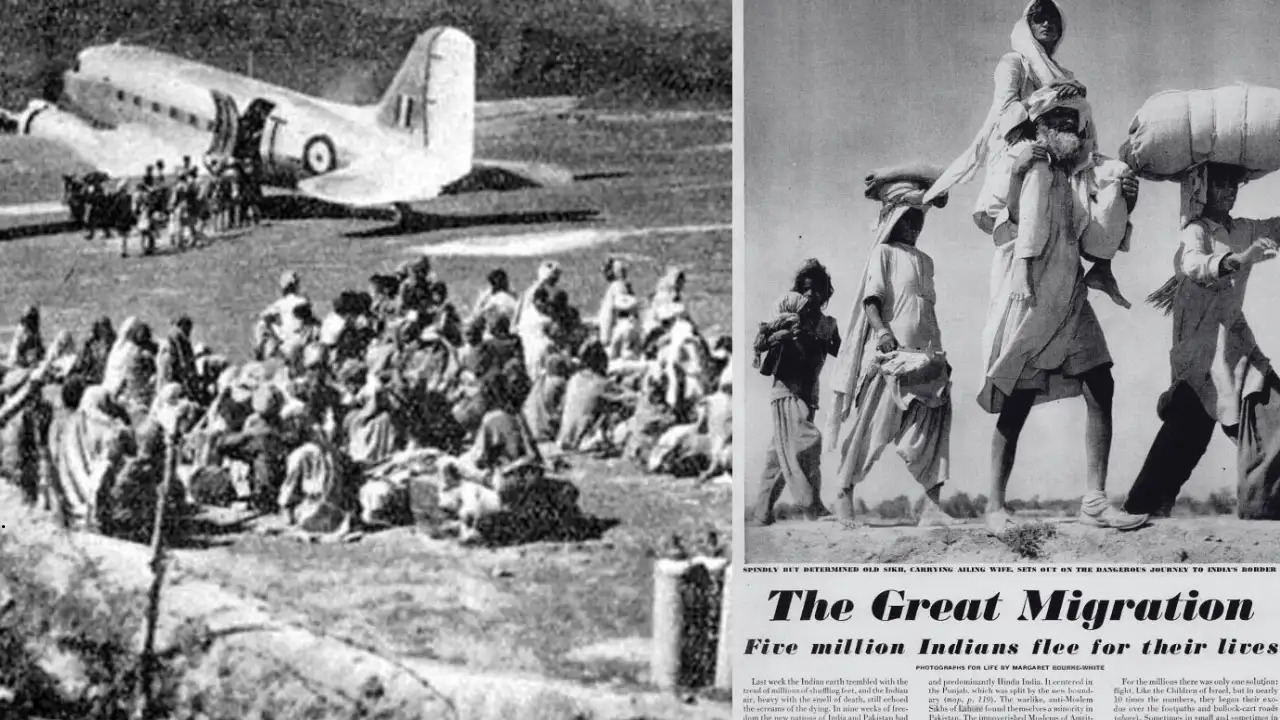
While the majority of refugees traversed by train, carts, vehicles, and on foot, airplanes operated primarily by the Royal Indian Air Force (RIAF), British Overseas Airways Corporation (BOAC), and other chartered carriers played an indispensable role in ferrying nearly 50,000 refugees—approximately 1% of the total migrants—between the newly formed nations.
Civilian aircraft, especially Douglas DC-3 Dakotas, were pressed into service to evacuate refugees trapped in hostile areas and to transport essential supplies, medical aid—including 1.5 million doses of cholera vaccine—and food to refugee camps in both India and Pakistan.
Over six weeks during October and November 1947, an operation involving 21 planes—mostly chartered Dakotas—from multiple British companies flew 35,000 people and transported over 1.5 million pounds of baggage, supporting the humanitarian and logistical needs of the mass migration.
Airports and airfields in Delhi, Punjab, Karachi, and other hotspots became focal points of desperation and hope, with scenes reminiscent of desperate crowds trying to board flights amid overcrowding and lax security. Miraculously, no major air accidents occurred despite the perilous circumstances.
Planes were also used to drop leaflets calling for peace and to deter violence, while the very presence of aircraft often had a calming or deterrent effect on mobs, helping reduce some communal violence.
Indian and Pakistani civilian airlines were overwhelmed by the scale of evacuation, prompting reliance on British military and civilian aircraft for many flights.
Context and Operational Challenges
At the dawn of independence, India’s air fleet consisted mainly of 115 civilian airplanes operated by eleven private companies. The immediate post-World War II boom left many aircraft, such as the Dakota DC-3, available cheaply but with limited profitability due to insufficient demand. During Partition, the unprecedented need for evacuation immobilized normal commercial air services. Many private airlines refused to use their planes for this "impossible task," necessitating government intervention and foreign assistance.
The Royal Indian Air Force, although still relatively nascent and modest in strength, took on a crucial role flying troops, evacuating refugees, and delivering life-saving supplies. Both the Indian and Pakistani governments used aviation to manage and ease the disorder that erupted during this large-scale upheaval.
Broader Significance and Human Stories
The use of airplanes in Partition was more than just logistics—it was a lifesaving lifeline amid widespread violence and dislocation. Refugees trapped in remote or suddenly hostile regions depended heavily on air transport for survival and escape. The operations marked the beginning of civil and military aviation serving humanitarian and strategic roles in the subcontinent.
Despite the heroic efforts, the migration was marred by communal violence, betrayal, and chaos. The airlift, though small compared to the overall migration, symbolized modern technology's potential to mitigate human suffering. It also forged memories of hope for countless individuals who found safe passage in the skies when land routes were cut off or too dangerous.
Conclusion
The three-month long population exchange during the 1947 Partition remains one of the fastest and largest forced migrations in history. Amid the turmoil, airplanes emerged as vital instruments of evacuation, relief, and hope. Nearly forgotten in popular narratives, the story of aviation’s role reveals the intersection of human resilience and technological adaptability during a national crisis. As India commemorates its 78th Independence Day in 2025, remembering the skyward journeys that saved thousands offers a poignant reflection on the enduring spirit amid division and renewal.
Source: BBC News India, The Aeroplane and the Making of Modern India by Mr. Iqbal, Indian Politics, Stanford Report