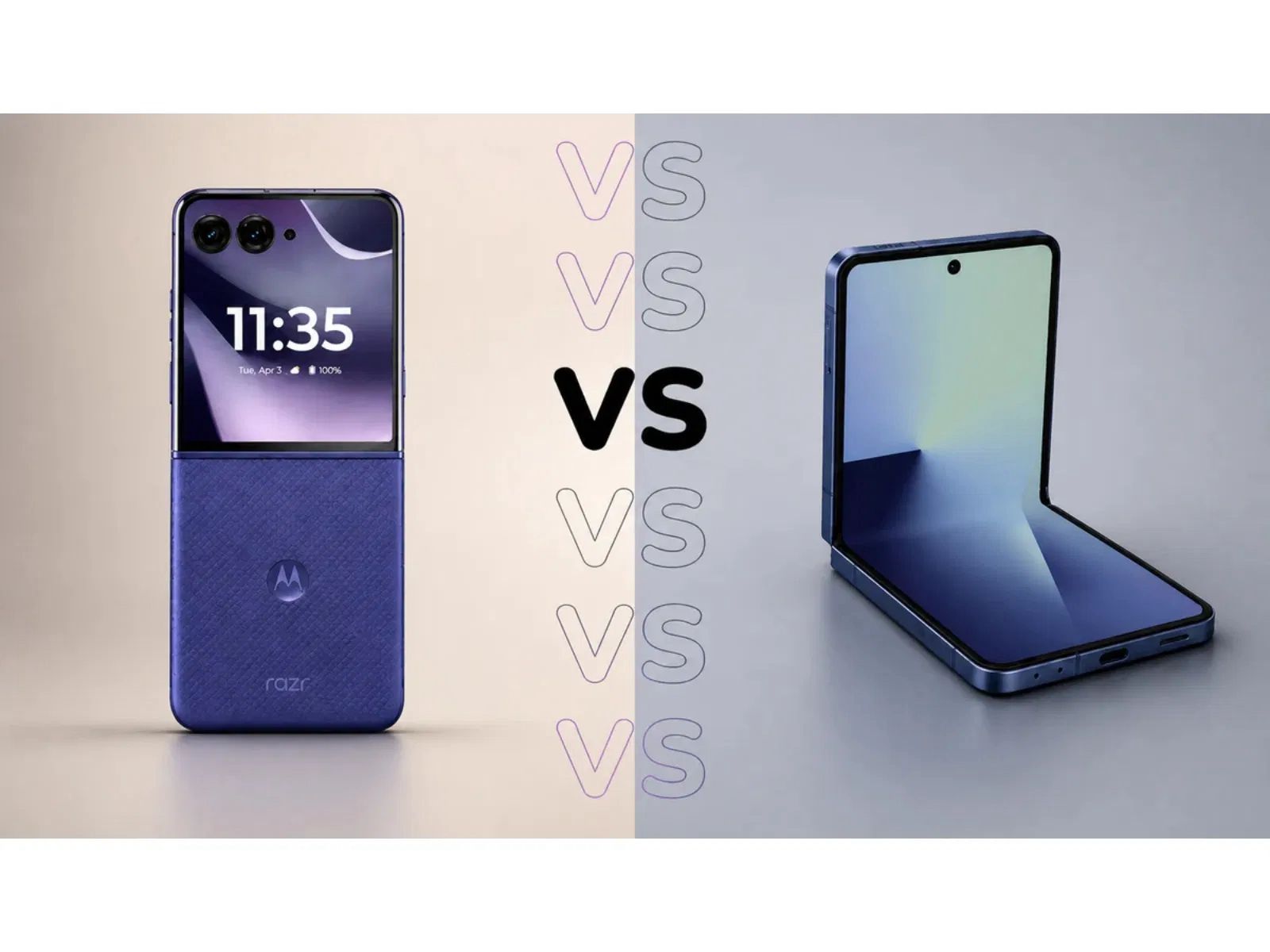
Motorola's new smartphone line splits the foldable market. The premium variant pairs a Snapdragon 8 Elite chip with an expansive 4.0-inch cover display and 68W charging for power users. The standard version relies on an efficient MediaTek chip and a 3.6-inch cover window, delivering key foldable features at a competitive price.
CHICAGO, IL — Technology giant Motorola has officially shook up the premium smartphone landscape with the dynamic release of its latest next-generation flip phones, the motorola razr 70 and the flagship motorola razr 70 ultra. Unveiled globally at an official launch event, this new dual-threat lineup targets distinct types of smartphone buyers. As mobile consumers increasingly transition toward flexible hardware form factors, Motorola is intentionally splitting its hardware strategy: offering one ultra-premium performance powerhouse equipped with an elite Qualcomm processor, alongside a highly capable, more cost-efficient sibling powered by MediaTek silicon to maximize mainstream market reach.
Processing Power and Silicon Performance Differentiators
According to official technical specifications released by the company, the internal system architecture marks the most definitive dividing line between these two devices. The premium motorola razr 70 ultra relies on the cutting-edge Snapdragon 8 Elite mobile platform, configured with an impressive 16GB of high-speed LPDDR5X RAM and up to 512GB of rapid UFS 4.0 storage. This internal computing setup is designed to manage intense workloads, heavy gaming sessions, and complex on-device artificial intelligence computations.
Conversely, the standard motorola razr 70 utilizes the MediaTek Dimensity 7450X system-on-chip, supported by a baseline configuration of 8GB of RAM. Motorola product engineers stated that this chip choice specifically targets maximum daily energy efficiency while providing comfortable, reliable handling of routine multitasking, communication apps, and media streaming.
Visual Engineering: Screen Real Estate Explores New Limits
The visual experience remains a core competitive battleground for clamshell foldables. Side-by-side display comparisons reveal noticeable dimensional steps between the two new variants:
External QuickView Displays: The ultra-tier model boasts an expansive 4.0-inch Extreme AMOLED cover screen with a fluid 165Hz refresh rate and a blinding peak brightness rating of 3,000 nits. The base variant utilizes a slightly more compact 3.6-inch cover panel, which still allows full interaction with notification widgets and messaging apps without forcing users to flip the handset open.
Internal Folding Panels: Unfolding the flagship model reveals an expansive 7.0-inch FlexView 1.5K pOLED LTPO display featuring Dolby Vision, HDR10+ compliance, and a massive 5,000 nits peak brightness capability. The standard model offers a 6.96-inch Full HD+ panel limited to a 120Hz refresh rate and a lower 3,000 nits peak threshold.
Professional Optics and Imaging Hardware
Camera capabilities provide another distinct hardware divergence for modern mobile photographers. According to product statements from Motorola, the flagship ultra incorporates a high-tier dual 50MP rear camera layout. The primary lens integrates an innovative LOFIC sensor to vastly enhance dynamic range in tricky lighting environments, backed up by a versatile 50MP ultra-wide and Macro Vision combo camera. Selfies are handled internally by a sharp 50MP sensor.
The standard variant drops down slightly in its structural camera array, combining its 50MP primary lens with a standard multi-functional secondary sensor, alongside a lower-resolution 32MP internal front-facing camera. For elite content creators and filmmakers, the ultra stands alone by offering full 8K video capture capabilities and complete structural integration with Dolby Vision recording protocols.
Battery Longevity and Energy Management
Interestingly, battery capacities inversely skew between the form factors due to spatial differences in their interior logic boards. Because the non-ultra model carries smaller internal cooling modules, it safely houses a larger 4,800mAh silicon-carbon battery pack. The high-performance ultra carries a 5,000mAh battery that delivers over 36 hours of operation according to regulatory filings.
However, energy replenishment times lean strongly in favor of the flagship model. The ultra supports blazing-fast 68W TurboPower wired charging, which can replenish a dead cell back to a full day of battery life in under ten minutes, while matching that with 30W wireless charging speeds. The standard model caps its wired input speed at a more conservative 30W threshold alongside a 15W wireless capability.
Official Sources Section
"The 2026 motorola razr series represents a significant structural leap in our foldable device design philosophy. By introducing tailored tiers of performance, we are offering exact lifestyle fits for both tech enthusiasts who demand unmatched processing speed, and practical lifestyle consumers seeking compact style without financial compromise."
— Official Statement from Motorola Product Development Division
Why It Matters: Commercial and Consumer Impact
For everyday shoppers, this dual-release format means entering the flexible smartphone ecosystem is becoming far more financially approachable. Enterprises can confidently deploy the standard variant as a space-saving corporate device for employees, while digital artists, active stock investors, and serious mobile gamers have a clear upgrade pathway via the ultra tier. Both devices arrive out of the box running Android 16 with Motorola's modern Hello UI layout overlay.
Key Facts at a Glance
The Silicon Split: The flagship model uses the top-tier 3nm Snapdragon 8 Elite chip, while the standard version relies on the efficient MediaTek Dimensity 7450X.
Cover Screen Differences: Users gain a massive 4.0-inch outer display panel on the ultra tier, compared to a still highly functional 3.6-inch external window on the base model.
Charging Top-Offs: The premium model charges at a rapid 68W wired speed, doubling the baseline version's 30W peak limit.
Chassis Craftsmanship: The premium tier implements an advanced aviation-grade aluminum frame protected by Gorilla Glass Ceramic armor, whereas the base model pairs a regular aluminum frame with Gorilla Glass Victus.
Frequently Asked Questions
Which model offers better overall battery life?
While both phones are optimized for multi-day endurance using advanced silicon-carbon chemistry, the standard model houses a robust 4,800mAh tank that pairs with an ultra-efficient MediaTek processor, often outlasting the power-hungry Snapdragon on basic tasks. However, the ultra model includes a 5,000mAh battery rated for more intensive, high-performance sessions.
Are both Motorola devices fully waterproof?
According to official laboratory certifications, the ultra tier carries an upgraded IP48 dust and water resistance rating, allowing it to withstand fresh-water submersion for up to 30 minutes. The base model offers standard splash protection that handles rain and sweat but should not be submerged.
What are the starting retail prices for these two phones?
In North American retail markets, pre-orders start at an accessible $799.99 for the standard variant, whereas the unlocked premium flagship ultra version starts at $1,499.99 for its maximum storage configuration.
Sources: Official corporate product announcements from Motorola Mobility LLC, global carrier reference data published via FoneArena, and hardware testing matrices aggregated by GSMArena.