In a landmark move that could redefine India’s aerial combat capabilities, the United States has formally offered the F-35 Lightning II stealth fighter jet to India. The offer, made by President Donald Trump and reiterated by senior officials in September 2025, positions the F-35 as a poten...
In a landmark move that could redefine India’s aerial combat capabilities, the United States has formally offered the F-35 Lightning II stealth fighter jet to India. The offer, made by President Donald Trump and reiterated by senior officials in September 2025, positions the F-35 as a potential game-changer in India’s defense modernization strategy. With a top speed of 2,500 kilometers per hour, a combat range of 3,500 kilometers on a single fueling, and a price tag nearly half that of comparable fifth-generation platforms, the F-35 is being hailed as the most advanced and cost-effective fighter jet in its class.
The offer comes amid growing strategic cooperation between Washington and New Delhi, and is seen as part of a broader push to counterbalance regional threats while deepening defense ties.
Key Highlights of the F-35 Offer to India
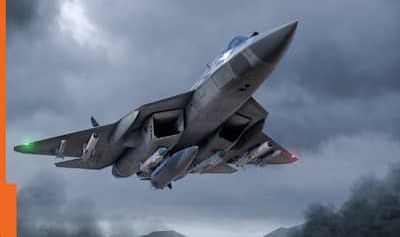
The F-35 Lightning II is a fifth-generation, single-seat, single-engine stealth multirole combat aircraft developed by Lockheed Martin.
It features advanced stealth, supersonic speed, sensor fusion, and electronic warfare capabilities.
The jet can reach speeds of up to 2,500 km/h and cover 3,500 km on a single fueling, making it ideal for long-range missions.
The cost of the F-35 is estimated to be nearly half that of other fifth-generation jets, offering affordability without compromising capability.
The offer includes potential technology transfer, training, and integration support for Indian Air Force operations.
Variants and Capabilities
F-35A – Conventional takeoff and landing, designed for air force operations.
F-35B – Short takeoff and vertical landing, suitable for expeditionary missions.
F-35C – Carrier-based variant for naval deployment.
Each variant is equipped with:
Stealth coating and radar-absorbing materials
Advanced avionics and helmet-mounted display systems
Network-centric warfare capabilities
Precision strike and air superiority tools
Real-time data sharing across allied platforms
Strategic Implications for India
The F-35 would significantly enhance India’s deterrence posture in the Indo-Pacific region.
It complements India’s existing fleet of Su-30MKIs, Rafales, and Tejas jets, offering a leap in stealth and sensor integration.
The jet’s long-range capabilities allow for deep strike missions and rapid response across borders and maritime zones.
Its compatibility with NATO systems could improve interoperability with allied forces during joint exercises and operations.
Comparative Advantage Over Other Platforms
The F-35’s price point is nearly 50 percent lower than other fifth-generation jets like the F-22 Raptor or Eurofighter Typhoon.
It offers superior stealth and electronic warfare capabilities compared to Russia’s Su-57 or China’s J-20.
Maintenance and lifecycle costs are optimized through global supply chains and predictive diagnostics.
Political and Diplomatic Context
The offer was first made by President Trump during a bilateral meeting with Prime Minister Narendra Modi earlier this year.
It was reiterated at Aero India 2025 and through diplomatic channels, signaling strong intent from Washington3.
The deal, if accepted, could include offsets, joint production, and defense technology sharing under the Defense Technology and Trade Initiative (DTTI).
Conclusion
The F-35 Lightning II stands as a symbol of next-generation air power, and its offer to India marks a pivotal moment in bilateral defense relations. With unmatched speed, range, and stealth, and a price tag that makes it accessible for large-scale deployment, the jet could become the cornerstone of India’s future air dominance strategy. As discussions progress, the decision will not only shape India’s military capabilities but also its role in the evolving global security architecture.
Sources: Economic Times, InsightsonIndia, Eurasian Times