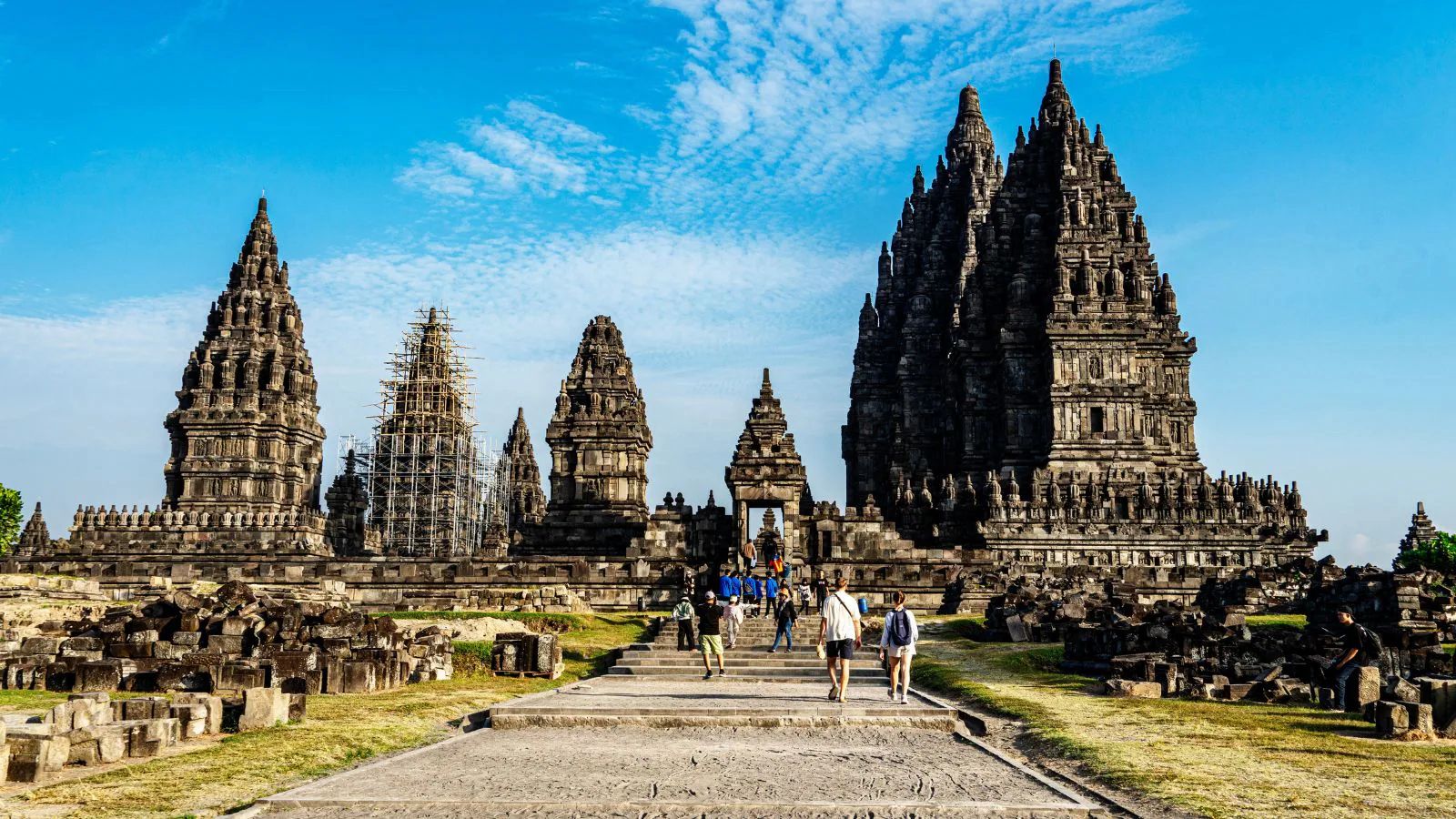
India and Indonesia are launching a joint conservation project for the 1,170-year-old Prambanan Shiva Temple. This UNESCO World Heritage Site, which depicts the Ramayana in intricate stone reliefs, stands as a lasting symbol of the deep-rooted historical and spiritual connections between the two nations and their shared civilizational legacy
Prime Minister Narendra Modi and President Prabowo Subianto are set to launch a major conservation project at the historic Prambanan Temple complex.
YOGYAKARTA, Indonesia — A monumental chapter in the civilizational partnership between India and Indonesia begins Wednesday as Prime Minister Narendra Modi and Indonesian President Prabowo Subianto officially launch a restoration project for the ancient Prambanan Shiva Temple complex. The 1,170-year-old UNESCO World Heritage Site stands as a testament to the deep-rooted cultural and spiritual ties that have connected the two nations for over a millennium.
The restoration initiative, spearheaded by the Archaeological Survey of India (ASI) in collaboration with Indonesian authorities, marks a significant milestone in India’s "Act East" policy. The project focuses on stabilizing and preserving the smaller shrines within the massive 240-temple complex, which were significantly damaged by seismic activity and the passage of time.
A Shared Spiritual Heritage
Built in the 9th century during the reign of the Sanjaya Dynasty, the Prambanan complex—originally known as Shivagrha (House of Shiva)—is dedicated to the Hindu Trimurti: Brahma the Creator, Vishnu the Preserver, and Shiva the Destroyer. The site is widely regarded as a masterpiece of classical Javanese architecture, mirroring cosmological principles found in ancient Indian temple traditions.
The "hidden secret" of its enduring connection to India lies in its narrative stone reliefs. The temple walls are intricately carved with the Indonesian version of the Ramayana epic, demonstrating how Indian philosophical and literary traditions were seamlessly integrated into Javanese art. Research conducted over the last century has confirmed that the cultural exchange was not a result of conquest, but of centuries of vibrant maritime trade and the migration of scholars and artisans from South India who brought with them the Sanskrit language, Vedic knowledge, and temple construction techniques.
Why Restoration Matters Today
For both nations, this partnership is about more than just stone and mortar. By leveraging India’s expertise in global heritage conservation, the project aims to preserve a site that symbolizes the historical spread of Indic civilization into Southeast Asia.
"The Prambanan Temple stands as a symbol of the shared cultural heritage of India and Indonesia," Prime Minister Modi noted ahead of the launch. For local residents in Yogyakarta, the temple remains the "beating heart" of Javanese identity, and its restoration is expected to boost heritage tourism and deepen people-to-people connections between the two countries.
Why It Matters
This collaboration serves as a practical application of cultural diplomacy. By reviving these ancient civilizational linkages, India and Indonesia are converting their "civilizational comfort" into a strategic partnership, particularly in an era where maritime connectivity in the Strait of Malacca remains critical for global industrial and economic futures.
Key Facts at a Glance
Age: Approximately 1,170 years old (inaugurated in 856 CE).
Significance: Largest Hindu temple complex in Indonesia and a masterpiece of Javanese-Hindu architecture.
Architecture: Dedicated to the Trimurti (Shiva, Vishnu, Brahma) and renowned for its elaborate Ramayana reliefs.
The Project: A joint restoration effort between India’s Archaeological Survey of India (ASI) and Indonesian authorities.
FAQ
Why is Prambanan connected to India?
The temple was built by the Hindu Sanjaya dynasty, which adopted Indian religious, literary, and architectural traditions, such as the Ramayana and the Trimurti concept, introduced by traders and scholars from South India.
How was the temple rediscovered?
After being abandoned in the 11th century due to political shifts and volcanic activity, the site was buried and overgrown until its rediscovery by the Dutch in the early 19th century.
What is the "hidden secret" of the temple?
The "secret" refers to its original Sanskrit name, Shivagrha (found in 856 CE inscriptions), and the fact that its narrative carvings preserve an early, indigenous version of the Indian Ramayana epic, showcasing the profound synthesis of the two cultures.
Source: India.com, ANI News, UNESCO