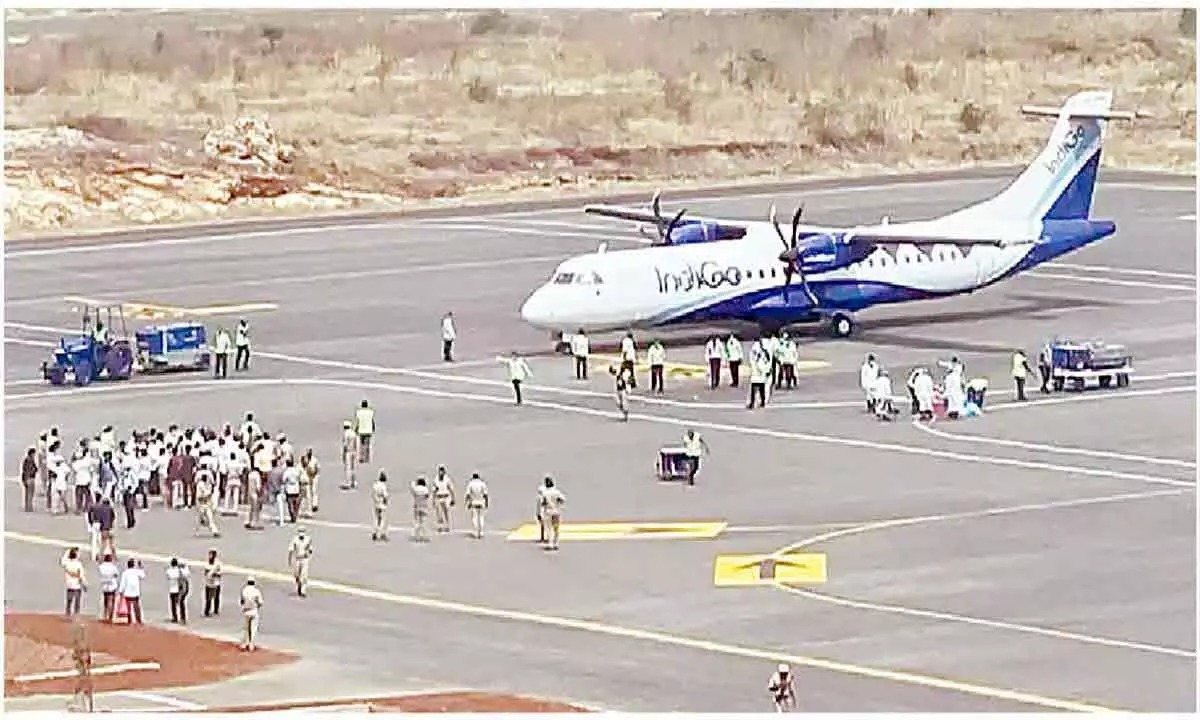
The Andhra Pradesh Airports Development Corporation Limited (APADCL) has issued an RFP for a comprehensive PPP master plan to upgrade Kurnool Airport into an integrated aviation ecosystem. Utilizing 1,008 acres, the upgrade adds night-landing systems, an MRO hub, drone development facilities, and a 343-acre city-side commercial zone under a 45-year concession.
AMARAVATI — The Andhra Pradesh Airports Development Corporation Limited (APADCL) has finalized a comprehensive master plan to upgrade Uyyalawada Narasimha Reddy Airport in Kurnool. This major infrastructural push is structured as a long-term Public-Private Partnership (PPP) and represents a core tactical element of the newly implemented Andhra Pradesh Aviation Policy. Today, June 23, 2026, state planning officials confirmed that the corporation has issued international competitive Request for Proposal (RFP) notices to select global infrastructure partners to manage airport operations, oversee structural expansions, and construct city-side commercial zones.
Technical Specifications and Strategic Land Allocation
According to the official master plan specifications released by the executive board of APADCL, the upgrade will systematically capitalize on 1,008 acres of state-owned land dedicated to the Kurnool aviation facility. While the existing operational airport infrastructure takes up approximately 429 acres, the new spatial blueprint reorganizes the remaining acreage to maximize high-yield commercial and aeronautical growth.
The developmental land distribution framework consists of several key zones:
Aeronautical Reserve Pool: Exactly 136 acres are legally reserved for essential airside expansions, including terminal building extensions, taxiway additions, and runway elongation.
City-Side Services Hub: A major 343-acre block is designated for commercial development, industrial logistics parks, high-capacity warehousing facilities, and manufacturing units.
Future Strategic Reserves: The remaining 100 acres will be kept in reserve to satisfy long-term industrial requirements as regional demand scales up.
To ensure all-weather commercial feasibility, the master plan introduces a dedicated Doppler Very High Frequency Omnidirectional Range (DVOR) navigational navigation network alongside night-landing infrastructure. These electronic upgrades will enable nighttime air operations and resolve low-visibility scheduling constraints.
Establishing an Integrated Aviation Ecosystem
A key objective of the upgrade plan is the establishment of a self-sustaining aviation ecosystem within the Rayalaseema industrial corridor. According to the statutory bidding documents, the selected private partner will sign a 45-year concession agreement. This contract requires the operator to manage, maintain, and expand the facility, with a provision for a 15-year extension.
Beyond standard passenger transit, the master plan incorporates line, base, engine, and structural Maintenance, Repair, and Overhaul (MRO) facilities for both fixed-wing aircraft and commercial helicopters. The regional ecosystem will also feature a dedicated drone city spanning 300 acres nearby, introducing specialized infrastructure for unmanned aerial vehicle (UAV) test flights, assembly lines, and research laboratories.
Furthermore, the site is positioned to become a pilot training base. The infrastructure includes dedicated taxiways to support two separate Directorate General of Civil Aviation (DGCA) approved Flying Training Organizations (FTOs). These facilities will feature flight simulators and modern classrooms to train student pilots across southern India.
Macro Economic Impact and Connectivity Alignment
The upgrade of Kurnool Airport is expected to have a significant positive impact on local businesses, regional manufacturing industries, and logistics providers. Situated right along National Highway 40, the expanded hub links directly with industrial corridors, reducing transport times for value-added agricultural products and industrial components.
For investors and corporate operators, the city-side development zone offers lower real estate costs than major metropolitan centers like Chennai, Hyderabad, or Bengaluru. This price advantage makes it highly suitable for data centers, back-office IT hubs, and advanced manufacturing operations.
Furthermore, the expansion provides domestic flight passengers with more direct regional routes, reducing travel times for businesses operating across Rayalaseema. The master plan aligns with India's long-term economic goal of decentralizing industrial supply chains and bringing high-tech employment opportunities to emerging cities.
Official Sources Section
The infrastructure blueprints, land boundaries, bidding guidelines, and concession conditions cited in this report conform strictly to the formal public notices and project guidelines published by the Andhra Pradesh Airports Development Corporation Limited (APADCL) and the statutory mandates of the Department of Infrastructure and Investment via the Government of Andhra Pradesh procurement registry.
Quote Section
"According to officials from the APADCL nodal desk, the modern master plan is designed to transform the regional transit facility into a core engine of industrial growth, combining advanced air side assets with an active, commercial city-side ecosystem."
Why It Matters
For global industrial developers, regional airlines, and logistics firms, this master plan shifts Kurnool from a simple regional stop into a multimodal aviation hub. By integrating MRO facilities, pilot training academies, and drone research zones into a single facility, it establishes a blueprint for regional economic growth, lowering operational costs and improving trade links for businesses across southern India.
Key Facts at a Glance
Total Project Footprint: Encompasses 1,008 total acres of land, with 343 acres dedicated exclusively to city-side industrial and commercial developments.
Core Technological Asset: Introduces night-landing facilities supported by a Doppler Very High Frequency Omnidirectional Range (DVOR) system.
Long-Term Concession Window: The partnership operates under a 45-year concession agreement, including a 15-year extension option.
Specialized Service Ecosystem: Features two DGCA-approved flight academies, an MRO facility, and a 300-acre drone tech testing area.
FAQ Section
What is the main goal of the new master plan for Kurnool airport?
The main goal is to upgrade the current regional transit facility into an integrated aviation hub. The plan adds high-capacity cargo storage, specialized aircraft MRO infrastructure, pilot training flight academies, and city-side logistics centers.
How will the surrounding land be utilized under this new infrastructure blueprint?
Out of the 1,008 total acres, 429 acres remain dedicated to the active airport, 136 acres are set aside for runway and terminal extensions, 343 acres are designated for city-side commercial business hubs, and 100 acres are held in strategic reserve.
When will the bidding process close for private infrastructure developers?
According to the official Request for Proposal (RFP) notices published by the state procurement portal, competitive international bidding submissions close on July 3, 2026.
Source: Official tender updates and project specifications published via the online clearing house of the Andhra Pradesh Airports Development Corporation Limited (APADCL) and the Government of Andhra Pradesh e-Procurement Portal.