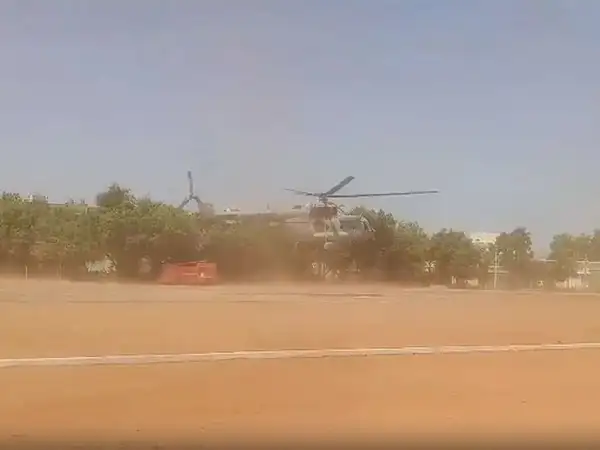
An Indian Army helicopter conducted a trial landing in Tirunelveli as part of a joint military operation to securely transport NEET-UG 2026 re-examination question papers. Following previous paper leak cancellations, the government is using Air Force assets and digital platform restrictions to guarantee a leak-proof test on June 21.
TIRUNELVELI, June 16, 2026 — An Indian Army helicopter successfully completed a trial landing at the Tirunelveli Armed Reserve Ground on Tuesday, marking a major shift in national examination logistics. The military deployment forms the centerpiece of a multi-layered security operation designed to transport the National Eligibility cum Entrance Test Undergraduate (NEET-UG) 2026 re-examination question papers under unprecedented surveillance.
The high-security measures come in direct response to the cancellation of last month’s national medical entrance test following widespread allegations of question paper compromises. The National Testing Agency (NTA) has scheduled the fresh nationwide re-test for June 21, 2026.
Last-Minute Airborne Logistics to Prevent Information Leaks
To bypass traditional surface transport vulnerabilities and dismantle organized cheating networks, the central government has authorized the joint involvement of the Indian Army and the Indian Air Force (IAF). Under the finalized security protocol, the highly confidential examination materials will be flown via commercial aircraft from New Delhi to Madurai.
From Madurai, an Indian Army helicopter—escorted directly by Air Force officials—will airlift the localized question paper consignments straight to the secure perimeter of the Armed Reserve Ground in Tirunelveli.
The unexpected presence of a military helicopter circling at low altitudes over key sectors of Tirunelveli city—including the Palayamkottai bus stand and the Government Multipurpose Hospital zone—drew large crowds of local residents before the aircraft executed its precise touchdown on the tactical landing pad. Authorities confirmed that the exercise served as a structural mock drill to verify timing windows, regional wind variables, and ground communication networks prior to the actual deployment on exam day.
Digital Lockdowns and Segmented Question Frameworks
The structural enforcement is not limited to physical transit. The Ministry of Electronics and Information Technology (MeitY), acting on parallel recommendations from the NTA and the Department of Higher Education, has implemented strict digital constraints to stabilize the integrity of the June 21 re-test.
Regulatory documents show that these parameters were invoked under Section 69A of the Information Technology Act, 2000. Intelligence briefings revealed that bad actors previously used back-dated message-editing features on social platforms to create fraudulent time stamps, generating false impressions of early leaks to extort candidates.
On the manufacturing side, paper-setters and translation coordinators have been placed under complete physical isolation inside undisclosed, heavily monitored facilities. These operatives are barred from using laptops, mobile phones, or smartwatches, and will remain under state supervision until the final exam session concludes on Sunday afternoon.
Official Sources Section
The operational arrangements and policy parameters have been verified through authoritative administrative platforms:
Quote Section
"According to officials managing the joint security framework, transporting sensitive materials via military aircraft ensures a highly controlled delivery path," an administrative coordinator stated. "Organizers stated that last-minute distribution directly to armed tactical zones removes ground-level transit risks entirely."
Why It Matters
For over 22 lakh medical aspirants and their families, these unprecedented steps are critical to restoring trust in India's highly competitive professional entrance ecosystem. By replacing conventional postal networks with military logistics and enforcing strict digital communication blackouts, the administration aims to ensure a fair testing field where academic merit is protected from organized criminal interference.
Key Facts at a Glance
Transit Date: The physical air delivery of question papers will take place immediately ahead of the June 21 exam.
Aviation Asset: Indian Air Force Mi-17 medium-lift helicopters will be utilized across 18 major regional hubs.
Ground Security Zone: The Tirunelveli Armed Reserve Ground will serve as the localized custody vault under heavy guard.
Digital Law Enforcement: Telegram's message-editing feature is disabled nationwide through June 30 to combat online fraud.
Frequently Asked Questions
Why is the government using military helicopters for a educational exam?
Following severe paper leak controversies last month, standard ground transport and postal delivery methods were deemed vulnerable. Utilizing military aircraft provides a rapid, tightly controlled, and tamper-proof chain of custody.
Will the digital restrictions affect students trying to access their admit cards?
No. The temporary platform restrictions apply strictly to the Telegram application to prevent the spread of fraudulent leaks. The official website remains fully functional for students downloading exam city slips and hall tickets.
How is the question paper being protected during the printing stage?
The NTA has isolated all paper-setters, moderators, and printers in classified locations with zero external communication access. Workflows have been completely compartmentalized so that no single team has visibility into the entire operational chain.
Source: National Testing Agency Official Portal, Ministry of Electronics and Information Technology Gazette, Tirunelveli Armed Reserve Command Reports