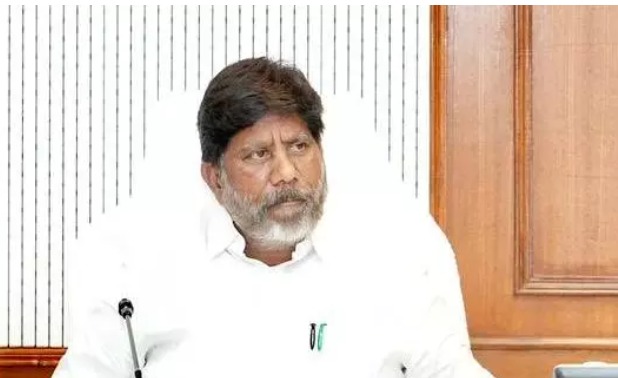
At the India Health Summit, Telangana Deputy CM Mallu Bhatti Vikramarka asserted that family health crises are a vital national priority. He urged a systemic shift from treating illnesses to preventing them, while committing to democratize digital medical tech so premium care remains affordable for the poor and marginalized.
HYDERABAD, India — Telangana Deputy Chief Minister Mallu Bhatti Vikramarka delivered a vital public policy message on Saturday, June 20, 2026, declaring that a family's health crisis must be recognized as a core national priority. Speaking as the chief guest at the high-profile India Health Summit, Vikramarka detailed the devastating cascading economic effects of medical emergencies on ordinary citizens. He noted that unforeseen severe illnesses regularly push low-income and middle-class households into deep financial distress, rapidly wiping out savings accumulated over an entire lifetime.
The Deputy Chief Minister emphasized that health is the truest measure of a nation’s overall development. He argued that access to high-quality, affordable healthcare should not be viewed merely as an optional government administrative responsibility, but as a fundamental, non-negotiable basic necessity for every single citizen.
Shifting From Illness-Care to Preventive Wellness
Addressing an audience of medical professionals, policymakers, and industry leaders, Vikramarka called for a fundamental reengineering of India's healthcare priorities. He advocated for an institutional transition away from a reactive "illness-care" model, which centers heavily on treating diseases after they manifest, toward a proactive "wellness-care" model focused strictly on long-term disease prevention.
“Prevention is far more effective and affordable than treatment after illness occurs,” Vikramarka observed during his keynote speech.
He explained that by shifting focus to early diagnostics, regular screenings, and community wellness initiatives, the broader public healthcare system could significantly mitigate the extreme physical and financial trauma that families face during advanced medical crises.
Democratizing Emerging Technology and Public Schemes
A primary focus of Vikramarka's address was the equitable distribution of modern scientific breakthroughs. He warned against the systemic clustering of medical innovations within elite private spaces, stating that advancements in medical technology, digital healthcare systems, and AI-driven telemedicine must not remain confined solely to the corporate sector. Instead, these technological tools must actively serve ordinary citizens, particularly the most underprivileged and marginalized sections of society.
Recalling the institutional evolution of India's public healthcare infrastructure, Vikramarka credited foundational national programs such as:
The establishment of the All India Institutes of Medical Sciences (AIIMS) networks.
The implementation of the Integrated Child Development Services (ICDS).
The reach of the Universal Immunization Programme and the National Rural Health Mission.
He specifically highlighted the localized success of the state's Aarogyasri health insurance scheme. He noted that the initiative has provided immense confidence to impoverished families by giving them free, direct access to critical, high-cost surgical treatments inside state-of-the-art corporate hospital environments.
Positioning Telangana as India's Public Health Capital
Detailing his administration's targeted vision, the Deputy Chief Minister described Telangana as an emerging public health capital for the country. The state government is aggressively executing a multi-layered healthcare strategy by systematically upgrading rural and district hospitals, expanding public medical education institutions, and substantially funding nursing and paramedical education streams.
To ensure the sustainability of these upgrades, Telangana is executing structured capacity-building initiatives to meet future specialized medical manpower requirements. Vikramarka noted that with Hyderabad's mature pharmaceutical ecosystem, dedicated Medical Devices Park, deep IT talent pool, and continuous government backing, the region is uniquely positioned to function as a premium global hub for medical innovation, advanced diagnostics, and integrated digital health delivery systems.
Official Sources Section
According to official event protocols and statement briefs issued by the Government of Telangana, public-private partnerships (PPPs) in the healthcare sector are being reassessed. The state's administrative guidelines mandate that all corporate-public medical collaborations must prioritize high-quality delivery to ordinary citizens rather than focusing primarily on commercial profit generation. Furthermore, recent pre-budget financial summaries confirm that health and education infrastructure upgrades have received top funding priority for the upcoming fiscal cycle.
Quote Section
Addressing the issue of institutional leadership during his presentation, Deputy Chief Minister Mallu Bhatti Vikramarka stated:
"Leadership in healthcare is an absolute responsibility. Scientific innovation and technology must serve ordinary citizens, particularly the poor. No poor person should ever have to fear entering a hospital facility simply because of treatment costs."
Reflecting on the government's fiscal commitments to public health, State Health Ministry officials stated:
"The previous administration allocated only ₹5,950 crore over a ten-year period for medical infrastructure. In contrast, our current administration spent ₹11,482 crore in a single year alone to clear pending medical bills and construct new regional cancer centers and organ retrieval facilities."
Why It Matters
The financial stabilization of health costs has vast practical implications for India's macroeconomic growth. When a sudden health crisis strikes an uninsured or underinsured family, the out-of-pocket medical expenditure instantly deflates household purchasing power, often trapping multiple generations in cycles of debt. By shifting systemic priorities to preventive care and democratizing digital diagnostics, the state protects citizen savings, stabilizes the rural workforce, and ensures that private healthcare infrastructure serves a broad public utility purpose rather than driving vulnerable communities into bankruptcy.
Key Facts at a Glance
The Main Message: Telangana Deputy CM Mallu Bhatti Vikramarka states that a family's health crisis must be handled as a major national priority to avoid household financial devastation.
The Strategic Shift: The government is calling for an evolutionary shift from reactive "illness-care" models to proactive, preventive "wellness-care" frameworks.
Tech Democratization: The administration emphasizes that premium advancements like telemedicine and AI diagnostics must reach the poor and marginalized, not just corporate centers.
Telangana's Hub Vision: Backed by Hyderabad's pharmaceutical ecosystem and Medical Devices Park, the state is scaling up district hospitals and nursing colleges to become a global healthcare innovation center.
Aggressive Funding: The current state framework allocated a record ₹11,482 crore in a single year to expand primary health centers and clear historical arrears.
FAQ Section
Q1: What did Deputy CM Bhatti Vikramarka mean by shifting from "illness-care" to "wellness-care"?
A1: He meant that instead of the healthcare system focusing almost entirely on treating sick patients after an illness has advanced, the country must prioritize preventive care, early screenings, and healthy lifestyle interventions to stop diseases from developing in the first place.
Q2: How does the Telangana government plan to make corporate-level medical treatments affordable for the poor?
A2: The state uses targeted insurance frameworks like the Aarogyasri scheme, which covers high-cost treatments for low-income families at corporate hospitals. Additionally, the state is strengthening local district hospitals so citizens can access specialized treatment without traveling to expensive metropolitan areas.
Q3: What specific infrastructure advantages help Hyderabad emerge as a global medical hub?
A3: Hyderabad possesses a powerful pharmaceutical ecosystem, a specialized Medical Devices Park, a highly skilled IT talent pool, and strong governmental infrastructure support, making it an ideal center for digital healthcare, diagnostics, and innovation.
Source: Telangana Government Information Department Bulletins, Keynote Proceedings of the India Health Summit 2026, Central Board of Public Health Data, Aarogyasri Healthcare Trust Operational Releases.