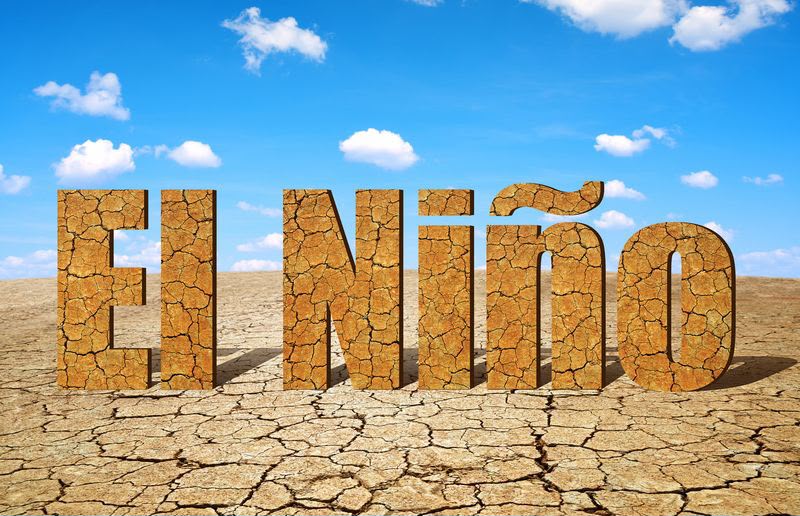
A strengthening El Niño weather pattern threatens global tropical commodities with severe production deficits through 2026. Hyper-concentrated crops like cocoa and robusta coffee face acute risks from localized droughts in West Africa and South-East Asia, compounding existing global food inflation already strained by geopolitical fertilizer supply shocks.
LONDON — Global meteorological agencies have confirmed the arrival of a powerful El Niño weather pattern, warning that its rapid intensification leaves the world’s soft commodities uniquely vulnerable to widespread crop failure. The U.S. National Oceanic and Atmospheric Administration (NOAA) declared last week that atmospheric conditions across the equatorial Pacific have locked in, with current climate projection models estimating a 63% probability that this event will strengthen into a "Super El Niño" heading into 2027. Coming at a time when global agricultural networks are already heavily strained by fertilizer supply bottlenecks linked to the ongoing West Asia conflict, the localized heatwaves, altered monsoons, and erratic rainfall patterns threaten to trigger acute production deficits for essential tropical commodities like cocoa, coffee, and sugar.
The Perfect Storm: Climate Extremes Meet Input Cost Shocks
The structural vulnerability of tropical commodities stems directly from the geographic concentration of their production. Unlike standard industrial grains like wheat or corn, which are cultivated across diverse climatic zones globally, soft commodities are predominantly grown within a narrow equatorial band. When El Niño disrupts the Pacific trade winds, it alters rainfall distribution asynchronously—inducing severe droughts in South-East Asia and parts of West Africa, while unleashing torrential downpours across the southern regions of South America.
Agricultural analysts emphasize that this climate shock does not occur in a vacuum. Farmers across developing tropical economies are currently grappling with severe operational cost pressures. The ongoing disruption of shipping lines through the Strait of Hormuz has triggered localized diesel and fertilizer price shocks. According to data tracked by the European commodity monitoring agency PricePedia, physical food commodity prices have climbed steadily, with tropical commodities surging 3.9% in May alone as a direct consequence of compounding climate and geopolitical risks.
Cocoa Markets Braced for Asymmetric Production Cuts
Among all soft commodities, cocoa represents the clearest indicator of how severe meteorological shifts translate directly into extreme global retail inflation. Historically, every major El Niño event over the past 55 years has resulted in measurable reductions in global cocoa outputs.
During the moderate-to-strong El Niño cycle of mid-2023 to 2024, top growers in West Africa—specifically Côte d'Ivoire and Ghana, which combined supply more than half of the world's cocoa beans—were initially battered by double their normal rainfall, leaving crops highly exposed to devastating fungal black pod disease. The pattern has flipped aggressively this season. Forecasters state that intense heat waves and dry Saharan Harmattan winds are sapping soil moisture across West African plantations. Financial networks have responded swiftly; ICE New York cocoa futures rallied to multi-week highs this month as investment firms like StoneX systematically downgraded global cocoa surplus forecasts for the 2026/27 marketing year.
Coffee and Sugar Supply Chains Face Divergent Impacts
The exposure profile for international coffee and sugar supply chains remains highly nuanced, split cleanly by regional geography and specific crop varieties:
Robusta Coffee: Highly exposed. Vietnam, which controls more than 40% of global robusta supply, along with Indonesia, faces severe heat-induced yield downgrades. Citi Research issued warnings noting that dry conditions will heavily trim Asian robusta yields starting in the fourth quarter.
Arabica Coffee: Distinctly insulated. The weather event typically brings optimal, frost-free rainfall to Brazil’s primary arabica-producing states, boosting early crop prospects.
Sugar: Mixed outlook. In India and Thailand, El Niño historically weakens the summer monsoon, reducing sugarcane volumes and triggering export restrictions. Conversely, Brazil, the world's largest sugar exporter, faces excessive localized precipitation that complicates field harvesting and dilutes raw sucrose levels.
Official Sources Section
Climate data models, agricultural projections, and commodity trade volumes cited within this report are compiled from formal regulatory bulletins published by the U.S. National Oceanic and Atmospheric Administration (NOAA), Japan's Meteorological Agency, the UN Food and Agriculture Organization (FAO), and official market updates from the Intercontinental Exchange (ICE).
Quote Section
"Food prices are being squeezed from both sides: by climate extremes disrupting production in major growing regions, and by a food system still exposed to spikes in gas and fertilizer costs," stated an agricultural economist via recent financial briefings on food security. "The prospect of a strong El Niño matters immensely because it turbocharges weather risks in an already destabilized market environment."
Why It Matters
When tropical commodities face acute structural deficits, the financial impact moves rapidly down the value chain to everyday retail consumers. Multinationals across the confectionery, beverage, and baking industries are forced to absorb soaring ingredient costs or pass them down, driving up grocery shelf prices for chocolate, coffee, and processed sweets. For developing agrarian nations, a sharp drop in exportable crop yields threatens rural incomes, worsens domestic food insecurity, and severely weakens foreign exchange reserves.
Key Facts at a Glance
Super El Niño Threat: Meteorologists project a 63% probability that the current El Niño cycle will transition into a historically severe "Super El Niño" by late 2026.
Input Price Collisions: Extreme weather disruptions are running parallel to severe fertilizer and fuel price shocks tied to the West Asia conflict.
Cocoa Shortages: Historic data establishes that every major El Niño over the last 55 years has directly reduced global cocoa output.
Robusta Under Pressure: Crucial robusta coffee plantations across Vietnam and Indonesia are facing severe moisture deficits ahead of the primary Q4 harvest.
FAQ Section
What exactly is El Niño and how often does it occur?
El Niño is a naturally occurring climate phenomenon marked by the periodic warming of sea surface temperatures in the central and eastern Pacific Ocean. It recurs every two to seven years and typically persists for nine to twelve months.
Why are tropical commodities more vulnerable than regular grain crops?
Tropical soft commodities like cocoa and coffee are highly vulnerable because their production is hyper-concentrated in specific equatorial nations. Severe regional droughts or floods cannot easily be offset by increasing production elsewhere.
Will the prices of all coffee varieties rise equally?
No. While robusta coffee prices are under upward pressure due to severe droughts in Vietnam and Indonesia, arabica coffee crops in Brazil are experiencing favorable, frost-free weather conditions, creating a divergent price outlook.
Source: National Oceanic and Atmospheric Administration (NOAA), UN Food and Agriculture Organization (FAO), PricePedia Commodity Index.