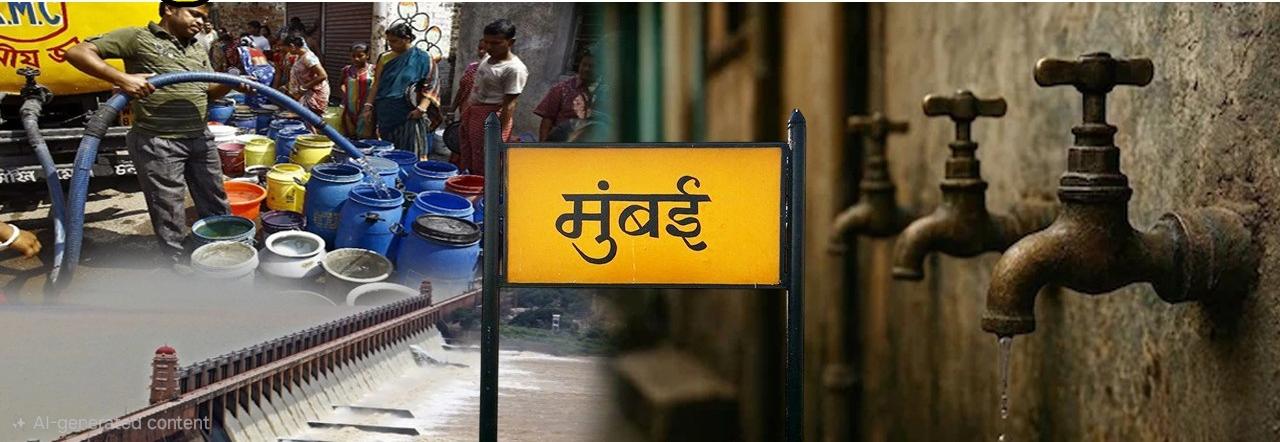
The Brihanmumbai Municipal Corporation has announced a 20% water supply cut across Mumbai due to low reservoir levels. The immediate conservation measures include a total ban on water for swimming pools and strict disciplinary action against the misuse of drinking water for non-essential washing and landscaping.
MUMBAI, INDIA — June 17, 2026 — The Brihanmumbai Municipal Corporation (BMC) has officially implemented an immediate 20% water supply cut across Mumbai and its surrounding metropolitan zones. Municipal administrative officials announced the structural rationing program on Wednesday, citing critically low storage reserves across the seven primary catchment reservoirs feeding the city.
The immediate enforcement comes as delayed monsoon precipitation strains municipal utilities, forcing civic authorities to protect remaining drinkable stock. The decision drastically alters daily resource management for millions of domestic residents, commercial complexes, and hospitality providers throughout the financial capital.
Strict Prohibitions on Swimming Pools and Non-Essential Use
To enforce the 20% water supply cut effectively, the BMC has instituted a zero-tolerance policy regarding non-essential water consumption. Under the emergency regulatory mandates issued by civic headquarters, the operation of all commercial and residential swimming pools across Mumbai has been suspended until further notice.
The municipal corporation has explicitly stated that potable drinking water cannot be directed toward filling recreational basins, washing commercial vehicle fleets, or executing decorative landscaping projects. Special civic surveillance teams are scheduled to patrol residential societies and industrial clusters to ensure compliance, with statutory authority to issue heavy monetary penalties and seize non-compliant utility connections.
Depleting Catchment Reservoirs Demand Preventive Action
The structural mandate for a 20% water supply cut stems directly from alarming water depth measurements compiled by the civic body's hydraulic engineering department. Mumbai relies on a complex network of seven localized lakes—Bhatsa, Upper Vaitarna, Middle Vaitarna, Tansa, Modak Sagar, Tulsi, and Vihar—to meet its baseline daily requirement of roughly 3,850 million liters.
According to technical briefs provided by hydraulic engineers, the collective usable content across these crucial catchments has dipped below critical safety margins. Civic authorities noted that while temporary reserve adjustments are common during high-summer transitions, the prolonged absence of steady catchment-area downpours has left municipal planners with no choice but to extend current stocks via early rationing.
Widespread Impact on Consumers, Businesses, and Housing Societies
The immediate impact of the municipal 20% water supply cut will be felt uniformly across all segments of the city’s economic and social strata. For everyday citizens and housing societies, the reduction means low pressure at domestic taps and restricted operational windows for municipal supply lines, necessitating strict internal rationing and water recycling protocols.
The commercial sector faces steep logistical adjustments. Hospitality businesses, structural construction sites, and multi-national commercial high-rises are forced to re-allocate capital toward private water tanker services to bridge their daily operational deficits. Market specialists warn that a prolonged supply cut could elevate operational overheads for small businesses and service providers, potentially increasing the retail price of water-dependent services across the city.
Official Sources Section
The directives, conservation rules, and technical data presented in this report originate from official municipal announcements and public health guidelines released by the hydraulic department of the Brihanmumbai Municipal Corporation (BMC). Storage percentages and weather monitoring projections were cross-verified using data published by the India Meteorological Department (IMD).
Quote Section
In an official public notification disseminated to regional residential welfare associations and corporate entities, municipal administrators clarified the rationale for the emergency constraints:
"According to officials, the implementation of the 20% water supply cut is a necessary preventive measure designed to manage Mumbai's drinkable reserves until steady monsoon rainfall fully replenishes the primary catchment lakes. Citizens must cooperate by eliminating non-essential usage."
Regarding enforcement protocols and punitive actions against property managers who violate the temporary rules, civic organizers stated that:
"Organizers stated that teams from the hydraulic and ward-level squads will conduct unannounced inspections. No water for swimming pools will be permitted, and immediate action against misuse of drinking water will be taken, including supply disconnection for repeat offenders."
Why It Matters
For civic planners and global urban investors, the water crisis in India's financial hub highlights the vulnerabilities of urban infrastructure to changing weather patterns. Implementing structural cutbacks before a complete depletion occurs ensures that essential healthcare facilities, public schools, and core emergency services maintain uninterrupted access to purified water, preventing larger public health emergencies.
Key Facts at a Glance
Rationing Volume: A mandatory 20% water supply cut enforced uniformly across the city.
Core Restriction: Total ban on using potable water for swimming pools, vehicle washing, and lawns.
Primary Cause: Delays in seasonal monsoon rainfall over the seven primary catchment reservoirs.
Target Audience: Affects all domestic households, housing societies, commercial hotels, and industrial zones.
FAQ Section
Why did the BMC implement a 20% water supply cut in Mumbai?
The cut was implemented as a preventive measure due to critically low water levels across the seven primary lakes and reservoirs that supply drinking water to the metropolitan region.
Are residential housing societies allowed to open their swimming pools?
No, the BMC has explicitly mandated that there will be no water for swimming pools, banning the use of municipal supply water for recreational basins.
What actions will be taken against individuals misusing drinking water?
Civic squads will carry out random inspections, and individuals found misusing water face stiff financial penalties, confiscation of equipment, or disconnection of their municipal lines.
How long are these emergency water restrictions expected to remain in place?
The 20% reduction and accompanying restrictions will remain active until monsoon rainfall significantly replenishes the catchment reservoirs to safe capacity levels.
Source: Brihanmumbai Municipal Corporation Official Civic Circular, BMC Hydraulic Engineering Department Lake Level Report, Regional Utility and Infrastructure Tracking Dashboard.