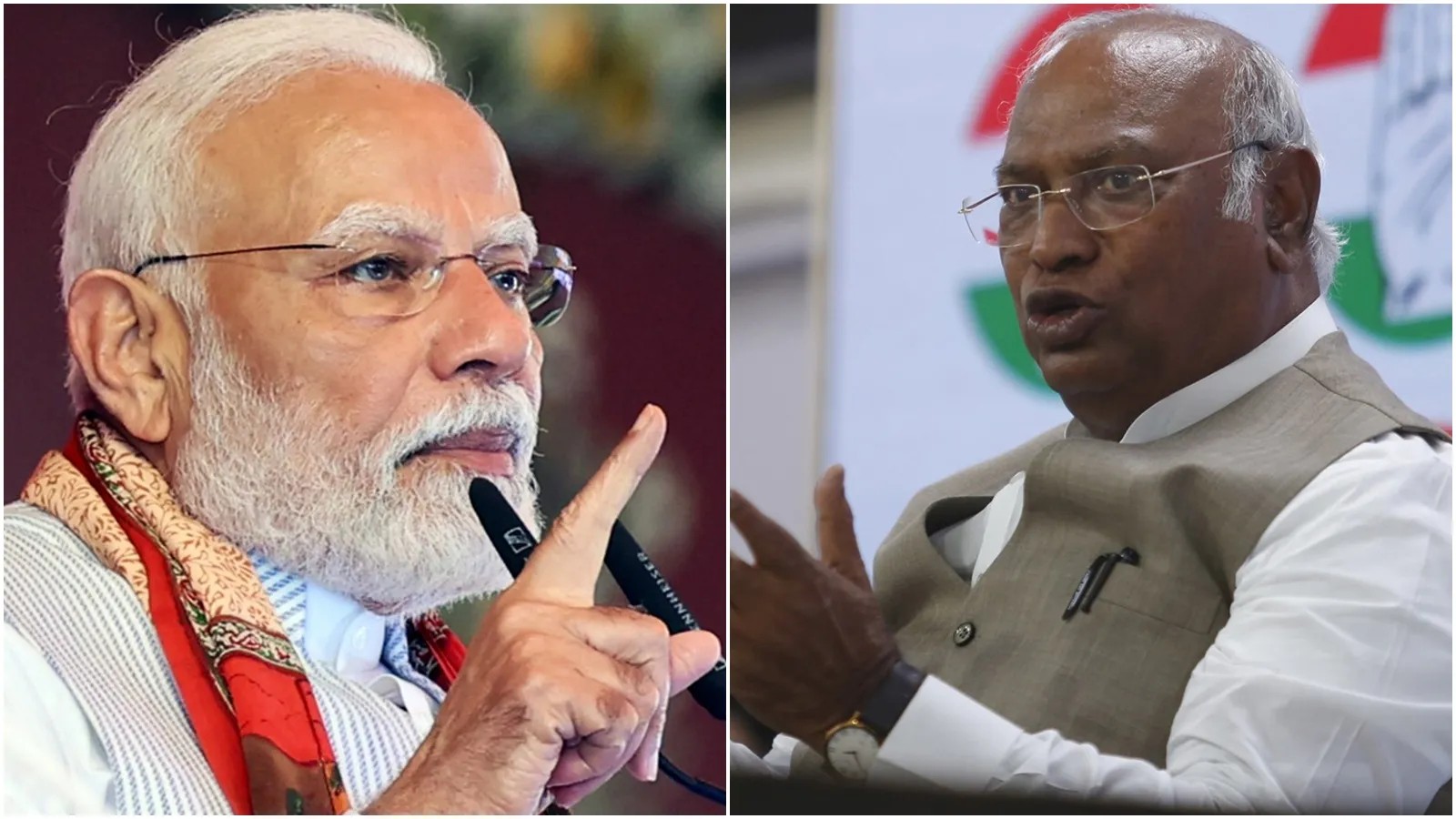
Six BJP Rajya Sabha MPs have filed a privilege notice against Leader of the Opposition Mallikarjun Kharge for allegedly using derogatory remarks against PM Narendra Modi. Rajya Sabha Chairman C.P. Radhakrishnan has referred the matter to the Committee of Privileges under Rule 203 for investigation and a report.
NEW DELHI, INDIA — June 17, 2026 — Six Bharatiya Janata Party (BJP) members of the Rajya Sabha have jointly submitted a formal breach of privilege notice against the Leader of the Opposition (LoP), Mallikarjun Kharge. The legislative filing accuses the senior Congress leader of utilizing "grossly derogatory, disparaging and highly disrespectful" remarks directed at Prime Minister Narendra Modi.
The parliamentary development escalated further on Wednesday after Rajya Sabha Chairman C.P. Radhakrishnan formally reviewed the complaint and transferred the matter directly to the Committee of Privileges for an immediate investigation. The dispute marks an intensifying institutional face-off within the Upper House today, as sharpening political rhetoric regarding national policy implementation faces stringent parliamentary code enforcement.
Technical Merits and Statutory Framework of the Notice
The formal privilege notice was filed under Rule 188 of the Rules of Procedure and Conduct of Business in the Council of States (Rajya Sabha). The moving legislators—comprising BJP MPs Brij Lal, Mithlesh Kumar, Sumitra Balmik, Shivesh Kumar, Sikander Kumar, and Nagendra Ray—contend that Kharge’s rhetorical statements constitute a continual and deliberate attempt to lower the institutional dignity of Parliament and its active membership.
According to a statutory notification circulated by the Rajya Sabha Secretariat, Chairman Radhakrishnan exercised his oversight powers on June 16, 2026, under Rule 203. This rule allows the chair to refer any question of privilege to the designated committee for structured examination, truth verification, and report formulation.
The Privileges Committee is chaired by Rajya Sabha Deputy Chairman Harivansh. The investigative panel includes prominent lawmakers such as Sudhanshu Trivedi, Deepak Prakash, Sumer Singh Solanki, Surendra Singh Nagar, Manan Kumar Mishra, and Independent MP Kartikeya Sharma.
Underlying Controversies and Political Context
The flashpoint behind the privilege motion traces back to sharp public statements issued by Kharge criticizing the Centre's handling of recurring examination leak scandals and the recent administrative restrictions placed on communication apps ahead of national re-tests. The Leader of the Opposition had sharply questioned the Prime Minister’s silence on youth unemployment and educational irregularities, accusing the executive administration of focusing on cosmetic damage control rather than structural accountability.
Moving MPs argued that the language employed by the Congress President breached the explicit boundary of healthy policy critique, transforming into personal disparagement targeting the office of the Prime Minister. Opposition strategists have conversely defended the comments, stating that rigorous accountability and aggressive verbal oversight are protected hallmarks of parliamentary democracy.
Systemic Impact on Governance and Legislative Focus
For citizens, domestic businesses, and political observers, the referral of the LoP to a privilege probe highlights the deepening polarization within India's top lawmaking body. When top-tier leaders become entangled in complex privilege procedures, the daily legislative schedule frequently experiences gridlock and unscheduled adjournments.
This friction directly risks delaying crucial economic, industrial, and digital regulatory bills scheduled for parliamentary debate. Furthermore, the development underscores an increasing institutional reliance on internal disciplinary codes to police political speech, altering how both treasury and opposition benches structure their debates on the house floor.
Official Sources Section
The baseline facts, procedural rules, and institutional declarations regarding this legislative dispute are drawn directly from official notifications distributed by Rajya Sabha Secretary General P.C. Mody. The organizational parameters have been cross-referenced with the digital repositories and statutory rulebooks maintained by the Parliament of India.
Quote Section
In the official parliamentary circular published by the Upper House administration, Rajya Sabha Secretary General P.C. Mody recorded the formal movement of the file:
"On consideration of the facts, the Chairman, Rajya Sabha has referred on 16 June, 2026, the matter under Rule 203 of Rules of Procedure and Conduct of Business in the Council of States (Rajya Sabha) to the Committee of Privileges for examination, investigation and report."
According to the text of the complaint filed by the six ruling party lawmakers, the rationale for seeking punitive intervention was explicitly detailed:
"According to officials, the notice was brought against Leader of Opposition Mallikarjun Kharge for alleged continual and deliberate use of grossly derogatory, disparaging and highly disrespectful remarks against the Prime Minister of India and thereby lowering the dignity of the Parliament and its members."
Why It Matters
For the broader public and institutional investors, the activation of the Privileges Committee serves as a key indicator of internal parliamentary stability. The final findings of the panel could lead to formal reprimands, establishing a modern precedent regarding the legal limits of political speech permitted by the Leader of the Opposition inside the chambers.
Key Facts at a Glance
Accused Party: Leader of the Opposition in the Rajya Sabha, Mallikarjun Kharge.
Complainants: Six BJP Rajya Sabha Members, including Brij Lal and Sumitra Balmik.
Statutory Framework: Notice initiated under Rule 188 and referred under Rule 203.
Investigative Body: The Rajya Sabha Committee of Privileges, chaired by Deputy Chairman Harivansh.
Core Grievance: Alleged deliberate and continual use of derogatory language targeting Prime Minister Narendra Modi.
FAQ Section
What exactly is a privilege notice in the Indian Parliament?
A privilege notice is a procedural mechanism that lawmakers can deploy when they believe a member has breached the code of conduct, misled the house, or insulted the institutional dignity of Parliament or its leadership.
What are the specific rules referenced in this case?
The notice was submitted under Rule 188, which governs the introduction of privilege questions, and was referred to the panel by the Chairman under Rule 203 of the Rajya Sabha rulebook.
What happens now that the matter has reached the Privileges Committee?
The committee, led by Deputy Chairman Harivansh, will conduct a detailed examination and investigation, interview relevant parties, and submit a formal report back to the Chairman.
Can Mallikarjun Kharge be disqualified because of this notice?
The committee generally recommends disciplinary actions ranging from formal house reprimands to temporary suspensions, but full disqualification is highly uncommon and subject to severe legal thresholds.
Source: Rajya Sabha Secretariat Official Notifications, Parliament of India Legislative Portal.