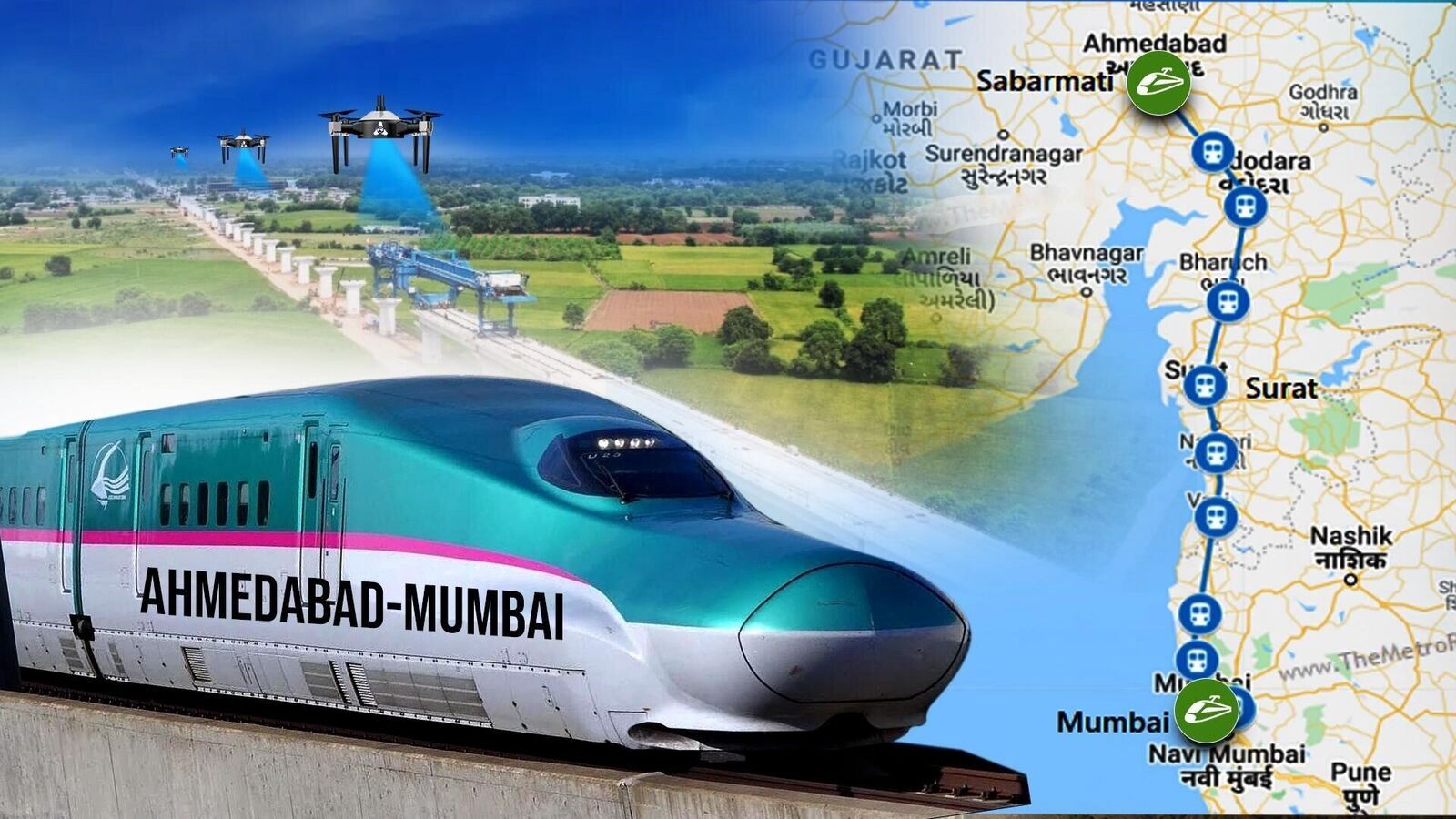
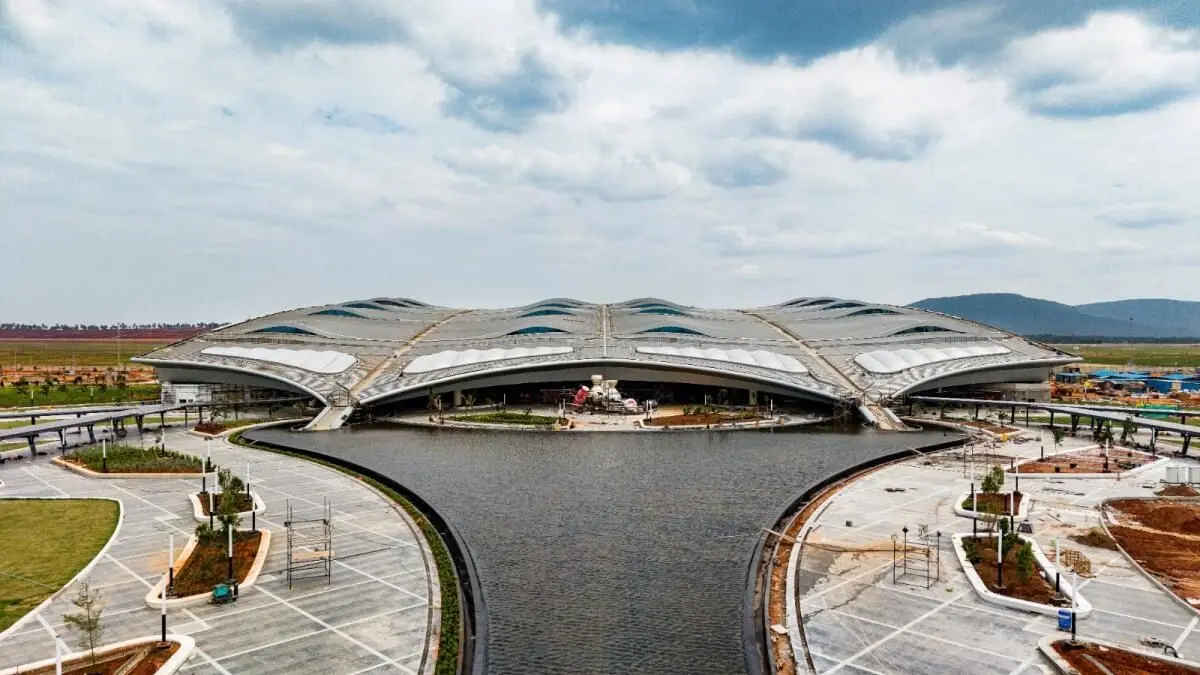
As construction ramps up on India's first high-speed rail corridor, official disclosures from the National High Speed Rail Corporation Limited highlight key milestones. While the diamond-inspired Surat station nears interior finishing, deep underground excavation advances at the Mumbai BKC terminal ahead of the anticipated August 2027 priority corridor launch.
With the August 2027 launch window approaching, official progress reports highlight advanced station structuring in Gujarat and deep underground excavation at the Mumbai terminal.
As construction advances across the Mumbai-Ahmedabad Bullet Train project, official updates released in August 2026 by the National High Speed Rail Corporation Limited (NHSRCL) reveal significant civil engineering milestones. Spanning a dedicated 508-kilometer high-speed rail corridor, the undertaking aims to drastically reshape passenger transit between India's financial hub and Gujarat’s commercial centers. While structural framing and roofing have reached advanced stages at regional hubs like Surat, technically challenging excavation continues at the underground Bandra Kurla Complex (BKC) terminal in Mumbai.
Station Architecture and Terminal Progress
The implementation of the Mumbai-Ahmedabad High-Speed Rail (MAHSR) corridor incorporates distinct architectural themes across its 12 planned stations. According to NHSRCL project releases, the Surat station features a roof and structural framework explicitly inspired by the city’s prominent diamond-cutting and polishing industry. Interior finishing, cladding, and ceiling installation are actively underway.
Key infrastructure milestones along the route include:
Mumbai BKC Terminal: Positioned as the project's starting point, this terminal is being built nearly 30 meters underground, featuring intensive tunnel boring machine (TBM) deployments for the Thane Creek undersea section.
Surat-Bilimora Priority Stretch: Civil works on the initial 50-kilometer operational sector are nearing completion, keeping the targeted launch window on track for August 2027.
Viaduct and Track Laying: Progressive construction figures record over 452 kilometers of pier construction and 209 kilometers of track-bed installation completed across the alignment.
Impact on Citizens, Commuters, and Regional Commerce
Once fully operational, the Shinkansen-based high-speed rail system is designed to run at speeds up to 320 km/h, reducing travel time between Mumbai and Ahmedabad to under two hours. For business travelers, logistics operators, and regional investors, the transition from multi-hour road journeys to a rapid rail link promises enhanced economic efficiency. Furthermore, transit-oriented development principles surrounding stations like Sabarmati and Surat are driving local real estate growth and creating thousands of direct and indirect engineering jobs.
Why It Matters
Deploying advanced high-speed rail technology establishes a new benchmark for national transport infrastructure. Cutting travel times between major economic zones fosters closer industrial integration and supports sustainable, long-term regional mobility.
Key Facts at a Glance
Total Corridor Length: 508.17 kilometers connecting Mumbai, Gujarat, and Dadra & Nagar Haveli.
Design Speed: Up to 320 km/h utilizing Japanese Shinkansen technology.
Priority Launch Window: Surat to Bilimora 50 km section targeted for August 2027.
Nodal Agency: National High Speed Rail Corporation Limited (NHSRCL).
FAQ Section
When is the first section of the Mumbai-Ahmedabad bullet train expected to open?
Official schedules project the opening of the initial 50-kilometer priority stretch between Surat and Bilimora by August 2027.
What makes the BKC station construction uniquely challenging?
The Bandra Kurla Complex terminal in Mumbai is being constructed nearly 30 meters underground, requiring intensive excavation and subterranean boring for the Thane Creek undersea tunnel section.
How long will the entire journey between Mumbai and Ahmedabad take?
Once the full corridor is operational, high-speed trains running at 320 km/h will cover the 508-kilometer distance in approximately two hours.
Where can citizens and stakeholders review official project construction updates?
Regularly updated media briefs, press releases, and progress logs are publicly accessible via the National High Speed Rail Corporation Limited (NHSRCL) Official Portal.
Source: National High Speed Rail Corporation Limited (NHSRCL) Official Portal, Press Information Bureau (PIB) Releases, The Economic Times Transport Desk, Asian News International (ANI) Reports