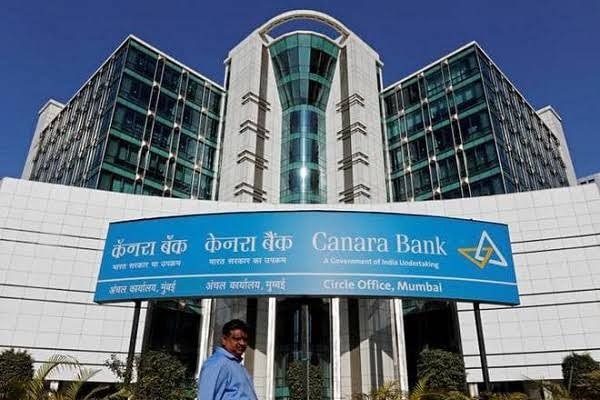
Canara Bank has kept its one-year Marginal Cost of Funds-Based Lending Rate (MCLR) completely unchanged at 8.75 percent. The public sector lender’s decision stabilizes financing terms across all key borrowing tenors, offering immediate interest rate predictability to retail loan consumers and commercial corporate enterprises following recent central bank monetary policy pauses.
BENGALURU — Canara Bank, one of India’s largest public sector financial institutions, announced on June 10, 2026, that it has maintained its key one-year Marginal Cost of Funds-Based Lending Rate unchanged at 8.75 percent. The decision to hold the benchmark steady comes immediately after the Reserve Bank of India (RBI) Monetary Policy Committee (MPC) opted to keep the sovereign repo rate paused at 5.25 percent for the third consecutive time. According to official regulatory filings submitted to the National Stock Exchange of India and the Bombay Stock Exchange, the state-owned lender reviewed its structural cost of funds and elected to preserve its broader lending rate architecture across key tenors to stabilize credit flow.
Macroeconomic Alignment and Lending Rate Stability
The operational decision by Canara Bank to leave its one-year MCLR unchanged provides considerable breathing room for both retail consumers and micro, small, and medium enterprises (MSMEs). The one-year tenure is particularly vital to the domestic credit market, as a substantial majority of long-term floating-rate personal loans, vehicle financing, and legacy home loans are benchmarked directly against this metric.
Financial analysts note that the bank's decision highlights a strategic pause following an aggressive cycle of deposit mobilization. Lenders across the Indian banking ecosystem had previously been lifting fixed deposit interest rates to attract long-term savings, which naturally drove up their internal marginal costs. By holding its lending rate steady this month, Canara Bank signals that its immediate funding pressures have stabilized, aligning closely with the central bank’s ongoing neutral-to-tight monetary policy stance.
Comprehensive Review of Multi-Tenor Lending Rates
Beyond the primary one-year anchor rate, the public sector lender confirmed that its entire marginal cost lending matrix will remain locked at the prior month's operational levels. The overnight and one-month tenors—which heavily dictate short-term commercial corporate credit lines, inventory working capital, and overnight call money transactions—remain securely positioned.
Operational Canara Bank Lending Benchmarks
| Tenor of MCLR | Current Applicable Interest Rate |
| Overnight MCLR | 7.90% |
| One-Month MCLR | 7.95% |
| Three-Month MCLR | 8.20% |
| Six-Month MCLR | 8.55% |
| One-Year MCLR | 8.75% |
| Two-Year MCLR | 9.00% |
| Three-Year MCLR | 9.05% |
The maintained pricing schedule ensures that fresh retail borrowers entering the credit market this month will lock in identical interest baselines compared to May. For existing corporate clients whose term loans undergo reset cycles in June, the parity eliminates the risk of an immediate spike in financing outlays.
Direct Impact on Consumers and Market Investors
For institutional investors monitoring Canara Bank equity (NSE: CANBK / BSE: 532483), the decision reflects a conscious management focus on preserving stable Net Interest Margins (NIM). Keeping the lending benchmark unchanged balances the need to shield borrowers from rising costs while ensuring the bank remains highly competitive against major public and private sector peers.
For Home and Vehicle Borrowers: Existing consumers whose floating-rate assets are linked to the one-year reset clause will see no change in their Equated Monthly Instalments (EMIs), provided their specific reset date falls within this review window.
For Commercial Businesses: Corporate entities utilizing three-month and six-month working capital limits can project fixed operational debt-servicing costs through the upcoming quarter.
For Modern Borrowers: New consumers should note that modern retail credits are frequently tied directly to the External Benchmark Lending Rate (EBLR), which tracks the RBI repo rate rather than internal banking cost formulas.
Official Sources Section
The pricing details have been structured entirely in accordance with the statutory disclosures mandated under prevailing banking transparency frameworks. Canara Bank disseminated the complete interest rate schedule via its official investor relations channels and regulatory filings submitted under compliance guidelines supervised by the domestic market watchdogs.
Quote Section
"According to officials familiar with the bank's asset-liability committee proceedings, internal funding matrices indicate that liquidity conditions remain completely adequate to support credit demand without altering the current yield baseline. The choice to maintain rates balances institutional margin management with consumer affordability."
Why It Matters
When major nationalized banks hold lending benchmarks steady, it acts as an anchor for the broader economy, preventing a cascading tightening of credit conditions. For everyday citizens dealing with elevated consumer living costs, this decision stops immediate inflation in home loan outlays. By maintaining predictable credit terms, the bank supports steady industrial output and corporate capital expenditure at a time when financial markets are carefully monitoring global macroeconomic shifts.
Key Facts at a Glance
Core Decision: Canara Bank officially maintains its crucial one-year MCLR unchanged at 8.75 percent.
Strategic Context: The interest rate freeze follows the Reserve Bank of India’s decision to hold the primary repo rate steady at 5.25 percent.
Short-Term Benchmarks: Shorter financing limits remain fully preserved, with the overnight rate resting at 7.90 percent and the six-month tenor at 8.55 percent.
Market Status: The newly re-confirmed interest rate schedule is fully effective immediately and will govern all subsequent credit allocations until the next scheduled institutional review.
Frequently Asked Questions (FAQ)
Will my existing home loan EMI drop because of this announcement?
No, your EMI will not drop. The lending benchmark has been kept unchanged rather than reduced, meaning your current interest outlays will stay flat when your specific loan reset date arrives.
How does the bank's internal cost of funds influence this rate?
The Marginal Cost of Funds-Based Lending Rate is calculated using the cost of fresh deposits raised by the bank. Because Canara Bank kept deposit rates relatively stable over the preceding weeks, its internal cost metrics did not necessitate an upward adjustment.
What is the difference between MCLR and Repo-Linked Lending Rates?
MCLR is an internal benchmark calculated based on the bank's specific cost of managing funds and deposits. Conversely, Repo-Linked Lending Rates are external benchmarks that move instantly whenever the Reserve Bank of India alters the country's main repo rate.
Source: