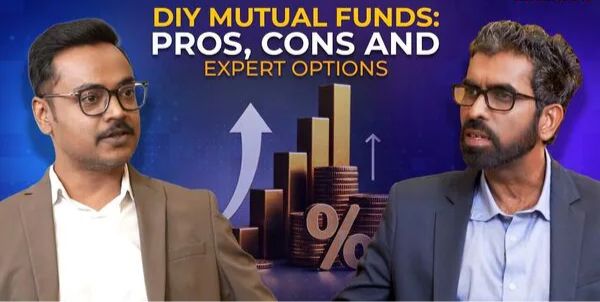
India’s Do-It-Yourself mutual fund boom has democratized market access for millions of retail investors. However, industry experts caution that unassisted digital investing exposes first-time participants to behavioral traps, heavy equity concentration, and market volatility, highlighting an urgent need for structured guidance and professional portfolio assistance.
Industry experts warn that India's massive DIY mutual fund boom requires structured guidance to protect millions of first-time retail participants from hidden market volatility.
As frictionless digital platforms democratize access to capital markets, over 5 to 6 crore Indians across more than 99 percent of the country's PIN codes have embraced Do-It-Yourself (DIY) mutual fund investing. However, according to industry disclosures published by leading financial platforms and market analysts in July 2026, this rapid growth has pushed lakhs of first-time investors into complex decision-making regarding asset allocation and fund selection. While technology has successfully solved the access problem, financial experts emphasize that the next phase of digital wealth creation will require curated advice and structured assistance to safeguard retail portfolios against cyclical market corrections.
Behavioral Traps and the Allure of Past Returns
A primary concern highlighted by market leaders is the tendency of unassisted investors to chase recent market outperformers. Driven by what behavioral psychologists term "cognitive conservation," retail participants often rely solely on visible 3-to-5-year return metrics, ignoring the cyclical nature of financial markets.
Key structural risks and behavioral hurdles identified across retail portfolios include:
The Equity Bias Trap: Less than 5 percent of non-institutional retail investors allocate capital to debt or arbitrage funds, leaving portfolios heavily vulnerable to equity drawdowns.
Thematic Over-Concentration: Sectoral and thematic funds have ballooned past 3.25 crore folios, exposing investors to prolonged and magnified risks during sector-specific downturns.
Emotional Impulse Trading: Lump-sum equity inflows tend to surge during market peaks and sharply taper off during corrections, violating core dollar-cost averaging disciplines.
Lack of Shock Absorbers: Omitting low-risk asset classes like liquid or fixed-income funds removes essential shock absorbers needed during major market corrections.
Impact on Retail Consumers and Wealth Management
For everyday consumers, unassisted direct-plan investing offers lower expense ratios and immediate portfolio visibility, but it places the entire burden of risk management on individuals who may lack formal training. Industry analysts note that without frameworks such as CRISP (consistency, risk, and investment style) or automated lifecycle rebalancing, retail investors risk making premature exits during historical market drawdowns, which have routinely seen equities experience 40 to 60 percent corrections. Consequently, wealth management platforms are increasingly transitioning toward hybrid models that blend digital autonomy with structural guidance.
Why It Matters
As millions of Indian households transition from traditional savings instruments to equity-linked mutual funds, ensuring that self-directed investors utilize structured evaluation frameworks is vital. Mitigating behavioral biases and preventing over-concentration in volatile sectors safeguards long-term national wealth accumulation against sudden market shocks.
Key Facts at a Glance
Participation Milestone: Over 5–6 crore Indians actively invest in mutual funds across 99% of national PIN codes.
Thematic Concentration: Sectoral and thematic funds exceed 3.25 crore folios, carrying elevated structural risks.
Historical Volatility: Broad equities have historically experienced drawdowns of 40–60% during major corrections.
Core Solution: Integrating structured frameworks like CRISP and lifecycle rebalancing into DIY platforms.
FAQ Section
Why is the DIY mutual fund boom raising concerns among financial experts?
While digital apps have simplified investment access, unassisted retail investors frequently chase past returns, overlook asset allocation, and concentrate capital in volatile thematic funds without professional guidance.
What is "cognitive conservation" in retail investing?
Cognitive conservation refers to the psychological tendency of investors to seek shortcuts when faced with complex decisions, leading them to rely solely on recent 3-to-5-year return metrics rather than evaluating underlying fund strategies.
Why are non-equity funds important in a balanced portfolio?
Low-risk avenues like liquid, arbitrage, and fixed-income funds act as shock absorbers during market corrections, preventing emotional panic exits and reducing overall portfolio volatility.
Where can investors find official data on mutual fund industry growth?
Official asset management metrics, investor statistics, and regulatory updates are published regularly by the Association of Mutual Funds in India (AMFI).
Source: Livemint, AMFI India