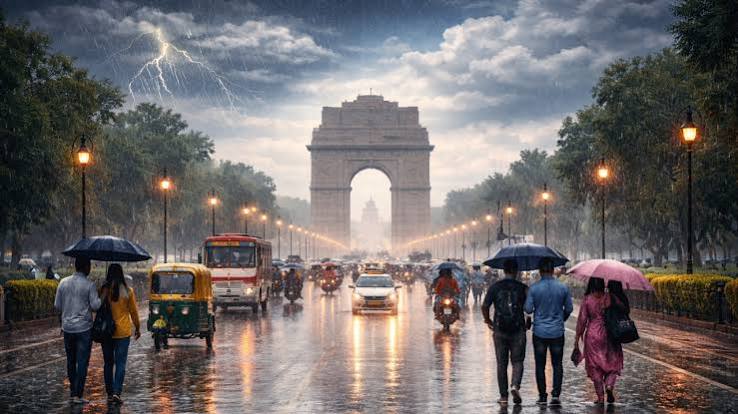
The India Meteorological Department (IMD) forecasts light rain and generally cloudy skies across New Delhi on Friday, August 1, 2026. The pleasant weather follows a month of above-normal monsoon precipitation in July, providing relief from summer heat while keeping municipal authorities alert to localized traffic disruptions across the National Capital Region.
NEW DELHI — The India Meteorological Department (IMD) forecasted light rain, drizzle, and generally cloudy skies across the National Capital Region (NCR) on Friday, August 1, 2026. According to official meteorological bulletins released from the regional weather forecasting center in New Delhi, the city is set to experience moderate temperatures alongside persistent cloud cover as August opens with active monsoon conditions across northwestern India.
The pleasant weather outlook follows an intense stretch of monsoon activity throughout July, during which Delhi recorded above-normal monthly precipitation figures that moderated summer heatwaves but created temporary urban waterlogging challenges.
Temperature Outlook and Meteorological Conditions
According to weather updates published by the IMD, maximum temperatures across the capital are expected to hover around 33°C to 34°C, while minimum temperatures are forecasted to settle near 25°C to 26°C. Relative humidity levels are projected to remain elevated between 75% and 90%, creating humid yet breezy weather conditions throughout the day.
Regional weather models indicate that the primary monsoon trough remains positioned close to its normal location across northern India, drawing moisture-laden easterly winds from the Bay of Bengal toward the National Capital Region. The interaction of these easterly winds with localized convective activity continues to trigger intermittent light to moderate rainfall over eastern, central, and southern sectors of New Delhi.
July Rainfall Totals and Seasonal Context
Official weather statistics confirm that New Delhi registered above-normal rainfall during July 2026, driven by several heavy precipitation spells toward the middle and end of the month. Data recorded at the Safdarjung Observatory—the primary weather station for the city—showed cumulative July rainfall exceeding long-period averages for the region.
The consistent rainfall helped replenish local groundwater reserves and improved ambient air quality metrics across the National Capital Region. However, intense single-day downpours during late July also caused localized waterlogging, temporary traffic congestion on major arterial roadways, and water accumulation in low-lying residential sectors.
Impact on Citizens, Daily Commuters, and Infrastructure
The IMD forecast carries direct practical implications for commuters, outdoor workers, and municipal bodies across the capital region:
For Daily Commuters: Light rainfall and overcast conditions are expected to keep afternoon temperatures comfortable, though scattered drizzle may cause minor traffic slow-downs during peak morning and evening rush hours.
For Municipal Services: Municipal corporations and drainage management departments maintain maintenance crews on standby to clear storm drains and prevent localized water accumulation along major transit corridors.
For Air Quality Index (AQI): Continued rainfall and active surface winds have maintained "Good" to "Satisfactory" Air Quality Index (AQI) levels across most monitoring stations in Delhi-NCR, according to Central Pollution Control Board disclosures.
Official Sources Section
According to official weather announcements, environmental reports, and government releases:
Quote Section
According to official weather bulletins and forecasts:
"According to officials, light rain and generally cloudy skies are expected to persist over New Delhi and surrounding areas, bringing pleasant weather conditions following above-normal rainfall recorded throughout the month of July."
Why It Matters
Sustained monsoon activity plays a vital role in regulating urban temperatures, maintaining air quality, and supporting water storage across Northern India. As New Delhi enters August, consistent light to moderate precipitation helps sustain favorable environmental conditions while limiting extreme heat risks for millions of residents across the National Capital Region.
Key Facts at a Glance
Weather Forecast: Light rain, drizzle, and overcast skies predicted for New Delhi on Friday, August 1, 2026.
Temperature Range: Maximum temperatures expected around 33°C to 34°C; minimum temperatures near 25°C.
July Context: The capital recorded above-normal precipitation throughout July 2026.
Air Quality: Rainfall activity maintains favorable AQI metrics across the capital region.
Frequently Asked Questions (FAQ)
What weather is expected in Delhi on Friday?
The IMD forecasts generally cloudy skies accompanied by light rain or drizzle across various parts of Delhi and the NCR.
How did Delhi's rainfall in July compare to historical averages?
According to official IMD records, Delhi received above-normal rainfall during July 2026, driven by multiple active monsoon spells.
What are the forecasted temperatures for the city?
Maximum temperatures are expected to reach around 33°C to 34°C, while minimum temperatures are likely to stay around 25°C to 26°C.
Where can residents check official weather advisories for Delhi?
Residents can view real-time meteorological reports and warnings on the official portals of the India Meteorological Department and the Government of NCT of Delhi.
Source: India Meteorological Department, Central Pollution Control Board, Government of NCT of Delhi