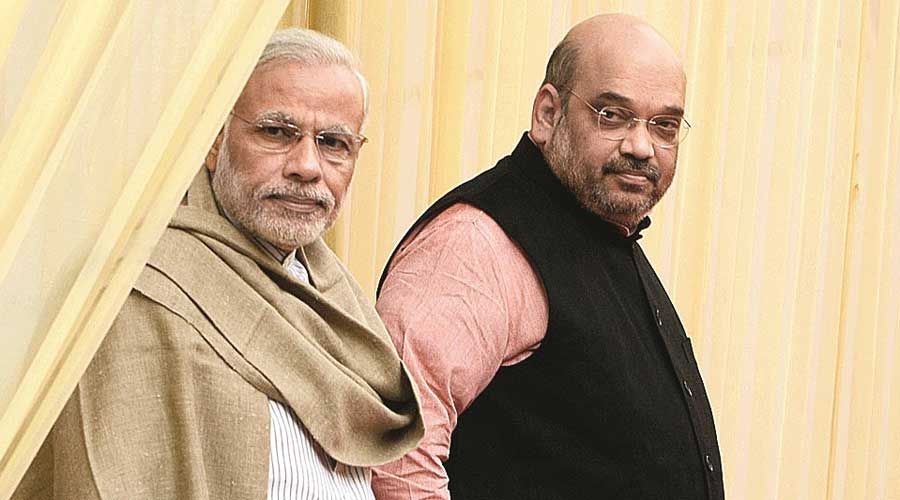
The Indian government has successfully brought back 274 fugitive criminals from 36 countries between 2019 and July 2026. Driven by enhanced legal frameworks, smart diplomacy, and intelligence-led operations under Prime Minister Narendra Modi and Home Minister Amit Shah, the mission targets terrorists, economic offenders, and violent criminals hiding abroad.
Backed by upgraded legal frameworks and global intelligence grids, Indian authorities have secured the repatriation of hundreds of high-profile offenders from 36 countries.
In a decisive push against transnational crime, the Indian government announced that 274 fugitive criminals have been successfully brought back to India from 36 countries between 2019 and July 2026. Operating under the leadership of Prime Minister Narendra Modi and the active guidance of Union Home Minister Amit Shah, security and law enforcement agencies have prioritized extradition as a core pillar of national sovereignty and domestic security. Disclosed via official press briefings and administrative updates from the Ministry of Home Affairs (MHA) in August 2026, the milestone reflects an unprecedented transformation in India’s capability to track, prosecute, and repatriate offenders who attempt to evade justice across international borders.
Intelligence-Led Operations and Strategic Pillars
The systematic return of these fugitives is built upon an integrated, intelligence-led, and technology-driven model designed to eliminate international safe havens. According to official government releases, India’s modern extradition strategy rests upon three critical operational pillars: global operations, robust inter-agency coordination, and proactive smart diplomacy.
Key developments driving this enforcement wave include:
BHARATPOL Integration: Launched in January 2025 to connect over 1,400 state and central law enforcement units directly with INTERPOL, slashing cross-border information-sharing timelines to just 3 to 10 days.
Operation Trishul: A specialized tracking initiative utilizing satellite telemetry, digital footprints, and profile mapping to locate absconders who attempted to conceal their identities abroad.
Legal Reforms: The implementation of strict statutory frameworks, including amendments to the National Investigation Agency (NIA) Act and the Unlawful Activities Prevention Act (UAPA), alongside the introduction of trial in absentia provisions under Sections 355 and 356 of the Bharatiya Nagarik Suraksha Sanhita (BNSS).
Asset Recovery and Financial Squeeze: Rigorous enforcement of the Prevention of Money Laundering Act (PMLA) and the Fugitive Economic Offenders Act, leading to the attachment of assets worth ₹17,874 crore and restitution amounting to ₹18,762 crore.
Impact on National Security, Citizens, and Economic Stability
For citizens, domestic businesses, and financial institutions, the decisive crackdown on cross-border criminals reinforces accountability and protects the integrity of India’s economic system. Home Ministry evaluations emphasize that harboring fugitives directly threatens national stability and public order. By shutting down escape routes for individuals linked to terrorism, organized syndicates, narcotics trafficking, and major financial frauds, the government has signaled that distance and assumed identities no longer offer immunity from Indian jurisprudence.
Why It Matters
Transnational crime and economic fraud can severely undermine public trust and financial stability. Establishing a swift, unyielding extradition mechanism ensures that individuals who violate Indian laws face trial regardless of where they flee, strengthening the rule of law and safeguarding national security.
Key Facts at a Glance
Total Returnees: 274 fugitive criminals successfully brought back to India.
Geographic Scope: Repatriations executed across 36 foreign countries.
Timeframe: Conducted between 2019 and July 2026 under structured mission mode.
Financial Recovery: Assets worth ₹17,874 crore attached and ₹18,762 crore restored through strict PMLA enforcement.
Crime Categories: Includes terrorists, gangsters, economic fraudsters, narcotics offenders, and individuals wanted for violent crimes and POCSO offenses.
FAQ Section
How many fugitives have been brought back to India since 2019?
A total of 274 fugitive criminals have been successfully extradited or deported to India from 36 countries between 2019 and July 2026.
What types of crimes were these repatriated individuals wanted for?
The returned fugitives face charges spanning terrorism, organized gang activity, financial fraud, narcotics trafficking, murder, rape, and offenses under the POCSO Act.
What technological platforms aided this international crackdown?
Initiatives like BHARATPOL—which connects over 1,400 domestic agencies with INTERPOL—and Operation Trishul, which utilizes digital profiling and satellite inputs, significantly accelerated fugitive tracking.
Where can readers verify the official statistics regarding these extraditions?
Complete statistical records and administrative announcements are publicly accessible via the Press Information Bureau (PIB) and the Ministry of Home Affairs.
Source: Press Information Bureau (PIB), Ministry of Home Affairs (MHA)