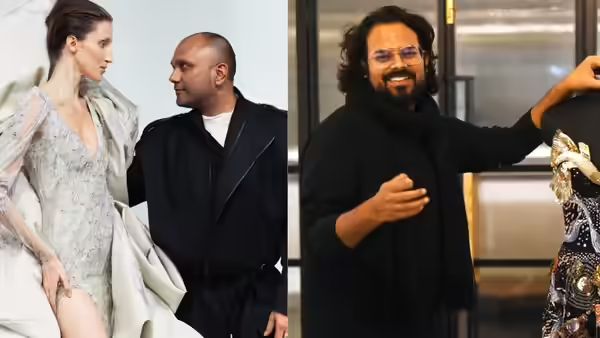
Five visionary Indian designers, Rahul Mishra, Gaurav Gupta, Anamika Khanna, Manish Arora, and Vaishali Shadangule, have broken into the elite Paris Fashion Week circuit. By merging ancestral heritage crafts, like Zardozi and raw handlooms, with modern architectural silhouettes, they have successfully transformed regional craftsmanship into globally recognized luxury couture.
PARIS, FRANCE — A distinct contingent of visionary Indian fashion designers has fundamentally reshaped the landscape of global high fashion by integrating ancient domestic heritage crafts into the highly exclusive calendars of Paris Fashion Week and Haute Couture Week.
This historic design movement has successfully transitioned traditional Indian textiles from local artisanal heritage into highly collectible global luxury art. Supported by growing international institutional recognition, these structural showcases have definitively proven that South Asian design talent goes far beyond simple commercial occasionwear, presenting a masterclass in modern construction, textile sustainability, and unparalleled hand craftsmanship.
The Trailblazers of the Parisian Runway
According to comprehensive historic collection logs curated by La Fédération de la Haute Couture et de la Mode (FHCM), the governing body of French fashion, the inclusion of Indian designers has steadily evolved from solitary, independent occurrences into consistent, official seasonal calendar selections.
These individual designers did not simply mimic Western tailoring; they actively forced the international fashion press to acknowledge Indian craft as serious intellectual capital rather than mere outsourced factory labor.
Five Masters of Heritage Craft and High Fashion
The global premium sector has been significantly impacted by five distinct design houses that successfully utilized localized Indian craft to disrupt the Parisian high-fashion ecosystem.
1. Rahul Mishra: The Narrative Embroiderer
In 2020, Rahul Mishra made history as the first Indian designer invited to showcase on the official Paris Haute Couture Week runway. His design framework centers on highly complex, museum-grade technical embroidery. By utilizing thousands of regional artisans across Indian villages, Mishra translates ecosystems—like coral reefs, overgrown jungles, and the artwork of Gustav Klimt—into hyper-detailed threadwork, Zardozi, and meticulous hand-embellishment techniques.
2. Gaurav Gupta: The Sculptural Illusionist
Securing a recurring guest membership on the Paris calendar, Gaurav Gupta blends a futuristic, avant-garde aesthetic with historical Indian garment construction. Known for his "Divine Androgyne" structural concepts and cosmic-inspired canvas dresses, Gupta maps the human form using precision draping and silver gear embroidery. His architectural gowns are highly sought after by tier-one international stylists, dressing icons like Beyoncé, Cardi B, and Lady Gaga.
3. Anamika Khanna: The Deconstructionist Rebel
Breaking barriers in 2007 as the first Indian woman to showcase independently at Paris Fashion Week, Kolkata-based Anamika Khanna earned critical acclaim by completely deconstructing traditional South Asian attire. She took classical elements like the saree, dhoti, and lehenga, and integrated them with 21st-century Western tailoring, raw textiles from Bengal, asymmetrical layers, and unexpected industrial closures like heavy zippers and structured waistbands.
4. Manish Arora: The Maximalist Pioneer
Long before modern institutional investments, Manish Arora injected an explosive dose of hyper-saturated color, theatricality, and psychedelic kitsch onto the Paris runways starting in 2007. Arora successfully merged traditional Indian gold work with modern, pop-art maximalism. His historic design footprints paved the way for subsequent generations, demonstrating that Indian aesthetics could be incredibly playful, cutting-edge, and irreverent.
5. Vaishali Shadangule: The Handloom Innovator
Debuting on the official Paris Couture calendar in 2021 under her label Vaishali S, Shadangule took a radically different path by avoiding heavy surface embellishments altogether. Instead, her high-fashion language relies entirely on the architectural manipulation of raw, handwoven Indian textiles, including Khadi, Chanderi, and indigenous Maheshwari weaves. Her collections showcase how raw, sustainable organic threads can be molded into fluid, ocean-inspired wearable luxury art.
Official Sources Section
The show schedules, designer profiles, historic milestones, and fashion collection parameters highlighted inside this premium journalistic report are drawn directly from official seasonal archival registries maintained by La Fédération de la Haute Couture et de la Mode (FHCM). Additional retrospective data has been cross-referenced with public designer retrospectives published by the Victoria and Albert Museum and real-time market data monitored by The Times of India and Luxebook India.
Quote Section
"In the age of artificial intelligence, India's core strength lies in exporting reality—genuine art, slow craft, rich heritage culture, and the irreplaceable human touch. If we systematically nurture this opportunity, more Indian designers will rightfully command the global luxury stage."
— Rahul Mishra, Haute Couture Designer, in an industry brief on international expansion
Why It Matters
For global luxury consumers, international retail buyers, and textile conservationists, this ongoing Parisian breakthrough marks a permanent pivot toward conscious, slow luxury. Moving beyond standard fast-fashion factory cycles, the high-profile visibility of these five designers ensures that thousands of hereditary Indian weavers and embroidery masters receive fair-wage compensation, sustainable employment, and international creative credit. It fundamentally changes India's global positioning from a historical backend manufacturing hub to a primary source of front-end luxury design.
Key Facts at a Glance
Institutional Pivot: Indian design houses have shifted from independent off-schedule trunk shows to holding official, permanent slots on the FHCM Paris calendar.
Artisanal Preservation: This high-fashion movement provides sustainable livelihood infrastructure directly to thousands of rural Indian handloom weavers and embroidery craftsmen.
Celebrity Validation: Strategic red-carpet placements on major figures like Beyoncé, Cardi B, and Zendaya have solidified commercial retail viability for these brands in Western markets.
Textile Innovation: Designers like Vaishali S utilize pure, sustainable indigenous weaves to craft structural silhouettes without relying on standard commercial synthetic fabrics.
Frequently Asked Questions (FAQ)
Which Indian designer was the first to show on the official Paris Haute Couture calendar?
Rahul Mishra became the first Indian designer to be officially invited by the French governing body to exhibit on the official Paris Haute Couture calendar in 2020.
How do these designers balance traditional craft with modern Western trends?
Instead of copying Western silhouettes entirely, these couturiers use traditional techniques like Zardozi embroidery, handloom weaving, and classical drapes, but apply them to avant-garde, asymmetrical, or highly structured modern garment patterns.
Why is this shift important for the rural Indian artisan ecosystem?
Historically, international luxury houses outsourced embroidery to India without public credit. By showing under their own labels in Paris, these Indian designers ensure that the intellectual capital, credit, and financial rewards flow directly back to the local artisanal communities.
Source: La Fédération de la Haute Couture et de la Mode Seasonal Archives, The Times of India Fashion Registry, and the Victoria and Albert Museum Design Studies Database.