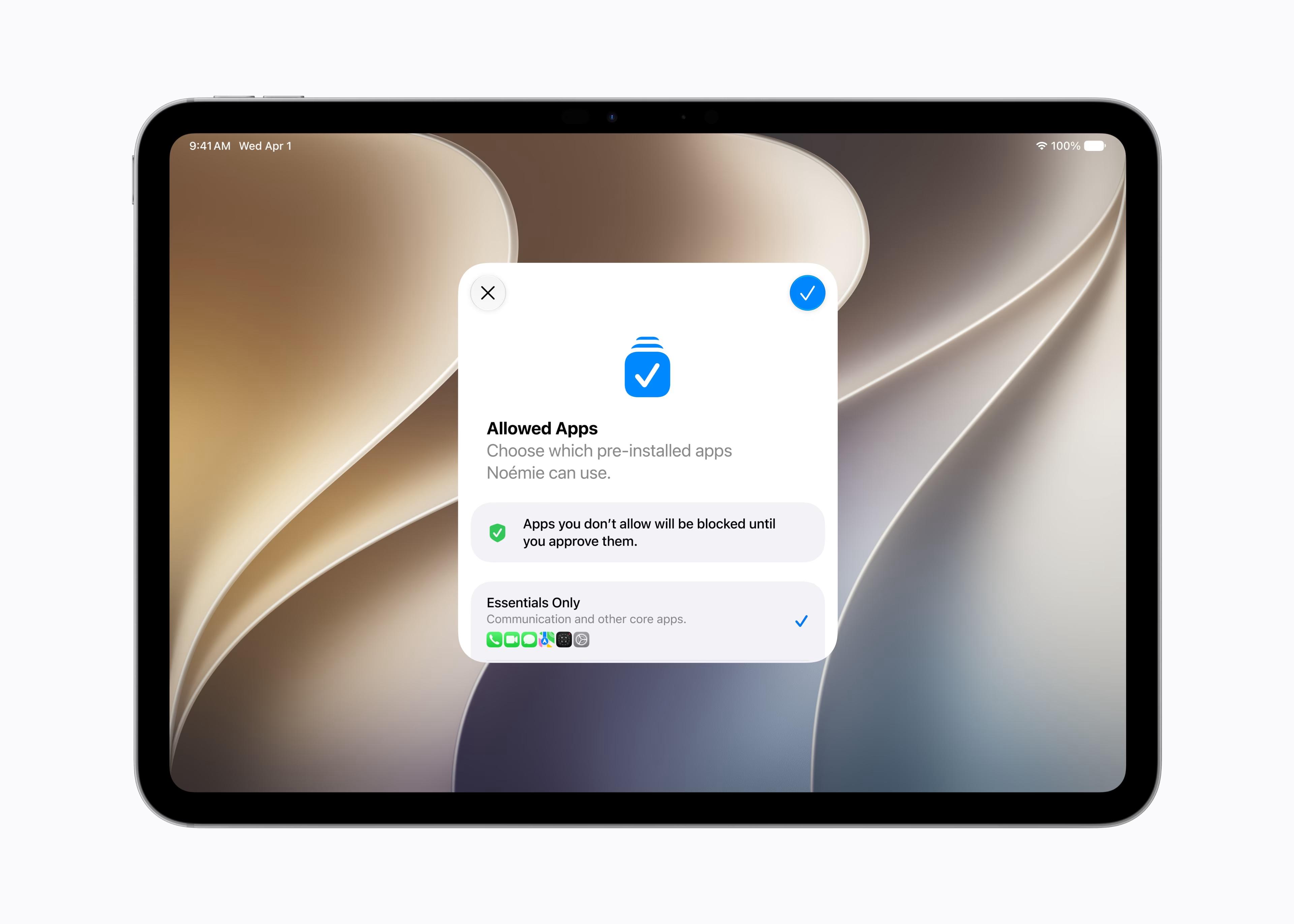
Apple's mandatory new Child Account framework for iOS 27 has sparked significant privacy concerns among data protection advocates. While designed to give parents deep control over web browsing, media consumption, and communication logs, critics warn that the centralized tracking of a minor's metadata creates severe risks to youth digital autonomy.
CUPERTINO, California — At its recent Worldwide Developers Conference (WWDC 2026), tech giant Apple officially unveiled an aggressive overhaul of its family safety suite, placing an upgraded, structured Child Account framework at the absolute center of iOS 27, iPadOS 27, and macOS 27.
While praised by parenting groups for giving families granular control over device usage, the strict enforcement of the software has immediately ignited severe backlash from digital rights organizations. Critics argue that the system's invasive monitoring tools, centralized data logs, and mandatory data sharing mechanisms present significant data protection risks. By transforming the personal smartphone into an aggressive surveillance hub, the platform may fundamentally undermine a minor's fundamental right to digital privacy.
The Anatomy of the New Parental Overhaul
According to technical specifications released by Apple’s health and engineering divisions, the newly updated Child Account system is now completely mandatory for all device users under the age of 13, with extended monitoring available for teenagers up to 18.
The system operates via a deeply integrated group of tracking systems managed directly through Apple's Family Sharing network. The core upgrades include several highly restrictive data-capture tools:
Ask to Browse: This feature forces the Safari browser to block any unapproved URL. When a minor attempts to access a new domain, the web address is intercepted and packaged into a notification routed directly through Apple's cloud infrastructure to a parent's Messages app.
Contact Approval Protocols: Children are blocked from adding new phone numbers or email addresses autonomously. Every communication attempt by an unapproved party is logged and held until a parent reviews the identity.
Expanded Communication Safety: Previously restricted to identifying nudity, the updated on-device artificial intelligence model now scans all incoming and outgoing images and videos for signs of graphic violence or gore.
The Privacy and Data Protection Paradox
The primary point of friction between Apple's safety positioning and international privacy advocates centers on the concepts of data minimization and surveillance normalization. While Apple maintains its historic privacy-first stance by processing sensitive media using local, on-device machine learning rather than cloud servers, data protection experts note that the metadata created by these features is inherently high-risk.
The Metadata Exposure Vector
By forcing every web navigation request and contact addition to pass through an external approval pipeline, the Child Account architecture builds a highly detailed ledger of a minor's psychological, social, and exploratory behaviors. If a parent's primary Apple Account or connected Apple ID is compromised via standard phishing or device theft, malicious actors instantly gain access to a comprehensive behavioral map of the child.
The Battle Over Age Verification
Digital advocacy networks, including the Electronic Frontier Foundation, have raised warnings regarding how Apple intends to enforce its mandatory under-13 Child Account classification globally. Because Apple has historically lobbied aggressively against rigid public online age-verification laws to protect user anonymity, the company's internal mechanisms for determining a user's true biological age without collecting biometric or government documentation remain deeply ambiguous.
The Fine Line of Digital Wellbeing
"Our approach to helping families create safer digital experiences is grounded in the belief that every child is unique," stated Dr. Sumbul Desai, Apple’s Vice President of Health and Fitness, during the official press preview. "That’s why we build simple and intuitive tools, based on expert guidance, to let parents tailor their kids' digital journey."
Official Sources Section
The technical frameworks, software version dependencies, corporate statements, and systemic parameters documented in this legal and privacy analysis are drawn directly from official press documentation at the Apple Newsroom Product Preview Portal, the authorized Apple Legal Family Privacy Disclosure Archive, and developmental API briefs released during WWDC 2026.
Quote Section
"According to officials and cybersecurity analysts evaluating the upcoming iOS 27 infrastructure, centralized family tracking frameworks inherently increase the target surface area for localized data leaks," noted privacy compliance teams reviewing the system's deep cross-device syncing.
Addressing the potential psychological and security implications of the new mandatory data ecosystem, independent consumer safety analysts stated that:
"When a computing ecosystem systematically conditions a child to accept that every web click, social contact, and personal photo is actively logged, filtered, and reported to a third party, it completely breaks down their healthy understanding of personal digital boundaries. The long-term risk isn't just data security—it's the corporate normalization of total surveillance."
Why It Matters
For data regulators, tech investors, and everyday consumers, Apple's Child Account pivot represents an important shift in the global tech landscape. Faced with mounting global regulatory pressure to protect children from online harms, Apple is using its hardware ecosystem to block inappropriate content before it ever hits a third-party app. However, by solving a regulatory safety problem, they have created a new privacy dilemma. Forcing minor accounts into a highly controlled data structure means that true digital privacy is fast becoming a luxury restricted only to adults.
Key Facts at a Glance
Mandatory Enrolment: The newly updated Child Account framework is legally and technically mandatory for all users under 13 within Apple's ecosystem.
URL Interception: The brand-new "Ask to Browse" feature routes unapproved web addresses directly to a parent's personal device for manual review.
AI Content Scanning: On-device machine learning models have been expanded to automatically scan and block images containing violence or gore.
Metadata Leak Risks: Security firms warn that compromising a parent's primary Apple ID unlocks an explicit behavioral map of the connected minor.
Frequently Asked Questions (FAQ)
Does Apple see the private photos scanned by the Child Account safety system?
No. According to Apple's official privacy disclosures, all image and video scanning for nudity or violence is performed entirely on-device using local machine learning. Apple does not receive notifications, image logs, or access keys regarding flagged content.
Can a teenager turn off the Child Account tracking features independently?
For children under 13, the controls are hardcoded and managed exclusively by the organizer of the Family Sharing group. For teenagers aged 13 to 17, the age-based safeguards are active by default, though configuration access depends on the specific permissions set up by the parent via the Screen Time passcode.
How does the "Ask to Browse" feature handle non-Safari web browsers?
Apple's documentation confirms that the underlying safety protocols hook directly into core system-level APIs. This means that website approval restrictions will apply universally across Safari and other WebKit-supported web browsers operating within the updated operating system.
Source: Apple Global Newsroom Product Archive, Apple Legal Privacy Policy and Parent Disclosure Index, and independent developer analysis from the World Wide Web Consortium (W3C) privacy tracking desks.