The Indian Government has detailed a major 12-year transformation of its railway network. Key achievements include hitting a 99.6% broad-gauge electrification rate, launching the highly popular Vande Bharat Sleeper train, and opening mega-engineering projects like the Chenab Bridge, the world’s highest railway arch bridge.
NEW DELHI, India — The Ministry of Railways has released a comprehensive performance blueprint outlining a massive transformation of India's rail network over the past 12 years.
According to an official corporate and operational fact sheet issued on Wednesday, June 10, 2026, the state-run transport monopoly has shifted away from fragmented project execution into an integrated, high-speed engineering infrastructure. The flagship markers of this decade-plus modernization campaign include the successful structural integration of the historic Chenab River arch bridge, the deployment of high-capacity Vande Bharat Sleeper trains, and the near-total 99.6% network electrification of the country's extensive broad-gauge routes. These milestones collectively position the network as a clean, sustainable transit system outpacing major global peers.
Sovereign Steel: Conquering the Himalayan Terrain
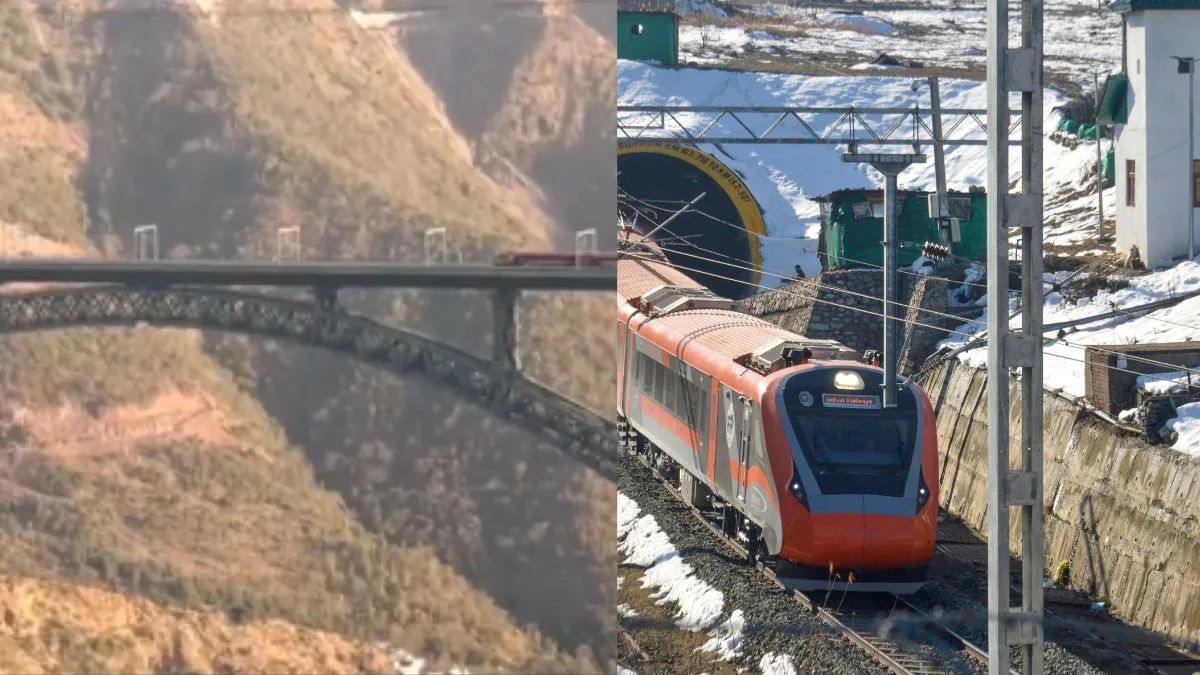
According to technical briefs finalized by project engineers, the completion of the Udhampur-Srinagar-Baramulla Rail Link (USBRL) stands out as a top historic achievement. The engineering centerpiece of this mountain corridor is the Chenab Rail Bridge, officially recognized as the world's highest single-arch railway bridge.
Rising 359 meters above the active riverbed—making it 35 meters taller than the Eiffel Tower—the 1,315-meter-long steel structure connects remote Himalayan valleys directly to the national mainland grid. Built with specialized structural steel optimized to withstand temperature extremes ranging from minus 10 to 40 degrees Celsius, the bridge can endure wind speeds up to 260 kilometers per hour.
To support local security frameworks, the structural design incorporates blast-resistant features developed in tandem with the Defence Research and Development Organisation (DRDO) to withstand large-scale explosions up to 40 tonnes of TNT.
The Clean Energy Pivot: Redrawing the Global Grid
The strategic data highlights a massive acceleration in the execution of the railway network's eco-friendly goals. As of mid-2026, India's broad-gauge rail electrification share has scaled to 99.6%, successfully energizing 70,002 route kilometers out of a total 70,271 route kilometers.
Leading the Global Clean Energy Race
"With broad-gauge network electrification touching 99.6%, Indian Railways has moved substantially ahead of major global networks including China, which stands at an 82% electrification share, and the United Kingdom at 39%," stated the Press Information Bureau (PIB) in its official infrastructure summary.
This grid overhaul is paired with a severe reduction in train accidents, which dropped from 135 in the 2014–15 fiscal cycle to approximately 16 in the most recent term. This 90% drop in accidents is largely attributed to the scaled deployment of Kavach 4.0, India’s indigenous Automatic Train Protection (ATP) platform, which is actively operating across the high-density Delhi–Mumbai and Delhi–Howrah travel corridors.
Next-Generation Fleets and Station Rejuvenation
For daily commuters and travelers, the visual signature of this 12-year transformation is the expansion of premium, indigenously manufactured train sets. As of the second quarter of 2026, 162 unique Vande Bharat Express services are fully active across domestic states.
The newest branch of this fleet, the premium Vande Bharat Sleeper, completed its initial launch phase with 100% passenger occupancy recorded across 119 long-distance trips. For lower- and middle-income families, the ministry deployed 60 low-tariff Amrit Bharat Express trains to ensure affordable long-distance mobility. Concurrently, under the targeted Amrit Bharat Station Scheme, the department has finalized the structural modernization of 208 central stations out of 1,338 hubs selected for total aesthetic and digital upgrades.
Official Sources Section
The infrastructure data, project costs, speed parameters, safety statistics, and international comparisons used in this journalistic report are drawn directly from certified data sets issued by the Press Information Bureau (PIB) New Delhi Desk, the regional project portfolios of the Ministry of Railways, and the capital expenditure sheets archived by the Ministry of Finance.
Why It Matters
For industrial logistics networks, consumers, and institutional market investors, these achievements bring significant economic advantages. Moving from a diesel-reliant model to an electrified grid saves billions in foreign fuel imports and drops the logistics turnaround times for manufacturing freight. The opening of deep-mountain assets like the Chenab Bridge and the Pamban vertical-lift sea bridge opens year-round access to remote regions, boosting tourism and ensuring smooth, all-weather supply movements for the military along strategic borders.
Key Facts at a Glance
Electrification Milestone: Broad-gauge route electrification has hit 99.6% ownership, placing India ahead of the UK and China.
Engineering Record: The 359-meter-high Chenab Bridge is officially operational as the planet's highest single-arch rail structure.
Fleet Performance: The newly launched Vande Bharat Sleeper train recorded 100% occupancy across its opening 119 long-distance runs.
Safety Integration: Deploying Kavach 4.0 ATP systems helped drive a 90% reduction in major train accidents over a 12-year window.
Northeast Expansion: Commissioning the Bairabi–Sairang line connected Mizoram’s capital to the national rail network for the first time.
Frequently Asked Questions (FAQ)
How does the Kavach 4.0 system actively prevent train collisions?
The Kavach Automatic Train Protection system utilizes high-frequency radio communication and trackside sensors to continuously monitor train positions. If a locomotive pilot fails to respect signal boundaries or if two trains enter the same track block, the system automatically applies the brakes without human intervention.
Is the entire Indian Railways network running on 100% renewable electricity?
While 99.6% of the physical lines are electrified to eliminate direct diesel locomotion, the power running through the overhead lines comes from the national grid. However, the ministry is rapidly building dedicated large-scale solar and wind plants to transition toward its goal of becoming a net-zero carbon emitter.
When will the Mumbai–Ahmedabad High-Speed Bullet Train project become operational?
According to National High Speed Rail Corporation Limited updates, major milestones have been met, with over 331 kilometers of elevated viaducts and 410 kilometers of piers completed. Sea and land tunneling works across Maharashtra remain underway to prepare for initial high-speed trials.
Source: Press Information Bureau (PIB) Government of India Archive, Ministry of Railways Infrastructure Fact Sheet, and global rail electrification indexes managed by the International Union of Railways (UIC).