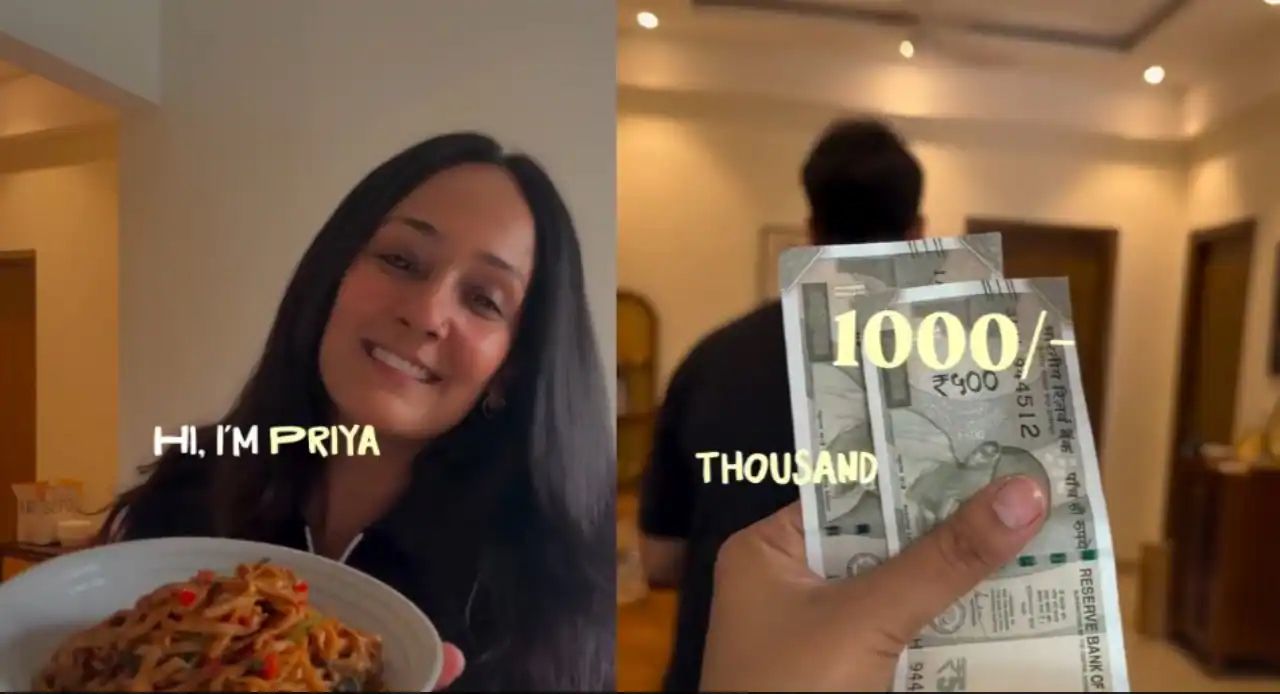
A Gurgaon-based food content creator has ignited a fierce online debate after revealing that her husband pays her Rs 1,000 for every cafe-style meal she prepares. While critics condemned the arrangement as materialistic, Priya clarified that the financial contract is a symbolic gesture recognizing the invisible labor of domestic cooking.
A viral social media video detailing a financial arrangement between a married couple for gourmet home cooking has sparked widespread debate over unpaid domestic labor.
Opening Paragraph
In an era where digital content frequently blurs the lines between personal life and public commentary, a food creator residing in Gurgaon has captured national attention with an unconventional domestic arrangement. Priya, a food content creator and former fashion designer, went viral on Instagram after revealing that her husband transfers Rs 1,000 every time she prepares a restaurant-quality, cafe-style meal at home. The video, which has garnered over 1.2 million views, ignited a massive online debate regarding marital expectations, the economic valuation of household labor, and how modern couples choose to distribute domestic responsibilities.
Origins of the Thousand-Rupee Meal Contract
The arrangement began shortly after the couple married in 2023, evolving from casual banter into a structured household routine. According to statements shared by Priya across media interviews and platform updates, the concept originated during discussions about sharing household burdens fairly. Rather than accepting cooking as an automatic, uncompensated expectation solely tied to her role as a wife, the couple established what she humorously termed a "financial contract."
Her husband, an architect who operates his own design firm, supported the idea, noting that he would readily spend equivalent sums dining out at commercial establishments. Key operational aspects of the arrangement include:
Tangible Appreciation: The Rs 1,000 transfer serves as a symbolic acknowledgment of the ingredient curation, recipe development, and time invested.
Retained Household Wealth: Money spent on gourmet home cooking stays within the family unit rather than flowing to commercial restaurants.
Fund Accumulation: Priya saves roughly Rs 15,000 to Rs 20,000 monthly from these payments, with plans to reinvest the capital into an independent food enterprise.
Public Backlash and the Wider Debate on Unpaid Labor
As the clip circulated widely across digital platforms, public reactions split sharply. Numerous social media users criticized the arrangement, arguing that introducing financial transactions into marriage undermines traditional notions of familial love and mutual care. Conversely, a substantial segment of viewers—particularly working women and gender studies commentators—praised the model for drawing attention to the historically uncompensated and unrecognized nature of domestic chores.
Industry analysts noted that the controversy touches upon deeper socio-economic questions regarding how society values invisible domestic labor, proving that modern partnerships are increasingly rewriting traditional rules of engagement.
Why It Matters
For sociologists, modern couples, and digital creators, this viral incident highlights changing domestic dynamics. It forces a broader examination of how contemporary households balance financial independence, mutual appreciation, and the division of unpaid labor without falling back on rigid historical stereotypes.
Key Facts at a Glance
Protagonist: Priya, a Gurgaon-based food content creator and former fashion designer.
The Arrangement: Husband transfers Rs 1,000 per cafe-style home-cooked meal.
Monthly Savings: Generates approximately Rs 15,000 to Rs 20,000 monthly, earmarked for future food business ventures.
Reach: The original Instagram video surpassed 1.2 million views, sparking a national conversation on domestic labor.
FAQ Section
Why does the Gurgaon woman charge her husband Rs 1,000 per meal?
She charges him for specialized, cafe-quality meals as a symbolic way to recognize the time, creativity, and labor involved in cooking, rather than treating household cooking as an uncompensated expectation.
How did the internet react to her viral video?
The internet was sharply divided; critics called the arrangement materialistic and transactional, while supporters praised it for highlighting and appreciating unpaid domestic work.
What happens to the money transferred by her husband?
The money remains within the household and is saved by Priya, with plans to use the accumulated funds to launch her own food business in the future.
Where can readers find the original coverage and interviews?
Full details and background interviews are archived via The Economic Times and Hindustan Times.
Source: The Economic Times, Hindustan Times