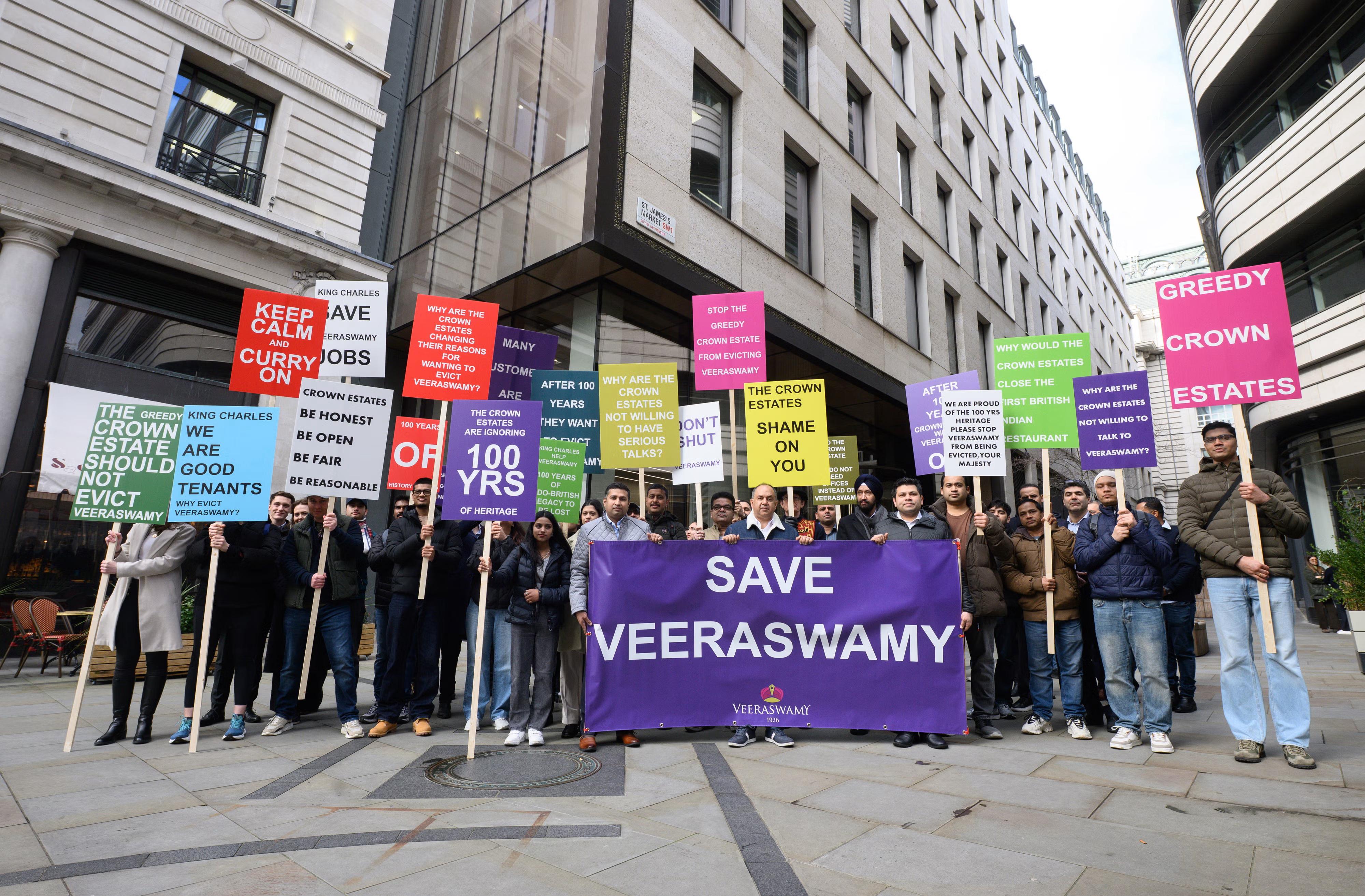
The UK's oldest Indian restaurant, Veeraswamy, is heading to the central London county court on June 29, 2026, to contest an eviction notice from the Crown Estate. The Michelin-starred Regent Street landmark faces closure after its landlord refused to renew its lease, choosing instead to prioritize a corporate office refurbishment.
LONDON — The United Kingdom’s oldest Indian restaurant, Veeraswamy, is taking its high-profile battle against eviction to the central London county court. The Michelin-starred institution, which has operated continuously on London's iconic Regent Street for a century, will face its landlord, the Crown Estate, in a definitive five-day legal hearing beginning on June 29, 2026. The culinary destination faces closure after the property portfolio owned by the British monarch refused to renew its long-standing commercial lease, sparking widespread community outrage and a year-long legal dispute.
The Battle for Victory House
The dispute centers on Victory House, a Grade II listed building at 99–101 Regent Street, where Veeraswamy has been greeting diners since April 1926. The building is part of the vast real estate portfolio managed by The Crown Estate, which generates surplus revenue for the UK Treasury and helps fund the British royal family via the Sovereign Grant.
According to official legal filings, the Crown Estate declined to renew the restaurant’s £205,000-per-annum lease when it expired last summer. The property manager intends to take back the space to carry out a comprehensive refurbishment of the upper floor offices, which have sat completely vacant since a major flood disrupted their electrical power supply in 2023.
The refurbishment blueprint involves demolishing an existing structural wall that separates the ground-level entrance of Veeraswamy from the office reception area. The developers state this structural change will establish a much larger, modern reception area for corporate office tenants, enabling the estate to materially increase the rents it can command in the prime West End district.
Restaurant Management Pushes Back
MW Eat, the parent company of Veeraswamy, argues that eviction is entirely unnecessary. Restaurant co-owner Ranjit Mathrani has insisted that reputable contractors can easily perform the office upgrades without displacing the historic hospitality business operating downstairs.
In an official witness statement submitted ahead of the five-day county court trial, Mathrani noted:
"It is well within the competence of many reputable contractors to deliver the defendant's programme of works in a manner which could accommodate the restaurant business. This is a standard part of many similar refurbishments in London and elsewhere in the UK."
To preserve its historic home, MW Eat offered alternative compromise solutions, including a shared layout for the larger reception entrance and a commitment to match the higher rental yields the Crown Estate expects to acquire from prospective corporate office tenants. These proposals were ultimately declined.
The corporate owners disclosed that relocating, constructing a new kitchen, and managing the revenue losses during an unexpected closure would cost approximately £5 million. Management notes that the financial compensation offered by the landlord covers only a small fraction of these mandatory relocation costs.
Cultural Backlash and Royal Petitions
The threat to Veeraswamy has caused significant concern among historians, industry experts, and the broader hospitality sector. It is widely recognized as the spiritual birthplace of the British public's affinity for classical Indian food and fine dining, famously hosting figures like Winston Churchill, Marlon Brando, Charlie Chaplin, Jawaharlal Nehru, and Indira Gandhi.
A grass-roots petition calling for urgent intervention to save the venue gathered more than 20,000 signatures from local diners and globally renowned culinary experts, including celebrity chefs Raymond Blanc, Michel Roux Jr., and Richard Corrigan. Co-owners Namita Panjabi and Ranjit Mathrani officially delivered the petition directly to Buckingham Palace in February 2026, appealing to King Charles III to help protect the venue's legacy. However, Buckingham Palace officials confirmed the legal and operational administration of the site rests entirely with the sovereign portfolio's independent trustees.
Official Sources Section
The details of the dispute have been documented via official corporate statements, published court schedules, and formal public updates from the involved parties:
The Crown Estate: Issued public statements detailing their statutory duty to manage public funds and heritage infrastructure responsibly.
MW Eat Management: Provided public witness testimony and operational data detailing the £5 million economic burden of relocation.
The Central London County Court: Listed the five-day civil dispute on the official judiciary docket for June 29, 2026.
Why It Matters
The final ruling by the central London county court will establish a crucial legal precedent regarding how the lease renewal rights of historic commercial tenants are balanced against a landlord's modernization plans under UK property laws. If Veeraswamy loses the case, international food enthusiasts and regular London visitors risk losing an irreplaceable heritage site. For the broader UK hospitality sector, the case underscores the growing vulnerability of independent restaurants facing large-scale urban redevelopment in highly competitive metropolitan markets.
Key Facts at a Glance
The Subject: Veeraswamy, established in April 1926 by Anglo-Indian retired officer Edward Palmer, is the oldest operating Indian restaurant in the United Kingdom.
The Landlord: The Crown Estate, an independent commercial business managing property on behalf of the reigning monarch, with net profits transferred directly to the UK Treasury.
The Dispute: A refusal to renew a £205,000-a-year lease in order to expand a commercial office reception by removing a shared entrance wall.
The Legal Date: A definitive five-day civil court hearing is scheduled to begin at the central London county court on June 29, 2026.
FAQ Section
When did Veeraswamy first open in London?
Veeraswamy opened its doors on Regent Street in April 1926. It has successfully survived the wartime Blitz, economic recessions, and major shifts within the competitive UK culinary market for a century.
Who owns the building that the restaurant is currently fighting over?
The building, known as Victory House, is owned by the Crown Estate. It belongs to the reigning monarch, King Charles III, "in right of the crown," meaning it is managed as a public asset rather than private royal property, with its surplus revenues funding the nation's public finances.
Why is the Crown Estate refusing to renew the lease?
The Crown Estate plans to convert vacant upper floors into modern office spaces following a flood in 2023. This requires removing a wall next to the restaurant's entrance to build a larger reception area for corporate tenants, boosting potential rental returns.
Can the restaurant simply move to another location in London?
While the Crown Estate has offered to help find an alternative location within its West End portfolio, Veeraswamy’s owners state that the total cost of relocation, building out a specialized kitchen, and surviving the closure period would exceed £5 million, which could force a permanent shutdown.
Source: The Crown Estate Official Media Centre, MW Eat Corporate Records, HM Courts & Tribunals Service.