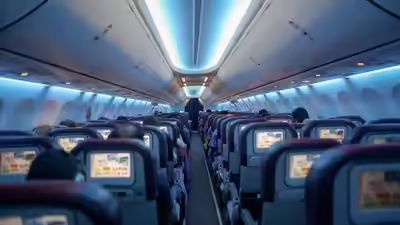
Airlines dim cabin lights before takeoff and landing to help passengers' eyes adapt to outside lighting conditions in case of an emergency evacuation. This industry-wide practice eliminates window glare for the crew, makes emergency exit paths highly visible, and ensures compliance with the strict 90-second international evacuation standard.
WASHINGTON — Amid the highly structured, multi-step safety checklists that govern commercial aviation, one routine cabin adjustment remains a point of constant curiosity for travelers. Global airlines systematically lower interior illumination levels right before a plane departs or lands. Far from setting a relaxed atmosphere or conserving engine power, aviation experts and safety logs confirm that dimming the cabin lights is a vital, science-backed emergency protocol.
According to historical safety and design records archived by the Federal Aviation Administration (FAA), this common operational practice was developed from extensive crash survival studies dating back to the mid-20th century. Takeoff and landing are universally recognized as the most critical phases of flight, when the statistical likelihood of an aircraft incident is at its highest. By adjusting the light inside to match the environment outside, carriers ensure that passengers and flight attendants are biologically and structurally prepared for an immediate evacuation if an unexpected emergency occurs.
The Biological Science Behind Human Vision Acclimation
The primary driver behind lowering cabin lights is the natural limitation of human eyesight when transitioning between drastically different lighting environments.
According to clinical studies compiled by aviation medical registries and detailed by India Today, the human eye requires time to transition from high-intensity indoor lighting to dark conditions. If an aircraft loses power during a night landing and the cabin is instantly plunged into pitch black, passengers whose eyes have not adjusted can experience total spatial disorientation for several crucial seconds. Dimming the lights ahead of time gives the eye's rod and cone cells a head start to acclimate, allowing travelers to retain their night vision if they need to escape into a dark environment.
Meeting the Strict 90-Second Emergency Evacuation Standard
The timing of this lighting change is deeply tied to international aircraft manufacturing and operating certifications.
Maximizing the Visibility of Critical Emergency Pathways
Safety rules managed by the International Civil Aviation Organization (ICAO) dictate that any commercial airplane must be fully evacuated in 90 seconds or less—even if half of the emergency exits are completely blocked.
According to aviation training manuals, dimmed cabin lights help speed up evacuations in three specific ways:
Exit Sign Contrast: Lowering the main overhead lights makes green and red illuminated "EXIT" signs stand out sharply, guiding passengers through smoke or haze.
Floor-Path Guidance: Floor-level emergency lighting tracks become instantly easier to spot and follow when the main cabin lights are low.
Outside Hazard Assessment: Dimmer indoor lights eliminate window glare, helping flight attendants look outside to spot fires, debris, or water before opening an emergency door.
Debunking Common Energy-Saving and Passenger-Comfort Myths
Aviation safety experts regularly dispel popular theories that claim this lighting protocol is meant to help the aircraft's engines or mechanical performance.
"According to technical bulletins maintained by the Federal Aviation Administration (FAA), the electrical power needed to run modern cabin LED lighting configurations is mathematically negligible. Turning them off provides zero functional benefit to the aircraft's engine performance or fuel consumption during a heavy takeoff run."
Aviation analysts also point out that while this practice is most noticeable during night flights, many airlines keep the policy in place during daytime operations as well. On overcast days or during stormy weather, conditions outside can be significantly darker than a brightly lit interior. Keeping the cabin lights adjusted ensures a smooth visual transition regardless of the hour, allowing rescue crews outside to see clearly into the plane through the required open window shades.
Why It Matters
For regular travelers, understanding why the lights go dim shifts the perception of pre-flight rules from minor inconveniences to active survival strategies. Knowing that stowed tray tables, upright seats, open window shades, and dimmed lights work together to clear escape paths empowers passengers to take these final checks seriously before wheels touch the tarmac.
For commercial airlines and aircraft manufacturers, keeping these protocols standardized is a foundational pillar of their safety reputation. As advanced cabin mood lighting rolls out on newer aircraft like the Airbus A350 and Boeing 787, engineering teams are designing automated lighting systems that naturally shift to warm, low-intensity wavelengths before landing. This seamless design helps passengers stay safe and keep their orientation without causing unnecessary worry in the cabin.
Key Facts at a Glance
Pre-Loading Night Vision: Dimming cabin lights prepares passengers' eyes for low-light environments, preventing temporary blindness if the power cuts out.
The 90-Second Rule: Federal regulations require all commercial aircraft to pass a full evacuation test within 90 seconds, making every second of visual readiness critical.
Eliminating Window Glare: Reducing interior lights allows flight attendants to see clearly through windows to check for fires or obstacles outside.
Not an Engine Power Trick: The electricity used by modern aircraft cabin lights is minor and has no impact on engine thrust or fuel efficiency.
Frequently Asked Questions
Why are passengers asked to keep window shades open along with dimmed lights?
Open window shades work hand-in-hand with low cabin lights. They help the crew monitor outside hazards and allow emergency rescue teams on the ground to quickly assess conditions inside the plane.
Does this light-dimming protocol apply to daytime flights as well?
Yes. Many airlines follow the same rule during the day to help eyes adjust to poor outside visibility caused by thick clouds, heavy rain, or sudden smoke.
Who regulates these cabin illumination levels during a flight?
While individual governments and international bodies like the ICAO mandate overall evacuation capabilities, the specific step of dimming cabin lights is written into the standard company operating policies of individual airlines worldwide.
Official Sources Section: