An unprecedented influx of 3.3 lakh vehicles over a ten-day period has brought severe traffic gridlock to Himachal Pradesh's primary highways. Driven by intense heatwaves in the plains, thousands of daily travelers have pushed local mountain infrastructure to its limit, forcing police to execute emergency bypass diversions.
SHIMLA — A massive influx of more than 3.3 lakh vehicles over a ten-day period has severely gridlocked key tourist highways across Himachal Pradesh. Driven by scorching, triple-digit heatwaves sweeping across northern and western India, thousands of travelers are rushing to higher altitudes daily. The sudden surge has strained the state’s historical infrastructure, resulting in miles-long, bumper-to-bumper delays on routes leading into Shimla, Manali, and the crucial Atal Tunnel. Government administrators are scrambling to manage the bottlenecks as the summer travel season hits its absolute peak.
Overwhelming Vehicular Influx Triggers Widespread Mountain Gridlock
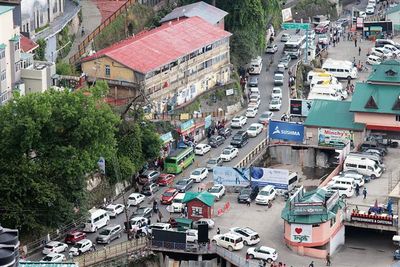
According to data compiled by state police agencies, more than 300,000 vehicles arrived at the state capital of Shimla within a single 10-day window, averaging roughly 30,000 incoming transits every day. This adds to a broader trend seen over the past month; official district logs confirm that over 700,000 vehicles entered Shimla town alone over the course of May.
The bottlenecks have spilled over significantly into neighboring Kullu and Manali districts. Local law enforcement officials noted that Manali is absorbing over 3,000 inbound tourist vehicles daily, alongside heavy fleets of interstate luxury Volvo buses.
The worst of the bumper-to-bumper congestion is occurring on the narrow high-altitude passages leading to the iconic Rohtang Pass and the strategic Atal Tunnel. While regional officials state that traffic technically remains moving, travelers report that clearing these specific bottlenecks routinely adds up to three hours to standard journey times.
Infrastructure Pitfalls Exposed by Rapid Urbanization Trends
The ongoing traffic management crisis has renewed intense political and administrative debates regarding the long-term carrying capacity of the western Himalayan mountain towns. Speaking publicly during a recent book launch event, Himachal Pradesh Chief Minister Sukhvinder Singh Sukhu directly addressed the vulnerabilities of the current layout, pointing out that weak planning—rather than tourism itself—is the root culprit.
"The problem is not over-tourism; the tourism infrastructure is weak and needs strengthening. We need new urban townships because infrastructure is lacking," Chief Minister Sukhu stated.
Echoing these long-term concerns, State Industries Minister Harshwardhan Chauhan emphasized that persistent bottlenecks will remain an ongoing reality until modernization takes precedence. Minister Chauhan called for systematic traffic management upgrades and highlighted that major tourist corridors suffer from acute manpower shortages.
Economic Windfalls Clash With Severe Local Logistical Constraints
While the traffic congestion creates an arduous environment for daily commuters and travelers, the sheer volume of visitors has brought an unexpected post-pandemic economic boom to the local hospitality sector.
Hoteliers across the state are seeing unprecedented transaction rates. Roshan Thakur, President of the Manali Hoteliers' Association, confirmed that hotel occupancy metrics are hovering comfortably between 80% and 90%. Representatives from the Dharamshala Hotel and Restaurant Association reported parallel gains, stating that continuous tourist arrivals have maintained robust 60% to 75% occupancy rates, heavily anchored by sports travel and regional events.
However, the rapid gains for business owners are visibly clashing with the on-ground realities faced by visitors. Travelers from neighboring states like Uttar Pradesh, Punjab, Haryana, and Delhi express deep frustration regarding a total absence of town parking and the slow-moving highway lines, which have overshadowed the relief brought by the cooler mountain weather.
Official Sources Section
The statistics, data parameters, and policy statements used to document this development are derived from formal releases by the following entities:
Statistical vehicular entry reports provided dynamically by the Shimla District Police Traffic Division.
Urban carrying capacity data outlined by the Office of the Chief Minister of Himachal Pradesh.
Occupancy logs and market analysis issued by the Manali Hoteliers' Association.
Quote Section
Detailing the real-time defensive adjustments being deployed by local authorities to mitigate the highway gridlock, Assistant Superintendent of Police (ASP) for Shimla, Abhishek, stated:
"On a daily basis, 30,000 vehicles are entering Shimla. In May, more than 7 lakh vehicles entered the city. We have increased personnel deployment and are actively diverting vehicles onto the bypass roads to minimize bottlenecks within the town area. We have divided the capital into five distinct traffic management zones, each overseen directly by a gazetted officer, to maximize structural oversight."
Why It Matters
The severe gridlock on Himachal highways emphasizes a critical, systemic issue facing India’s top hill stations: the growing mismatch between soaring domestic leisure demand and historical, fragile mountain roads. If urban infrastructure, alternative transit loops, and dedicated multi-level parking modules are not quickly constructed, structural gridlock risks harming long-term tourism revenue. Furthermore, excessive vehicular idling on narrow mountain passes threatens the delicate environmental balance of the Himalayan ecology through concentrated exhaust emissions.
Key Facts at a Glance
Massive Volume: More than 3.3 lakh vehicles crossed into Himachal Pradesh's primary tourist hubs over a compact 10-day period.
Daily Strain: Shimla is coping with an influx of approximately 30,000 vehicles per day, leading to severe inner-town bottlenecks.
Critical Hotspots: The longest delays are concentrated heavily along the approaches to the Atal Tunnel and Rohtang Pass, adding up to 3 hours to travel times.
Economic Boom: Despite gridlock, the local hospitality sector reports hotel occupancy rates soaring past 85% in Manali and Shimla.
Diversion Schemes: Law enforcement has split the capital zone into 5 management rings and is routing upper-bound traffic via the Shoghi-Mehli bypass line.
FAQ Section
Q1: Why is there an unprecedented tourist rush to Himachal Pradesh right now?
An intense, prolonged summer heatwave across the plains of North India—where temperatures are exceeding 45°C—has forced hundreds of thousands of residents to seek immediate relief in cooler mountain stations.
Q2: Which specific roads are seeing the worst traffic delays?
The highest levels of traffic congestion are currently impacting the National Highway links leading into Shimla, the inner access loops of Manali, and the high-altitude roads connecting to the Atal Tunnel and Rohtang Pass.
Q3: What actions are local police taking to relieve the bottlenecks?
Authorities are implementing strategic traffic diversions, routing heavy transit traffic away from central towns via designated bypass lanes, deploying additional personnel at key intersections, and utilizing local volunteers.
Q4: Are hotels available for travelers planning a trip to Shimla or Manali?
While rooms are available, occupancy levels are exceptionally high, ranging from 80% to 90% on weekends. Tourism associations recommend booking accommodations and parking facilities in advance.
Source: Hindustan Times Regional Bureau Report | Official Traffic Logs from Shimla ASP Desk | Manali Hoteliers' Association Press Release.