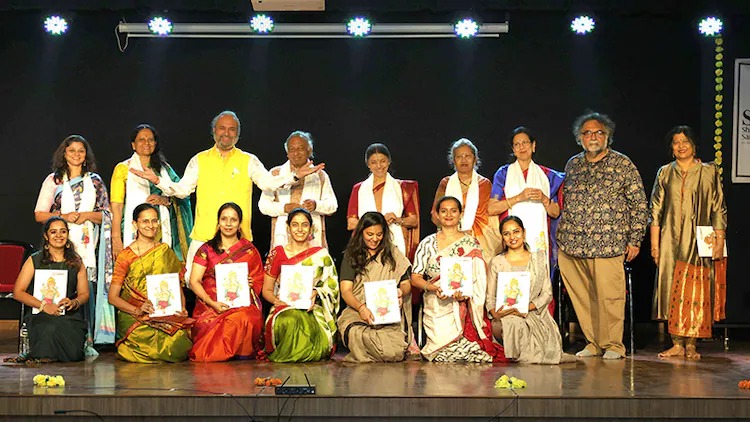
Pune hosts 'Ashta Bhava, Ashta Nritya – Mahabharata', a landmark cultural production uniting eight classical dance forms—Bharatanatyam, Kathak, Kathakali, Manipuri, Mohiniyattam, Kuchipudi, Odissi, and Sattriya—to interpret pivotal episodes of the epic through the emotional framework of the Natya Shastra.
A grand cultural showcase in Pune unites eight Indian classical dance styles to interpret pivotal episodes of the Mahabharata through the framework of the Natya Shastra.
PUNE — Pune’s cultural landscape is playing host to a unique collaborative production titled 'Ashta Bhava, Ashta Nritya – Mahabharata', bringing together eight distinct classical dance traditions on a single stage at Bal Gandharva Rangmandir. Jointly organized by the Pune Art and Culture Foundation and the Pune Municipal Corporation’s Cultural Centre Department, the grand showcase explores the Mahabharata not merely as a historical epic, but as a dynamic emotional landscape. Featuring 52 artists from across Pune, Mumbai, Bengal, and Andhra Pradesh, the performance uses the Ashta Bhava—the eight fundamental emotional states defined in Bharata Muni’s Natya Shastra—to guide the audience through legendary narratives.
An Epic Told Through Eight Diverse Idioms
Rather than relying on a single dance vocabulary, the production assigns specific episodes of the Mahabharata to distinct classical traditions. The performance weaves together Bharatanatyam, Kathak, Kathakali, Manipuri, Mohiniyattam, Kuchipudi, Odissi, and Sattriya. Key dramatic moments—such as the Lakshagriha episode, Bhima and Hidimba’s narrative, Draupadi Cheer Haran, the cosmic Vishwaroopa Darshan, Abhimanyu's battlefield struggle, and Karna's tragic arc—are brought to life by prominent gurus and their disciples. Sattriya exponent Dr. Devika Borthakur serves as the sutradhar (narrator), seamlessly guiding the audience through the shifting emotional and stylistic segments.
Celebrating India's Plural Cultural Vocabulary
According to event coordinators, the initiative was conceptualized to offer audiences a multi-faceted experience of India's rich heritage by platforming both widely recognized and lesser-performed regional classical traditions side by side. Conceived by Gayatri Mishra, Director of the Pune Art and Culture Foundation, and coordinated by Dr. Devika Borthakur, the event aims to foster a deeper appreciation for the diverse movement lexicons, rhythms, and abhinaya (expression) systems native to different parts of the country.
Official Sources and Event Organizers
According to official announcements released by the Pune Art and Culture Foundation and the Pune Municipal Corporation (PMC), the collaborative production highlights institutional efforts to promote classical performing arts.
"Organizers stated that bringing all eight classical dance forms together in one production allows audiences to experience their distinct styles, movement vocabularies, and expressions within a single unified narrative."
Eminent cultural figures, including veteran Bharatanatyam exponent Guru Sucheta Bhide Chapekar and Kathak guru Shama Bhate, alongside civic officials such as PMC Commissioner Naval Kishore Ram, are slated to grace the proceedings.
Why It Matters
The convergence of eight classical arts offers significant practical and cultural value for the performing arts sector. By uniting regional institutions, senior gurus, and young disciples on one platform, the production revitalizes interest in traditional dance forms among younger demographics. For cultural enthusiasts, students, and researchers, it presents a rare opportunity to witness how classical idioms can collaboratively interpret complex mythological and philosophical texts.
Key Facts at a Glance
Event Title: 'Ashta Bhava, Ashta Nritya – Mahabharata'.
Venue: Bal Gandharva Rangmandir, J.M. Road, Pune.
Dance Forms Featured: Bharatanatyam, Kathak, Kathakali, Manipuri, Mohiniyattam, Kuchipudi, Odissi, and Sattriya.
Artistic Framework: The eight fundamental emotional states (Ashta Bhava) from the Natya Shastra.
Organizers: Pune Art and Culture Foundation and Pune Municipal Corporation Cultural Centre Department.
Frequently Asked Questions
What is the central concept of 'Ashta Bhava, Ashta Nritya – Mahabharata'? The production interprets eight key episodes from the Mahabharata using eight distinct Indian classical dance traditions, mapped against the eight primary emotions described in the Natya Shastra.
Which dance forms are part of the performance? The showcase includes Bharatanatyam, Kathak, Kathakali, Manipuri, Mohiniyattam, Kuchipudi, Odissi, and Sattriya.
Who organized the event in Pune? The production was organized by the Pune Art and Culture Foundation in collaboration with the Pune Municipal Corporation's Cultural Centre Department.
What episodes from the epic are depicted? The performance covers major narrative arcs including Lakshagriha, Draupadi Cheer Haran, Vishwaroopa Darshan, Abhimanyu's saga, and Karna's life story.
Source: Punekar News Reports, Times of India Pune Desk, Pune Municipal Corporation Cultural Centre