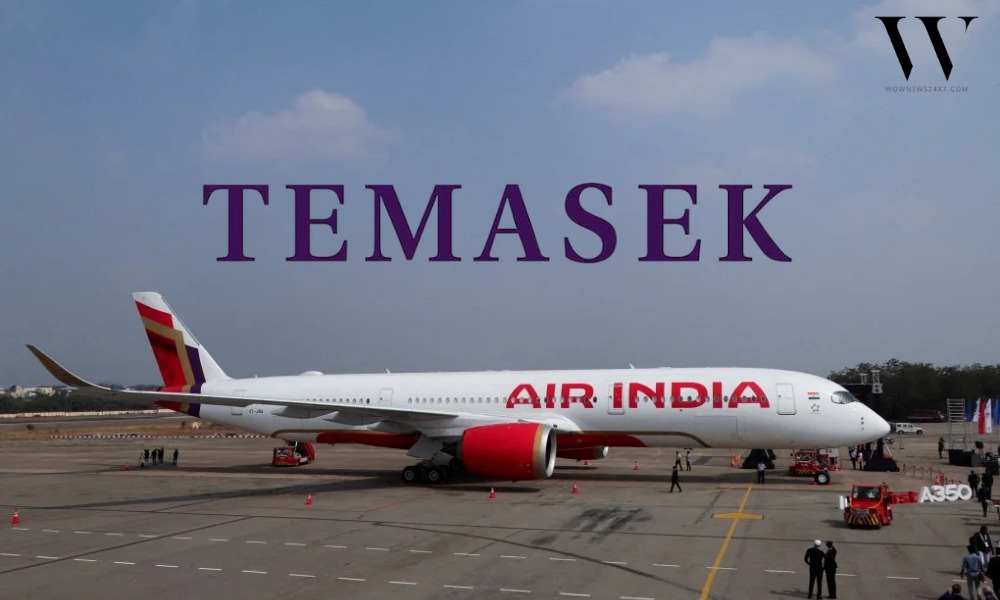
State investor Temasek has backed Singapore Airlines' investment in Air India, acknowledging that the carrier's ongoing corporate transformation involves complex, multi-year operational hurdles but remains critical for long-term regional growth.
Singapore state investor Temasek has defended Singapore Airlines' investment in Air India, stating that the carrier's multi-year restructuring involves complex operational challenges.
SINGAPORE — Singapore state-backed investment firm Temasek Holdings affirmed its backing of Singapore Airlines' (SIA) strategic equity exposure to Air India, noting that the corporate turnaround of the Indian carrier requires a long-term perspective. The official statement, issued on August 29, 2026, comes amid intense parliamentary scrutiny and public debate in Singapore regarding potential capital commitments. Temasek, the majority shareholder of SIA, emphasized that large-scale aviation transformations are inherently non-linear and subject to external headwinds, following reports of substantial capital requirements and widening losses.
Complex Integration and Multi-Year Challenges
Addressing structural realities within the aviation sector, Temasek underscored that reshaping Air India following its 2022 privatization and subsequent consolidation with Vistara involves deep-rooted operational hurdles. According to the state investor, outcomes should not be evaluated on short-term quarters, given factors such as fleet renewal cycles, aircraft supply chain constraints, and legacy technological adjustments. The remarks follow disclosures regarding Air India and Air India Express posting combined financial losses exceeding $2.3 billion for the fiscal year, which have weighed heavily on SIA's recent quarterly balance sheet.
Strategic Rationale and Regional Expansion
Despite near-term financial pressures and scrutiny from minority shareholder groups and opposition lawmakers in Singapore's parliament, Temasek maintained that India remains a critical growth market. Holding roughly a 25 percent stake in the enlarged Air India group via Singapore Airlines, the partnership allows the Singaporean carrier to establish a formidable secondary international hub to tap into the world's third-largest aviation market. Management reiterations note that long-term participation preserves global competitiveness, even as external shocks—including regional airspace restrictions and volatile jet fuel pricing—continue to impact performance.
Official Sources Section
According to official correspondence and policy statements released by Temasek Holdings and regulatory submissions by Singapore Airlines, corporate strategies are periodically reviewed to align with long-term risk parameters.
"Organizers stated that while the transformation involves complex, multi-year operational and integration challenges, such initiatives are vital to sustaining strategic growth and global market positioning over the long run."
Government and corporate communications verified that SIA's board retains absolute autonomy over capital allocation choices, ensuring that funding decisions remain tied strictly to commercial viability.
Why It Matters
The ongoing discourse surrounding Air India's fiscal rehabilitation has direct implications for international investors, aviation stakeholders, and cross-border corporate partnerships. For consumers and business travelers, the restructuring dictates service reliability, fleet expansion, and route connectivity across South Asia. For financial markets, the stance adopted by Temasek signals institutional tolerance for prolonged capital investments in capital-intensive turnaround projects.
Key Facts at a Glance
Investment Context: Singapore Airlines maintains a ~25% equity stake in Air India following the integration of Vistara.
Temasek's Stance: Backs SIA's long-term strategy, acknowledging that enterprise transformations are multi-year and non-linear.
Market Significance: Positions SIA within India, recognized as the world's third-largest air transport market.
Operational Headwinds: Restructuring constrained by global supply chains, geopolitical friction, and fuel price volatility.
Frequently Asked Questions
Why is Temasek supporting Singapore Airlines' investment in Air India? Temasek views the investment from a long-term strategic perspective, aiming to secure a foothold in India's rapidly expanding aviation market.
What challenges are affecting Air India's turnaround? Officials cite complex operational integration, fleet renewal cycles, legacy constraints, and external factors like fuel price volatility.
How much stake does Singapore Airlines hold in Air India? Singapore Airlines holds approximately a 25 percent equity share in the consolidated Air India group.
Are further capital injections guaranteed? SIA management has stated that any future capital requests will be evaluated strictly on their own merits and Air India's commercial business strategy.
Source: Temasek Holdings News Room, Singapore Airlines Investor Relations, The Economic Times Aviation Desk