The Delhi Government has established 13 District Level Coordination Committees under District Magistrates to tackle waterlogging and oversee monsoon preparedness. Supported by 179 CCTV cameras, over 1,000 pumps, and high desilting completion rates, the initiative has reduced critical waterlogging sites from 194 in 2024 down to 34.
NEW DELHI — The Delhi Government has constituted District Level Coordination Committees (DLCC) across all 13 districts of the national capital to closely monitor monsoon preparedness and tackle waterlogging. Formed under the direction of Chief Minister Rekha Gupta, these specialized panels are chaired by District Magistrates (DMs) and tasked with overseeing pre-monsoon readiness, real-time drainage monitoring, and post-rain recovery operations. The initiative aims to streamline inter-agency coordination, eliminate jurisdictional delays, and prevent urban flooding during periods of intense rainfall across the capital.
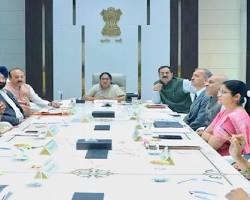
Officials gather in New Delhi to review flood mitigation strategies, drainage infrastructure, and district-level monsoon monitoring panels.
District Level Committees and Agency Coordination
Mandate and Operational Framework
The newly formed 13 District Level Coordination Committees serve as localized command hubs to manage stormwater infrastructure and execute immediate interventions during heavy downpours. Each committee, led by the respective District Magistrate, brings together officials from the Public Works Department (PWD), Municipal Corporation of Delhi (MCD), Delhi Jal Board (DJB), New Delhi Municipal Council (NDMC), and the Delhi Development Authority (DDA).
According to official releases from the Delhi Government, the panels are responsible for inspecting high-risk waterlogging locations, verifying the desilting status of major drains, monitoring drain confluence points, and ensuring the timely removal of cleared silt. The committees also supervise the deployment of mobile pumps and inspect drainage bell mouths to prevent blockages caused by municipal waste.
Infrastructure Upgrades and Surveillance Systems
To support field operations, the Public Works Department has integrated 179 CCTV cameras directly into its 24x7 Monsoon Control Room to stream live feeds from 45 designated waterlogging-prone hotspots, including major underpasses such as Minto Bridge, Zakhira, Dhaula Kuan, and Moolchand.
To handle surface runoff, the government has deployed 754 permanent pumps across 167 fixed locations and augmented them with 305 temporary pumps stationed at 273 vulnerable sites. Engineering teams and maintenance staff remain on standby around the clock to respond to localized emergencies.
Decline in High-Risk Waterlogging Locations
Comparative Trends and Multi-Year Data
Data presented during a review meeting of the Delhi Disaster Management Authority (DDMA), co-chaired by Lieutenant Governor Taranjit Singh Sandhu and Chief Minister Rekha Gupta, showed a significant reduction in chronic waterlogging sites across the capital.
The total number of identified waterlogging points in Delhi has dropped from 194 in 2024 to 169 in 2025, and further down to 34. Similarly, sites experiencing repeated seasonal flooding fell from 53 locations between 2024 and 2025 to eight locations. Officials attribute this decline to systematic desilting drives, structural alterations at key underpasses, and improved pump capacity.
"The systematic shift from reactive flood management to proactive district-level oversight has yielded measurable reductions in critical waterlogging points across the national capital," noted a senior DDMA representative during the briefing.
Progress on Desilting and Maintenance
Government submissions reveal that civic agencies have substantially completed their pre-monsoon desilting schedules:
Public Works Department (PWD): Achieved approximately 95 percent of its target desilting work along major arterial roads.
Delhi Jal Board (DJB): Completed desilting across 85.5 percent of trunk sewer lines, 91.1 percent of peripheral sewer lines, and 90.16 percent of branch sewer lines.
Municipal Bodies (MCD, NDMC, DDA): Reached 100 percent of their primary drain cleaning targets.
Chief Minister Rekha Gupta issued strict directives to all civic agencies requiring that removed silt be transported and disposed of simultaneously with desilting operations to prevent rainwater from washing waste back into drainage networks.
Impact on Citizens, Commuters, and Urban Infrastructure
Commuter Mobility and Safety Standards
The establishment of district-level monitoring panels directly affects millions of daily commuters in the National Capital Region (NCR). Historically, monsoon downpours led to severe gridlock at major arterial intersections and underpasses, stranding vehicles and interrupting public transportation routes.
During recent heavy rainfall events recording up to 100 mm of precipitation within 24 hours, live control room monitoring enabled field teams to clear water complaints within 15 to 30 minutes, keeping major transit corridors fully operational.
Directives on Civic Safety
To minimize public safety hazards, the DDMA directed municipal bodies to ensure that no drain, sewer line, or manhole remains uncovered. Pothole repair crews have been ordered to level road depressions immediately. Furthermore, local authorities are conducting proactive trimming and removal of hazardous, storm-vulnerable trees along major thoroughfares to avert potential accidents during severe thunderstorms.
Official Sources Section
The operational details and statistical metrics in this report are sourced from official press statements by the Chief Minister's Office (CMO) Delhi, disclosures from the Delhi Disaster Management Authority (DDMA), regulatory filings from the Public Works Department (PWD), and official proceedings of the Lieutenant Governor's Secretariat, Lok Niwas, New Delhi.
Quote Section
"According to officials, the creation of district-level committees under District Magistrates ensures direct administrative accountability, faster field responses, and seamless inter-departmental action during monsoon emergencies across Delhi."
Why It Matters
For residents, commuters, and businesses in Delhi, structured monsoon monitoring reduces travel delays, shields urban infrastructure from structural damage, and lowers public safety risks associated with open drains or submerged roadways. The decentralized 13-district framework establishes clear administrative oversight, helping civic agencies resolve waterlogging complaints swiftly during severe weather events.
Key Facts at a Glance
13 District Panels: Delhi Government forms DM-led coordination committees across all 13 districts for monsoon waterlogging monitoring.
Significant Hotspot Reduction: Waterlogging-prone locations reduced from 194 in 2024 to 34.
Substantial Infrastructure: 179 CCTV cameras, 754 permanent pumps, and 305 temporary pumps deployed across key locations.
High Desilting Targets: PWD achieved 95% drain desilting, while DJB desilted over 85% of major trunk lines.
24x7 Control Room: Integrated monsoon control room addresses public grievances, with average response times between 15 and 30 minutes.
FAQ Section
Why did the Delhi Government form committees in all 13 districts?
The committees were formed to decentralize monsoon monitoring, ensure rapid field response to waterlogging, and coordinate actions across multiple civic agencies like PWD, MCD, and DJB under the leadership of District Magistrates.
How many waterlogging hotspots are currently identified in Delhi?
The number of official waterlogging-prone locations has dropped to 34, down from 169 in 2025 and 194 in 2024.
What measures are being taken to monitor major underpasses during heavy rain?
Major underpasses such as Minto Bridge and Zakhira are monitored continuously using 179 CCTV cameras connected to a central 24x7 control room, supported by permanent high-capacity drainage pumps.
How can citizens report waterlogging issues during the monsoon?
Citizens can contact the dedicated 24x7 PWD monsoon helpline control room, where incoming complaints are assigned immediately to field engineers for rapid resolution.
Source: Delhi Disaster Management Authority (DDMA) Official Release, Public Works Department (PWD) Delhi Monsoon Review, Office of the Lieutenant Governor of Delhi (Lok Niwas Press Statement), Chief Minister's Office (CMO) Delhi Administrative Orders.