A captivating new exhibition titled 'Sair-e-Dilli: Chronicles of Change' is currently unfolding at Bikaner House in New Delhi, offering an insightful exploration into the dynamic and layered history of India’s capital city. Curated by renowned historian Swapna Liddle, the exhibition...
A captivating new exhibition titled 'Sair-e-Dilli: Chronicles of Change' is currently unfolding at Bikaner House in New Delhi, offering an insightful exploration into the dynamic and layered history of India’s capital city. Curated by renowned historian Swapna Liddle, the exhibition seeks to challenge and correct the conventional narrative about Delhi’s history, which often simplifies the city’s rich past into a timeline of rise, ruin, and rebirth across seven historic cities. Instead, it presents Delhi as a living, breathing metropolis with intertwined histories, cultures, and social life continuing across centuries.
A Fresh Lens On Delhi’s Complex Past
The exhibition features an eclectic mix of paintings, prints, photographs, maps, and plans that collectively portray Delhi’s transformation through various historical eras.
From Sultanate and Mughal chroniclers’ perspectives to late colonial photographers and cartographers, the artworks span centuries and viewpoints, encapsulating the city’s evolving built form and human experiences.
Curator Swapna Liddle highlights that the established "seven cities" paradigm, which implies a series of disconnected cities that were abandoned and rebuilt, is misleading because in reality, older parts of Delhi have coexisted and influenced new developments continuously.
Visitors get to witness vivid depictions of the city’s cultural, social, and faith-based festivals and interactions that animated Delhi’s neighborhoods over generations, rejecting ideas of the older urbanscapes as mere ruins.
Visual Storytelling Through Time
Among the exhibition’s highlights is a rare set of photographs documenting the destruction wrought by the 1857 revolt, including damage to iconic structures such as Kashmere Gate and Kudsia Bagh mosque.
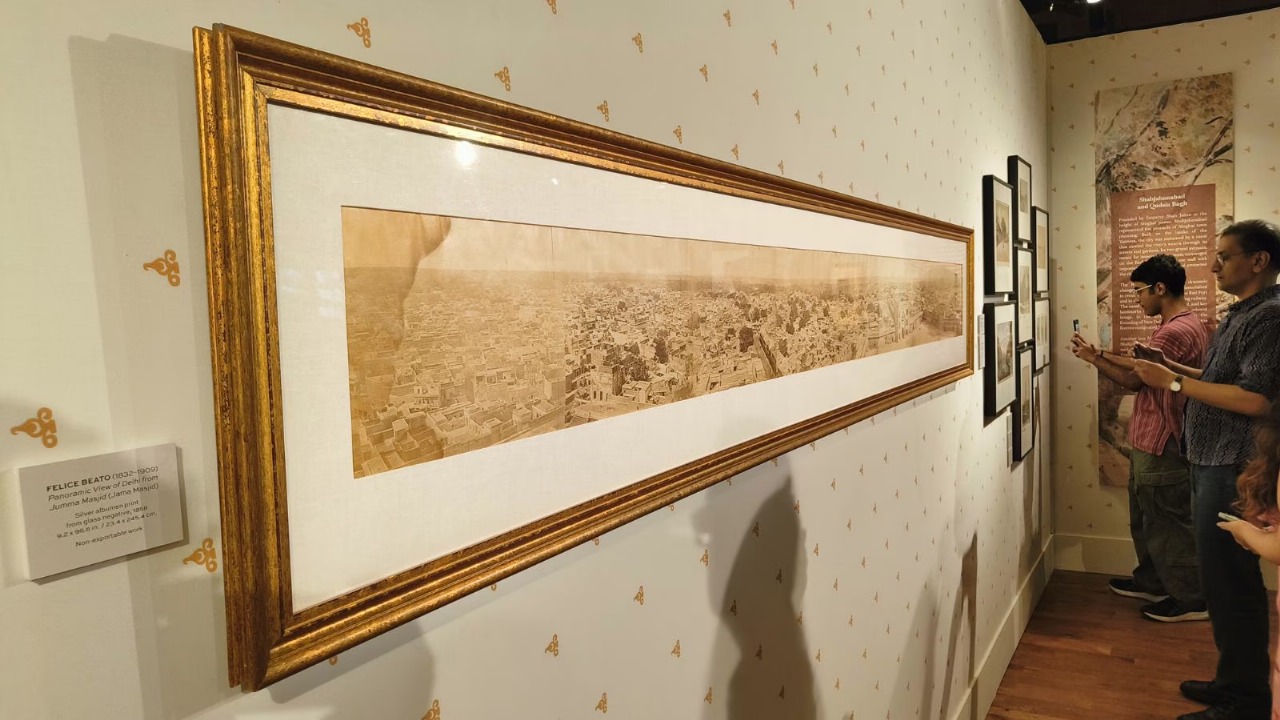
A panoramic painting by Felice Beato unveils the view from Jama Masjid post-revolt, showing areas near the Red Fort that were later demolished by British authorities citing security reasons.
The exhibit also brings to light the historical Akbarabadi Mosque, whose remains were unearthed during metro construction near Jama Masjid, connecting archaeological discoveries to the narrative.
Challenging Conventional Historical Narratives
The displays defy rigid chronological storytelling, instead weaving a narrative that reflects the lived experiences of 19th-century Delhi’s inhabitants and their perceptions of the city as a network of sites rather than isolated urban entities.
The exhibition invites visitors to reimagine Delhi’s identity through indigenous voices that described it as a vibrant and living city, intertwining old and new urban forms.
It casts a spotlight on the layers of Delhi’s history often overlooked in mainstream narratives, including socio-cultural continuities and transformations.
Delhi’s Identity: A Living Culture Emerging From The Past
Beyond historic architecture and events, 'Sair-e-Dilli' evokes the intangible heritage of Delhi’s communal life shaped by diverse cultural festivals, markets, and religious activities thriving simultaneously.
It underscores how the city’s identity has continually evolved through cultural exchanges, social interaction, and resilience against colonial disruptions.
The exhibition’s nuanced portrayals deepen understanding of Delhi not as a relic, but as an ever-transforming metropolis with deeply interlaced histories.
Implications For Contemporary Understanding
This exhibition is more than just an art show; it is a corrective lens encouraging Delhi’s residents and visitors to embrace a more inclusive and comprehensive vision of their city. It challenges oversimplified histories and offers a richer appreciation of Delhi's pluralistic heritage that continues to shape its present-day identity.
The showcase runs until September 15, drawing history buffs, art lovers, and curious minds to Bikaner House, inviting all to embark on this immersive journey through time and space in Delhi’s unique urban saga.
Sources: The Indian Express, Bikaner House Exhibition Release, Historian Swapna Liddle interviews