Union Minister Pralhad Joshi has warned restaurants that mandatory service charges are illegal, following CCPA action against 41 establishments for automatic billing. Reaffirming that such charges are voluntary, the government has mandated penalties and software changes for violators, urging consumers to report any forced levies via the National Consumer Helpline.
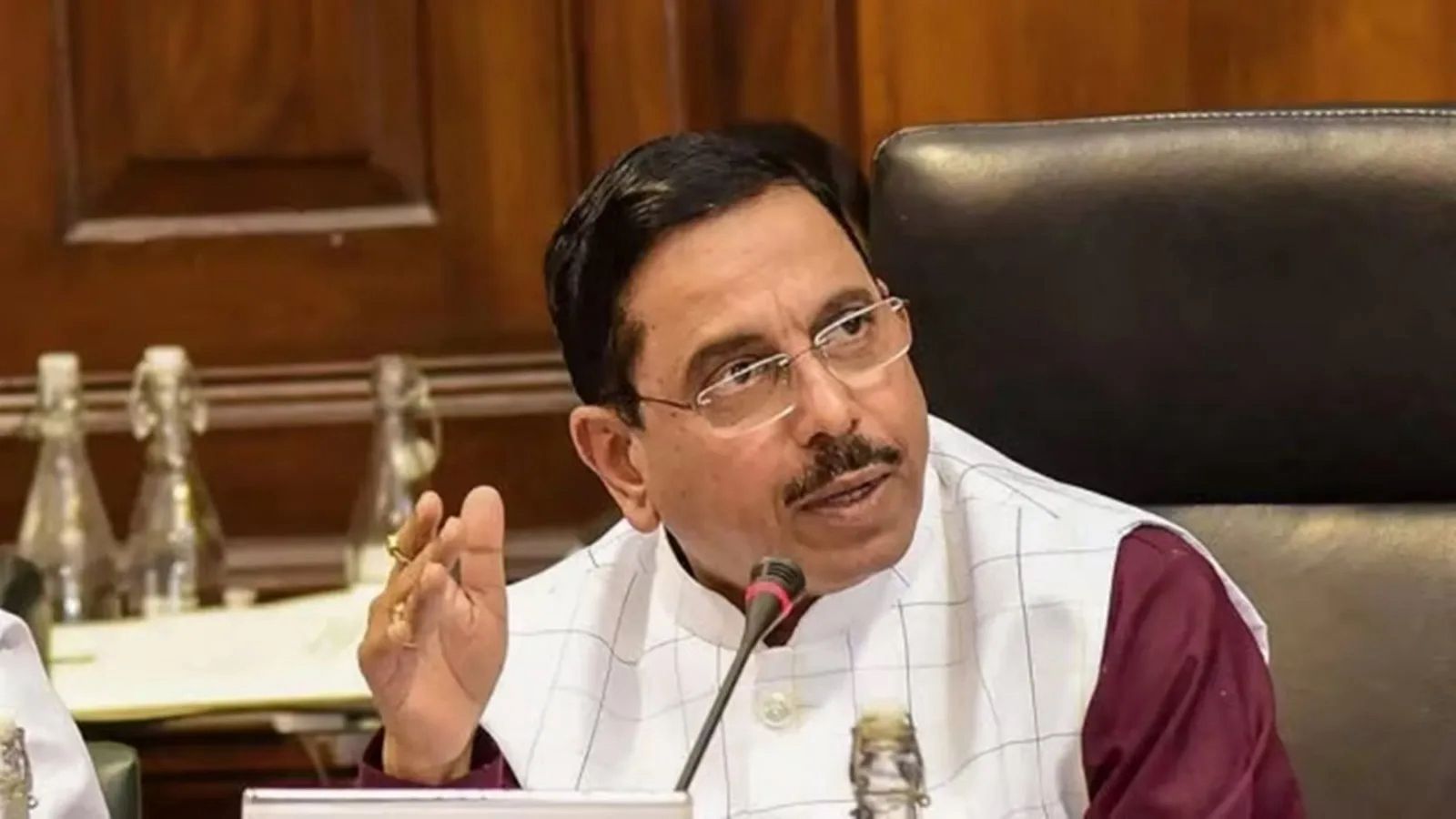
Union Minister Pralhad Joshi has issued a stern warning to restaurants across India, declaring that mandatory service charges are illegal and that violators face stringent fines and reputational consequences.
NEW DELHI — In a major move to protect consumer rights, the Central Consumer Protection Authority (CCPA) has initiated suo motu action against 41 restaurants nationwide for automatically levying service charges on customer bills. Union Minister of Consumer Affairs, Pralhad Joshi, reaffirmed on July 19, 2026, that service charges are entirely voluntary and that forcing customers to pay them constitutes an unfair trade practice.
The government's crackdown follows numerous complaints lodged through the National Consumer Helpline (NCH), where customers provided invoices as evidence that restaurants were adding service charges by default without explicit consent.
A Stand Against Coercive Billing
Minister Pralhad Joshi stated that he has taken the issue "very seriously," directing authorities to pursue strict enforcement. Addressing the widespread nature of the practice in major metropolitan hubs like Delhi, Mumbai, and Bengaluru, the Minister warned that restaurants continuing to ignore the law will face hefty financial penalties and significant negative publicity.
"There is a clear distinction between a voluntary tip paid by a customer and a mandatory service charge imposed by a restaurant," Joshi remarked. "The latter is not permissible under the law".
Legal Backing and Regulatory Action
The current enforcement measures are rooted in the Guidelines to Prevent Unfair Trade Practices and Protection of Consumer Interest with Regard to Levy of Service Charge in Hotels and Restaurants, originally issued on July 4, 2022. The validity of these guidelines was definitively upheld by the Delhi High Court in its March 2025 judgment, which confirmed that mandatory service charges are contrary to the Consumer Protection Act, 2019.
As part of the recent enforcement, the CCPA has imposed penalties of ₹50,000 on establishments like Chaayos (Sunshine Teahouse Pvt Ltd) and directed them to refund the collected charges to affected customers. Other outlets facing similar final orders include Cafe Blue Bottle in Patna, China Gate Restaurant, and Barbeque Nation. Furthermore, the CCPA has mandated that these establishments modify their billing software to ensure no such charges are added automatically by default.
What This Means for Consumers
The regulatory stance is clear: no restaurant can force a customer to pay a service charge, nor can they restrict entry or service to those who refuse to pay. Additionally, the government has clarified that service charges cannot be collected under any other name, and no GST should be levied on such amounts.
Consumers who encounter mandatory service charges are encouraged to report the violation by providing their bill details to the National Consumer Helpline at 1915 or through the government's online grievance portals.
Key Facts at a Glance
Voluntary Nature: Service charges are strictly optional; they cannot be added to a bill automatically or by default.
Legal Standing: The Delhi High Court has upheld CCPA guidelines, confirming that mandatory collection is an "unfair trade practice".
Enforcement Actions: The CCPA has penalized 41 restaurants, with fines reaching up to ₹50,000 for non-compliance.
Reporting Violations: Customers can report illegal charges via the National Consumer Helpline (1915).
FAQ
Is a service charge mandatory in India in 2026?
No. Service charges are entirely voluntary, and forcing customers to pay them is illegal.
Can a restaurant deny me service if I refuse to pay the service charge?
No. It is illegal for a restaurant to restrict entry or provision of services based on a customer's refusal to pay a service charge.
What should I do if a restaurant adds a service charge to my bill?
You should request the restaurant to remove the charge. If they refuse, you can pay the bill and report the invoice details to the National Consumer Helpline (1915) for investigation.
Can restaurants rename 'service charge' to something else?
No. The CCPA guidelines prohibit the collection of service charges under any other name or substitute term.
Source: Ministry of Consumer Affairs (PIB), The Economic Times, ETV Bharat