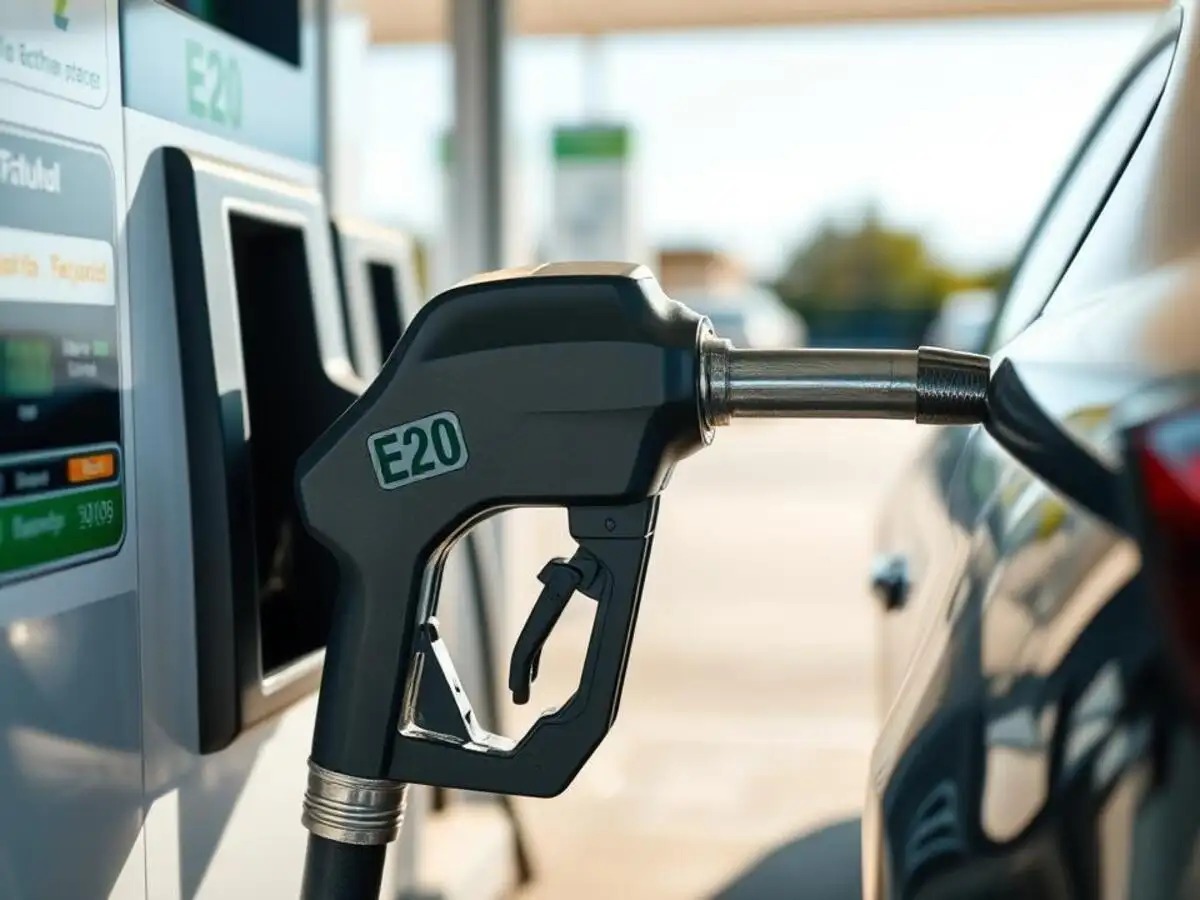
Union Minister Suresh Gopi confirmed that the Government of India has not taken any decision to increase ethanol blending in petrol beyond the current 20% level. Backed by extensive field safety data, the EBP programme has saved ₹1.97 lakh crore in foreign exchange while ensuring engine safety across millions of legacy vehicles.
NEW DELHI — The Union Government of India confirmed on Monday, July 20, 2026, that it has not taken any decision to raise the mandate for ethanol blending in petrol beyond the current 20% threshold. In a formal written response submitted to the Rajya Sabha during the opening day of the parliamentary Monsoon Session, Minister of State for Petroleum and Natural Gas Suresh Gopi clarified that the state's macro policy remains anchored to E20 fuel configurations. The minister emphasized that any future consideration to scale biofuel integration levels will strictly require localized engine durability assessments, vehicle material compatibility certifications, and extensive structural consultations across the domestic automotive and energy sectors.
Technical Directives and Regulatory Frameworks
According to the official legislative brief presented to the Upper House in reply to queries from Member of Parliament Rajeev Shukla, the rollout of the Ethanol Blended Petrol (EBP) programme is proceeding under highly regulated operational guidelines. The administration emphasized that the current E20 fuel baseline is the result of a phased, calibrated, and evidence-based transition, rather than an abrupt policy shift.
The ministry outlined that the path toward any potential higher-concentration biofuel tiers will be guided by standard scientific checkpoints:
The completion of comprehensive long-term scientific and technical durability studies by domestic research institutions.
Exhaustive material compatibility evaluations regarding internal rubber hoses, metallic fuel tanks, and fuel injection systems.
Structural validation by the Society of Indian Automobile Manufacturers (SIAM) and the Automotive Research Association of India (ARAI).
Operational alignment reviews with state-owned Oil Marketing Companies (OMCs) regarding depot-level blending infrastructures.
The minister explicitly noted that the government has no immediate structural plans to introduce ethanol blending in diesel for commercial transport use, choosing instead to focus public energy infrastructure entirely on stabilizing the E20 fuel network.
Economic Gains and Macro-Environmental Impact
The centralized implementation of the EBP framework has delivered significant macroeconomic buffers since its accelerated rollout initiated in 2014–15. India successfully achieved its targeted national average of 20% ethanol blending in petrol during the 2025–2026 supply year, meeting the strategic milestone five years ahead of the timeline originally projected by legacy frameworks. This marks a major shift from the 2013–14 supply baseline, when the country's average blending metric languished at just 1.53%.
The rapid growth of the biofuel value chain has transformed the financial structure of regional sugar and grain processing hubs. By diverting excess sugarcane crop yields and damaged food grains into ethanol distilleries, the policy has funneled over ₹1.66 lakh crore in additional gross revenues directly to domestic farming communities, improving rural liquidity parameters and helping minimize seasonal cane price arrears.
Vehicle Performance and Mechanical Durability Data
Addressing lingering consumer anxieties regarding the impact of ethanol blending in petrol on engine longevity, the ministry presented extensive real-world mechanical field data collected from leading domestic manufacturers. Long-term performance data indicates that the standardized E20 fuel allocation has caused no higher incidence of engine damage or component failures compared to older, lower-blend fuels.
Lending statistical weight to this quality validation, the minister highlighted that one of India's largest passenger vehicle manufacturers successfully serviced 2.84 crore vehicles during the 2025–2026 fiscal cycle. This volume included approximately 1.5 crore older, non-E20 certified passenger cars that operated continuously on the evolved standard without reporting widespread, verified engine failure or structural fuel line degradation.
The ministry clarified that while legacy vehicles designed specifically for E10 might experience a minor, nominal drop in fuel economy generally restricted to a 3% to 5% variance depending on individual driving behavior the E20 blend offers a higher octane rating and cleaner engine combustion metrics, which actively helps minimize long-term internal carbon build-up.
Official Sources Section
The macroeconomic metrics, structural timelines, and vehicle performance indicators featured in this report are drawn entirely from official government releases and parliamentary statements.
The standalone data sets match the written answers submitted to the Rajya Sabha by the Ministry of Petroleum and Natural Gas. Strategic parameters, biofuel roadmap targets, and automotive compliance data align with publications managed by the Press Information Bureau (PIB) and NITI Aayog guidelines.
Quote Section
"According to officials familiar with the energy transition roadmap, the current policy priority is focused entirely on stabilizing the nationwide E20 distribution architecture rather than prematurely pushing for higher blending values. The government's primary objective is to move forward with a scientifically validated and superior fuel standard that preserves engine safety while lowering our import dependencies."
Why It Matters
For everyday motorists, two-wheeler commuters, and transport operators, the minister's explicit clarification provides assurance that the government will not introduce higher, uncertified ethanol concentrations that could compromise existing engine warranties or cause component degradation.
For international energy desks, institutional equity investors, and sugar industry analysts, the stabilization at the 20% blending level brings near-term policy predictability. Lenders and corporate boards can safely optimize their refinery asset allocations and distillery distillation setups without facing sudden regulatory changes, ensuring that the country’s high-capacity bio-refinery investments remain aligned with stable domestic commercial fuel demands.
Key Facts at a Glance
Policy Ceiling Maintained: The Union Government has officially taken no decision to raise ethanol blending in petrol beyond the active 20% limit.
Calibrated Progress: The transition remains strictly dependent on long-term engineering validation and automotive sector clearances.
Foreign Exchange Savings: The EBP programme has successfully saved over ₹1.97 lakh crore in crude oil import costs since 2014–15.
Engine Safety Validated: Extensive service logs tracking millions of legacy vehicles confirm zero widespread component failures under current E20 distribution.
FAQ Section
Is the government planning to increase the ethanol blending level to 25% or 30% soon?
No. The Ministry of Petroleum and Natural Gas has formally clarified that no decision has been taken to increase ethanol blending beyond the current 20% level, and any future adjustments will require extensive scientific technical studies.
Will using E20 fuel damage the engine or fuel lines of an older vehicle?
According to comprehensive field data and millions of manufacturer service records tracked through 2026, the current E20 fuel blend has shown no adverse impact on vehicle longevity, engine safety, or component wear.
What are the primary economic benefits of the Ethanol Blended Petrol programme?
The campaign has substituted nearly 316 lakh metric tonnes of imported crude oil, lowered national carbon dioxide emissions by 952 lakh metric tonnes, and generated more than ₹1.66 lakh crore in additional gross revenue for domestic farmers.
Source: Press Information Bureau - Government of India, Ministry of Petroleum and Natural Gas Statutory Filings, Rajya Sabha Question Hour Repository.