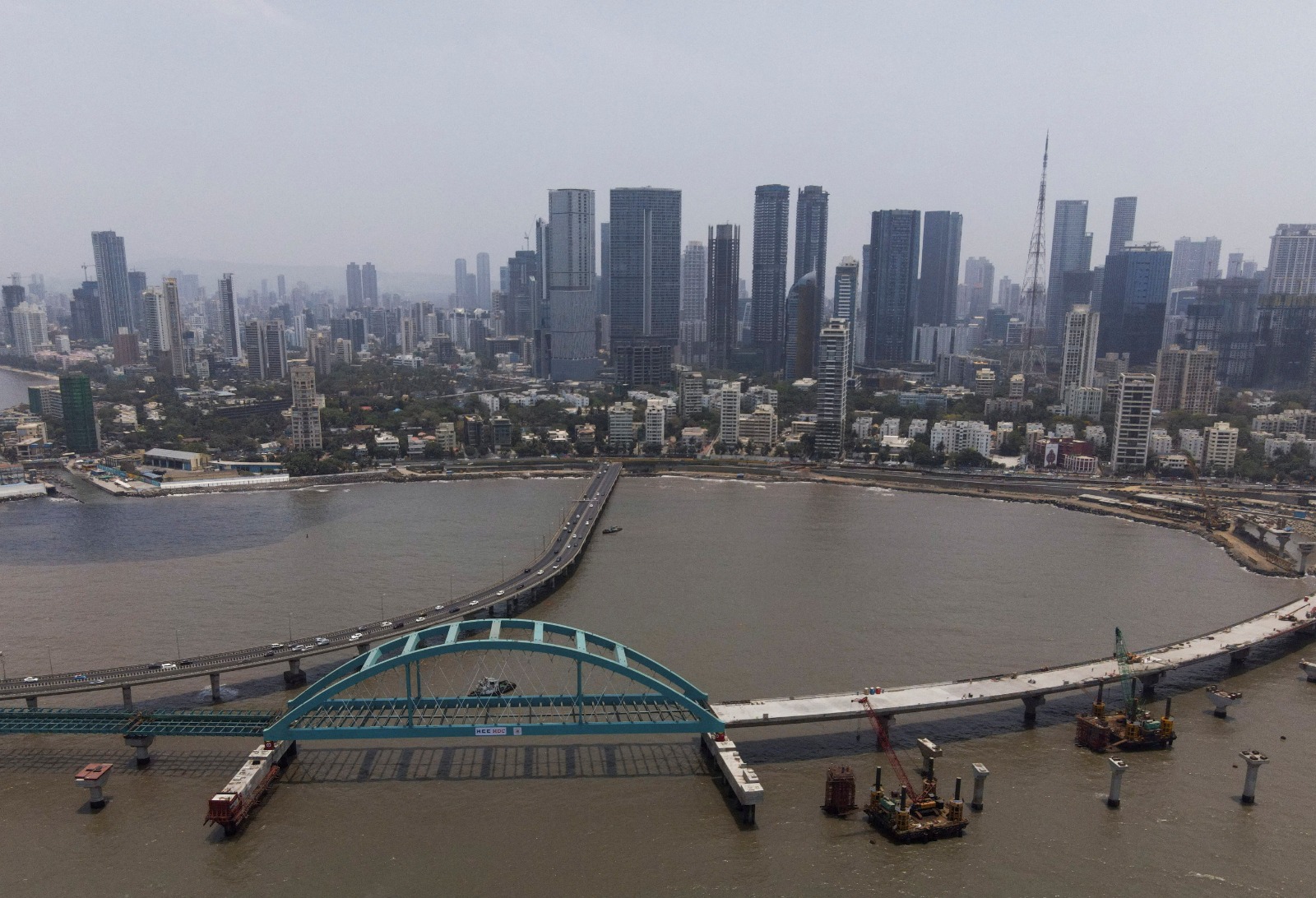
The Government of India revealed that its effective capital expenditure has grown fivefold since 2014, reaching ₹90.87 trillion (~$1.01 trillion) to drive infrastructure-led growth. Tabled by Finance Minister Nirmala Sitharaman, the data highlights major upgrades across national highways, rail networks, and regional airports to lower domestic logistics costs.
NEW DELHI — The Union Government of India announced a historic expansion in state-led asset formation on Monday, July 20, 2026, revealing that India's infrastructure spending has increased fivefold since 2014. In a formal written briefing delivered to the Lok Sabha during the opening day of the parliamentary Monsoon Session, Union Finance Minister Nirmala Sitharaman confirmed that the Centre’s aggregate effective capital expenditure climbed to an unprecedented ₹90.87 trillion (approximately $1.01 trillion) over the 2014–2026 fiscal stretch. This macro-level push represents a significant increase compared to the ₹17.04 trillion deployed during the previous decade, highlighting the government's strategy of using massive public investment to drive long-term economic growth.
The Anatomy of the ₹91 Trillion Capital Stack
According to the official data sheets tabled by the Ministry of Finance in response to starred parliamentary inquiries, the ₹90.87 trillion effective capital outlay is divided into two separate financial streams. The baseline component consists of the Centre's direct capital expenditure, which expanded to ₹64.70 trillion during the 2014–2026 period, up from ₹12.39 trillion recorded between 2004 and 2014.
The second component involves structural grants-in-aid provided directly to state governments for asset creation, totaling ₹26.17 trillion over the last 12 years. These targeted fiscal transfers fund regional engineering works and social infrastructure projects, including municipal school structures under the Samagra Shiksha framework and rural housing under the Pradhan Mantri Awas Yojana.
This sustained funding surge has altered the composition of India's Gross Domestic Product (GDP). The country's capital expenditure-to-GDP ratio grew steadily from 1.6% in the 2014–2015 fiscal year to a peak of 3.2% in both 2023–2024 and 2024–2025, before stabilizing at a healthy 3.1% for the provisional 2025–2026 cycle.
Transforming Core Logistics Networks
The practical applications of this infrastructure spending are visible in the modernization of India's transport and connectivity networks. According to physical project data audited by the Ministry of Commerce & Industry, public capital deployment has driven significant structural upgrades:
National Highway Expansion
India's total National Highway network grew by 61%, expanding from 91,287 kilometers in 2014 to 1,46,572 kilometers by early 2026. The total length of high-capacity four-lane and above expressways more than doubled, rising from 18,371 kilometers to 45,516 kilometers, significantly improving freight transit times along major economic corridors.
Railway Modernization and Electrification
Total annual budgetary support for Indian Railways experienced a nearly nine-fold increase, surging from ₹32,000 crore in 2014–2015 to an unprecedented ₹2.78 lakh crore for the FY2026–2027 cycle. This heavy funding helped the network achieve 99.6% broad-gauge track electrification by March 2026, lowering operating overheads and reducing dependence on imported fossil fuels.
Regional Aviation Growth
The number of operational commercial airports in India more than doubled, increasing from 74 in 2014 to 165 in 2026. Backed by fiscal outlays exceeding ₹1.4 lakh crore, the expansion successfully connected smaller tier-2 and tier-3 cities to primary economic hubs.
Official Sources Section
The macroeconomic metrics, financial breakdowns, and project milestones featured in this report are sourced directly from centralized government declarations.
All primary data points match the official statements tabled before the Lok Sabha by the Ministry of Finance. Additional project parameters correspond to structural reporting updates published by the Press Information Bureau (PIB) under the active monitoring protocols of the Department of Expenditure.
Quote Section
"According to officials familiar with the expenditure reviews, the sustained public investment has successfully rebuilt the country's economic baseline while crowding in private corporate investments. The ongoing deployment of integrated digital tools, such as the PM GatiShakti National Master Plan, will continue to lower logistics frictions across all state lines."
Why It Matters
For Indian citizens, businesses, and manufacturing hubs, the fivefold increase in infrastructure spending has direct, real-world implications. The continuous building of expressways, modern cargo terminals, and automated rail corridors helps lower the country's high internal logistics costs, making domestic manufacturing more competitive globally.
For institutional investors, market analysts, and corporate boards, this multi-trillion rupee capital commitments provides crucial long-term revenue visibility. By maintaining a high baseline of public spending, the government cushions the broader economy against global headwind trends, ensuring that manufacturing industries, cement producers, steel mills, and construction operations enjoy steady, predictable order books for years to come.
Key Facts at a Glance
Total Spending Outlay: Effective capital expenditure reached ₹90.87 lakh crore (~$1.01 trillion) over the 2014–2026 period.
Fivefold Scaling: The modern capital spending pool stands nearly five times larger than the ₹17.04 trillion deployed in the previous decade.
Logistics Milestones: National highway lengths grew by 61%, while railway track electrification achieved a near-total 99.6% baseline.
Aviation Footprint: The number of operational airports grew from 74 to 165, improving regional business travel access.
FAQ Section
What exactly does the term "effective capital expenditure" encompass?
Effective capital expenditure is a comprehensive economic metric that combines the Central Government's direct spending on major assets (like railways and dams) with the structural grants-in-aid it gives to state administrations specifically to build public infrastructure.
How has this massive spending surge affected private businesses?
By expanding power grids, highways, and digital connectivity, public investment has lowered entry risks and logistical costs for private players. This has effectively "crowded in" private capital, encouraging corporate firms to co-invest in industrial parks, manufacturing plants, and logistics hubs.
What are the primary target initiatives for infrastructure management moving forward?
The government is prioritizing tech-enabled project execution through systems like the PM GatiShakti National Master Plan and the National Logistics Policy, focusing on improving inter-agency coordination to eliminate costly project execution delays.
Source: Press Information Bureau - Government of India, Ministry of Finance Parliamentary Filing Desk, Lok Sabha Starred Question Repository.