Dino-Mite Discovery: India Unveils World’s Oldest Giants
A revolutionary fossil finding in India revolutionized our perspective on dinosaur evolution, extending the timeline of several of the earth's earliest dinosaurs and placing focus on the subcontinent's pivotal position in...
Dino-Mite Discovery: India Unveils World’s Oldest Giants
A revolutionary fossil finding in India revolutionized our perspective on dinosaur evolution, extending the timeline of several of the earth's earliest dinosaurs and placing focus on the subcontinent's pivotal position in their global history.
Major Takeaways
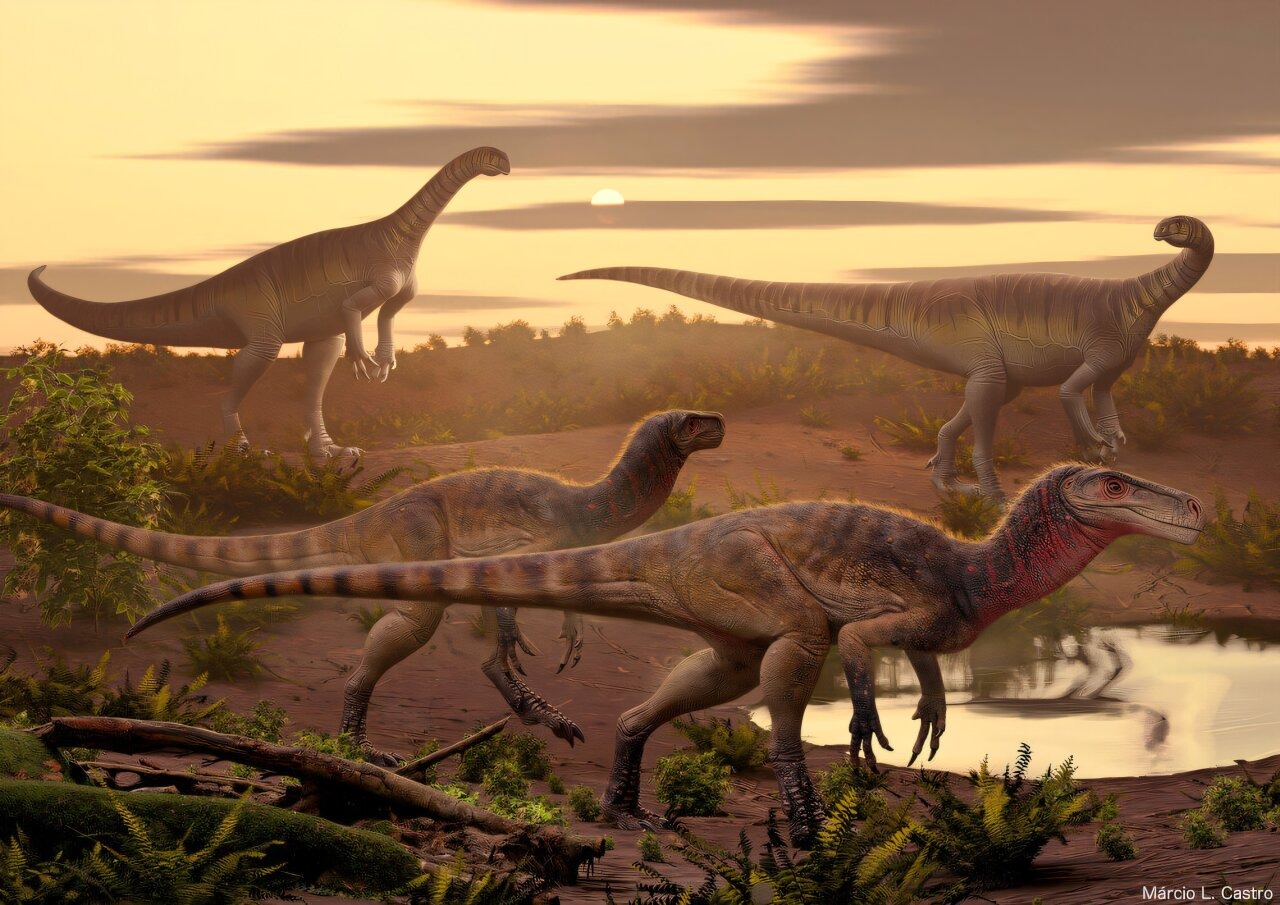
The discovery of a new species of dinosaur, Maleriraptor kuttyi, in south-central India within the Upper Maleri Formation indicates that India has some of the world's most ancient dinosaurs, according to research. The findings, coupled with other recent finders, place India as hosting some of the world's first dinosaurs.
The Pranhita-Godavari Valley, whose Upper Triassic–Lower Jurassic rock formations contain fossils, has provided evidence of the existence of early dinosaurs, giving us a glimpse into a pivotal period of evolution more than 200 million years ago.
Sophisticated methods such as UV light and CT scans have enabled paleontologists to unlock previously hidden anatomical information in these fossils, providing further insights into the biology and diversity of these ancient animals.
One noteworthy discovery is Tharosaurus indicus, a dicraeosaurid sauropod of the Middle Jurassic Jaisalmer Basin. It is the oldest known diplodocoid dinosaur in the world and predates such discoveries in Africa, South America, and even China.
The evolutionary position and age of Tharosaurus imply that India, or surrounding areas of eastern Gondwana, could have been the hub of neosauropod dinosaur origins and early radiation, contradicting earlier beliefs that located these origins elsewhere.
These findings highlight India's significance in the dinosaur evolutionary story, revealing that the country was not only a recipient of dinosaur lineages but a cradle of their initial diversification and dispersal across the ancient supercontinent Pangaea.
The discoveries also underscore the necessity for additional fossil prospecting in India, as more intense collecting efforts may uncover more ancestral forms and fill key gaps in the worldwide dinosaur record.
This succession of finds not only lengthens the timeline of the early dinosaurs but also makes India a central figure in the ancient world, with its fossil beds providing precious clues to the origins of the dinosaur era.
Sources: Phys.org, Nature, Wildlife Conservation Trust, LinkedIn