The Joint Parliamentary Committee on simultaneous elections announced that the Election Commission of India can conduct 'One Nation, One Election' within a six-month notice period. If legislation passes by 2028, the unified polling framework will be ready for the 2029 general elections, curbing massive economic expenditures.
LUCKNOW — The Election Commission of India (ECI) has informed the Joint Parliamentary Committee (JPC) examining simultaneous elections that it requires only a six-month advance notice to successfully conduct synchronised Lok Sabha and state assembly polls across the country.
Speaking at the conclusion of a three-day academic consultation in Lucknow, JPC Chairman P.P. Chaudhary confirmed the poll body's preliminary submission. This development marks a significant operational milestone for the "One Nation, One Election" (ONOE) initiative, a cornerstone electoral reform championed by Prime Minister Narendra Modi to streamline the country's democratic framework.
Technical Feasibility and Timeline
According to official committee statements, the ECI has laid out a clear roadmap for the administrative implementation of the initiative. The structural implementation rests heavily on the timeline of legislative enactments.
"The poll body had indicated that simultaneous elections across the country would be feasible if it is given six months' advance notice," JPC Chairman P.P. Chaudhary stated to reporters. "The Election Commission believes that if Parliament passes the law in 2028, it can conduct 'One Nation, One Election' from 2029."
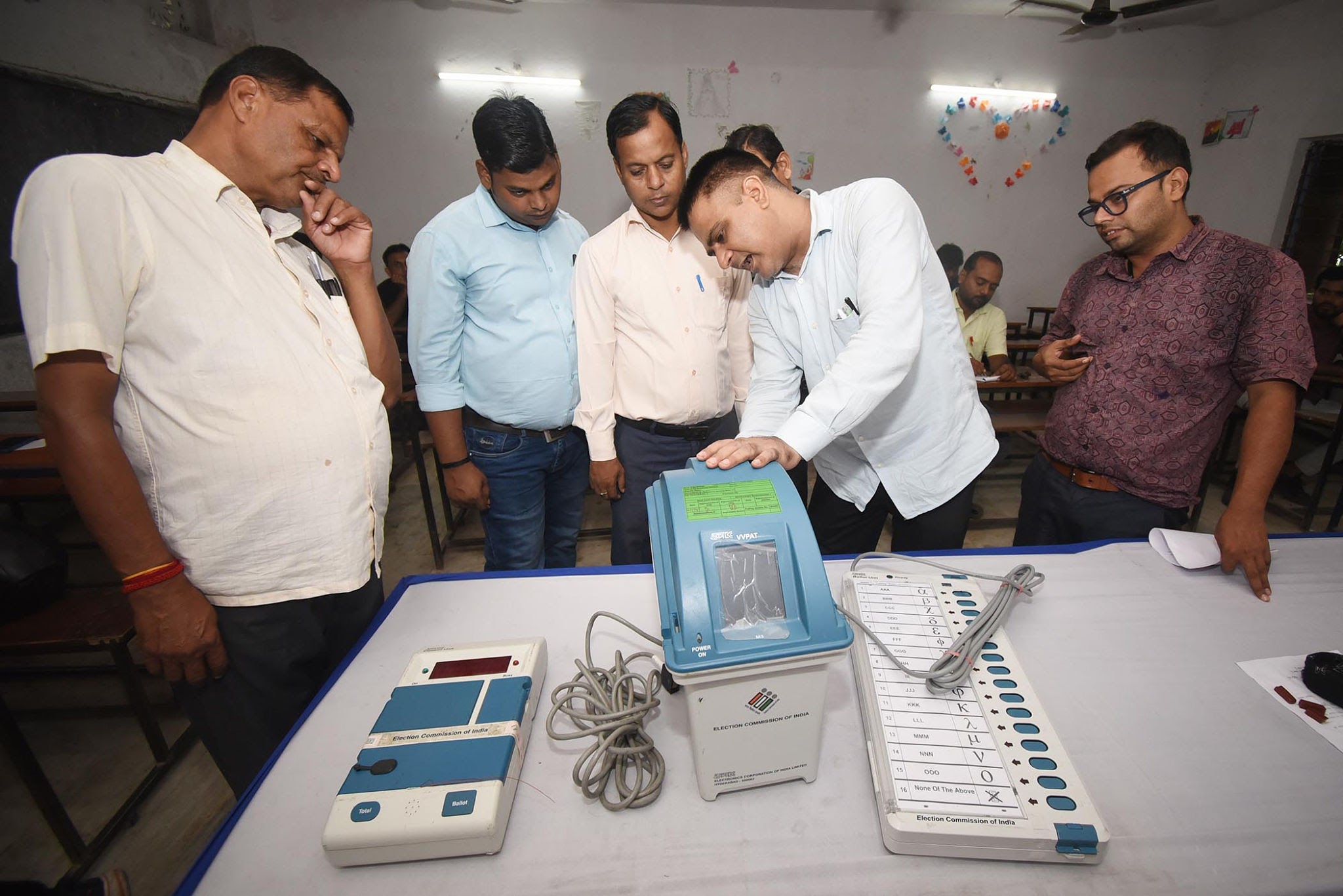
The committee, which is reviewing the Constitution (129th Amendment) Bill, 2024, and the Union Territories Laws (Amendment) Bill, 2024, intends to question the Election Commission formally regarding logistics, electronic voting machine (EVM) availability, and security deployment before delivering its final recommendations to Parliament.
Constitutional Validity and Historical Context
Addressing criticisms surrounding federalism and state autonomy, Chaudhary noted that constitutional experts who deposited before the panel affirmed that the framework does not violate the basic structure of the Indian Constitution.
"It is only a timetable for holding Lok Sabha and assembly elections together," Chaudhary quoted from the expert depositions. "It does not curtail the powers or rights of the states."
The panel chief reiterated that simultaneous polling is not an entirely new concept for India, noting that the country successfully held simultaneous general and state assembly elections between 1954 and 1960 using traditional paper ballots.
Economic and Administrative Impact
A principal argument driving the JPC’s acceleration of the ONOE policy framework is the enormous fiscal relief it promises. Data submitted previously to the high-level committee led by former President Ram Nath Kovind estimated that asynchronous, frequent elections cost the Indian economy up to ₹7 lakh crore due to disrupted commerce, repeated security mobilization, and administrative pauses.
Furthermore, frequent elections consistently trigger the Model Code of Conduct (MCC), pausing development projects and pulling government school teachers and civil servants away from core public service duties for training and polling tasks.
Official Sources Section
The findings and timelines detailed in this article are based on:
Official media briefings by the Joint Parliamentary Committee (JPC) Chairperson P.P. Chaudhary in Lucknow.
Preliminary submissions presented by the Election Commission of India (ECI) to the JPC.
Parliamentary records regarding the Constitution (129th Amendment) Bill, 2024.
Data from the High-Level Committee on Simultaneous Elections chaired by former President Ram Nath Kovind.
Quote Section
"We will hear the Election Commission on how it plans to conduct 'One Nation, One Election'. We will put our questions to it, and only after hearing its views will the committee recommend whether it is feasible or not."
— P.P. Chaudhary, JPC Chairman
Why It Matters
For citizens and businesses, the implementation of "One Nation, One Election" eliminates voter fatigue and prevents repeated freezes on government infrastructure projects caused by the Model Code of Conduct. For the corporate sector and investors, the synchronization stabilizes policy continuity and prevents regional economic pauses caused by staggered political campaigns.
Key Facts at a Glance
6-Month Window: The Election Commission requires exactly a six-month notice to prepare for country-wide simultaneous polls.
Target Year 2029: If Parliament enacts the required statutory legislation by 2028, the first simultaneous election cycle will launch in 2029.
Economic Benefit: Consolidating elections is estimated to mitigate an economic drain of approximately ₹7 lakh crore.
No Federal Violation: Constitutional experts state the adjustment is strictly a scheduling alteration and does not diminish state legislative powers.
FAQ Section
Q: What is 'One Nation, One Election'?
A: It is a proposed reform to synchronize the electoral cycles of the Lok Sabha (Parliament) and all State Legislative Assemblies so that voters cast both ballots on the same day or within a unified phase.
Q: Does ONOE apply to local municipal or panchayat polls?
A: The current framework under the Constitution (129th Amendment) Bill specifically addresses the Lok Sabha and State Legislative Assemblies, excluding localized panchayat and municipal elections from the immediate synchronized rollout.
Q: When could the first synchronized election take place?
A: According to the JPC Chief, if the constitutional amendment is passed by Parliament in 2028, the ECI can systematically execute simultaneous elections starting with the 2029 general election.
Sources: Joint Parliamentary Committee (JPC) Press Briefing, Election Commission of India Preliminary Submissions, Ministry of Law & Justice Parliamentary Records.