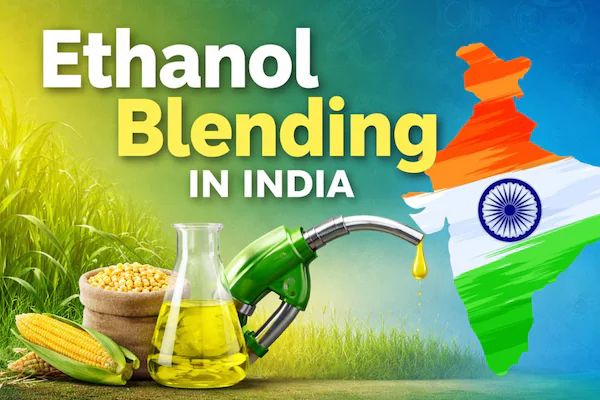
ICRIER has recommended that India adopt a flexible ethanol blending framework, suggesting a temporary reduction from the 20% target to 15% during shortages. The policy shift aims to counter mounting food-versus-fuel inflation pressures affecting sugar and agricultural feedstocks nationwide.
NEW DELHI — In a significant policy assessment released in September 2026, the Indian Council for Research on International Economic Relations (ICRIER) has advised the central government to build structural flexibility into its flagship Ethanol Blended Petrol (EBP) programme. Co-authored by prominent agricultural economist Ashok Gulati, the research paper titled "Food vs Fuel: Recalibrating India's Ethanol Blending Strategy" suggests that while 20% blending (E20) should remain the permanent long-term goal, authorities should permit a temporary reduction to 15% (E15) during domestic agricultural shortfalls. The proposal addresses mounting economic tensions as rapid biofuel expansion strains traditional food and feed crop reserves across the country.
Balancing Biofuel Demands With Agricultural Realities
India successfully accelerated its clean energy roadmap, achieving the E20 milestone during the 2025–26 Ethanol Supply Year five years ahead of its original 2030 schedule. However, this rapid scaling has exposed systemic imbalances between fuel demand and agricultural output.
Surging Demand Growth: Ethanol supplies delivered to oil marketing companies (OMCs) surged from 1.73 billion litres in 2019–20 to a projected 12 billion litres for 2025–26, registering a compound annual growth rate of roughly 38%.
Stagnant Feedstock Yields: In contrast, primary agricultural commodities utilized for biofuel production—including sugarcane, maize, and surplus rice—have expanded at a significantly slower pace.
Food-Versus-Fuel Strain: Heavy diversion of sugarcane juice and molasses toward ethanol production contributed to tight domestic sugar inventories, triggering a sharp spike in modal retail sugar prices from ₹45 to ₹65 per kilogram.
Proposed Buffer Mechanisms: The study calls for flexible blending triggers, suggesting that the government utilize raw sugar import duty cuts and restrict Food Corporation of India (FCI) subsidized rice allocations strictly to genuine surplus stocks.
Impact on Consumers, Farmers, and Industrial Stakeholders
For everyday consumers and retail households, balancing energy security with food inflation is becoming an urgent priority. Industry analysts note that maintaining rigid blending mandates during weather-induced monsoon disruptions forces disproportionate cost burdens onto food markets and retail buyers. For sugar mills, distilleries, and automobile investors, a flexible mechanism provides a pragmatic safety valve, preventing severe feedstock shocks while safeguarding long-term investments in green energy infrastructure without destabilizing domestic food price stability.
Why It Matters
Introducing flexible blending thresholds allows India's energy transition to absorb unexpected agricultural deficits and weather shocks. This adaptability prevents runaway food inflation and protects vulnerable households from commodity price volatility.
Key Facts at a Glance
Core Recommendation: Temporarily reduce ethanol blending from 20% to 15% during agricultural shortages.
Long-Term Goal: Maintain E20 as the permanent national objective.
Identified Risk: Rapid biofuel diversion driving up retail sugar prices and tightening feedstocks.
Growth Disparity: Ethanol procurement expanded at 38% CAGR while crop yields grew moderately.
Frequently Asked Questions
Why is ICRIER recommending a temporary cut to 15% ethanol blending?ICRIER proposes the temporary reduction to E15 to relieve severe food-versus-fuel pressures and manage tight agricultural feedstocks without abandoning long-term green energy goals.
Has India already achieved the 20% blending target?Yes, India met its E20 national blending target during the 2025–26 Ethanol Supply Year, five years ahead of its original 2030 schedule.
What primary commodities are used for ethanol production in India?Ethanol is manufactured primarily using sugarcane (juice and molasses), maize, and surplus food grains provided by the government.
Where can the complete ICRIER policy paper be accessed?
A detailed breakdown of the report is published via financial portals like The Economic Times and ChiniMandi.
Source: The Economic Times, ChiniMandi, PSU Watch, The Wire