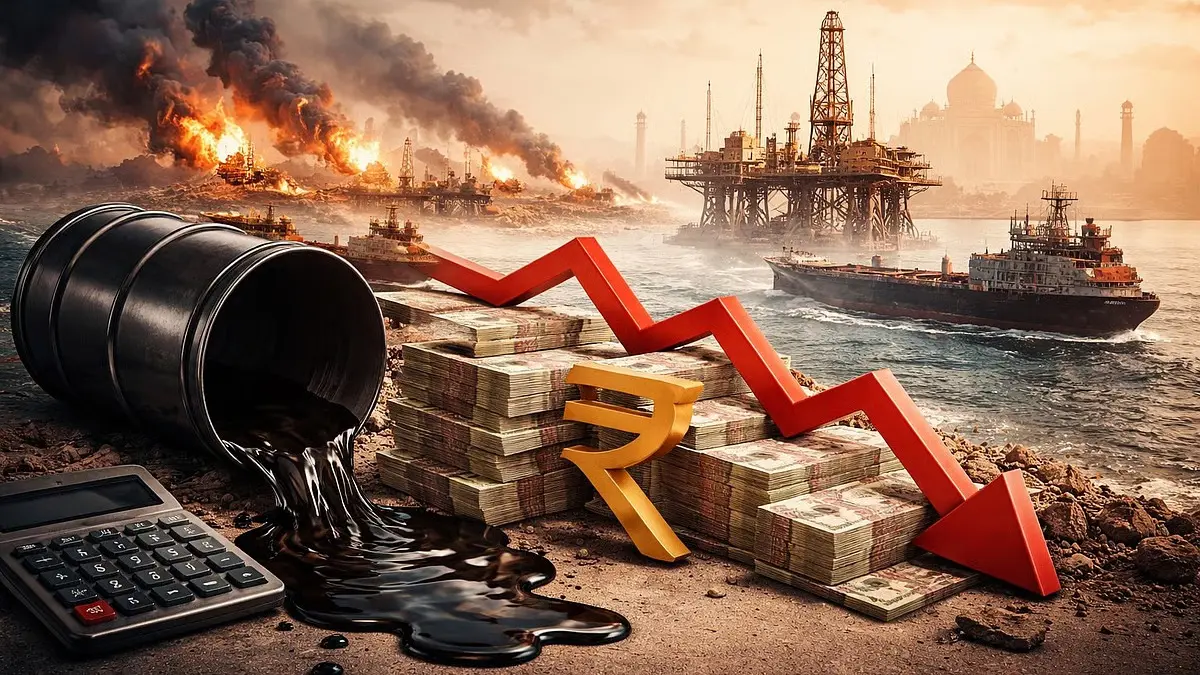
India's Confederation of Indian Industry has called on the government for a phased rollback of fuel excise duties, even as private sector capital expenditure surged 67 percent to Rs 7.7 lakh crore in FY25. The dual signal booming corporate investment alongside a plea for tax relief marks a pivotal moment in India's growth policy debate.
The Numbers Behind The Noise
India's private sector has posted one of its strongest capital expenditure performances in recent memory, with investment climbing 67 percent year-on-year to Rs 7.7 lakh crore in FY25. Yet the Confederation of Indian Industry believes this momentum could be even stronger if the government reduces the tax burden on fuel, which feeds directly into logistics, manufacturing, and consumer costs across every sector of the economy. CII's pre-budget recommendation is clear: lower fuel taxes in stages to sustain investment confidence and ease inflationary pressure on businesses and households alike.
Why Excise On Fuel Matters
Fuel excise duties in India are among the highest globally as a share of the retail price, with petrol and diesel taxes accounting for nearly 45 to 55 percent of what consumers pay at the pump. For industries relying on road freight, cold chains, and power backup, elevated fuel costs compress margins and raise input prices across the supply chain. A phased rollback, CII argues, would not be a revenue giveaway but a growth multiplier lowering the cost of doing business while putting more disposable income back in the hands of consumers.
The Private Capex Story
For the first time in over a decade, private sector capital expenditure has meaningfully outpaced public sector spending growth, signalling a genuine revival of corporate confidence. Key sectors driving this investment surge include infrastructure, renewable energy, semiconductors, electronics manufacturing, and data centres. Industry leaders credit the government's Production Linked Incentive schemes, single-window clearances, and a stable macro policy environment as the triggers behind this investment upcycle.
Capex And Industry Highlights
- Private sector capex rose 67 percent year-on-year to Rs 7.7 lakh crore in FY25, the highest growth rate in over a decade
- CII has formally recommended a phased reduction in central excise duties on petrol and diesel to ease input cost pressures
- Fuel taxes currently constitute nearly 45 to 55 percent of retail pump prices, making India one of the highest-taxed fuel markets among emerging economies
- Sectors leading private investment include renewables, semiconductors, electronics, data infrastructure, and road logistics
- CII also recommended rationalising GST slabs and expanding the PLI scheme to more labour-intensive industries
- A phased excise rollback could directly reduce freight costs, lower retail inflation, and boost rural consumption demand
- Government's public capex in FY25 remained robust at Rs 11.1 lakh crore, with private investment now catching up as a parallel engine
The Policy Tightrope
The government faces a delicate balancing act. Cutting fuel excise reduces a reliable revenue stream that funds welfare schemes, infrastructure bonds, and fiscal deficit management. However, with the fiscal deficit tracking within target and private investment accelerating, CII believes the timing is right for the government to give back some of the gains accumulated from fuel tax collections during the high-price years of 2021 to 2023. A phased approach beginning with a Rs 2 to Rs 3 per litre cut on diesel is being proposed rather than an immediate sweeping reduction.
What It Signals For India Inc.
The combination of record private capex and organised industry lobbying for supply-side tax relief points to an Indian economy that is growing with confidence but watching its cost structure carefully. If the government acts on even part of the CII recommendation in the Union Budget, it could trigger a second wave of investment decisions that are currently sitting on the fence, waiting for input cost certainty before committing.
Sources: Confederation of Indian Industry (CII) Annual Report, Business Standard, Economic Times, Moneycontrol, Financial Express (May 2026)