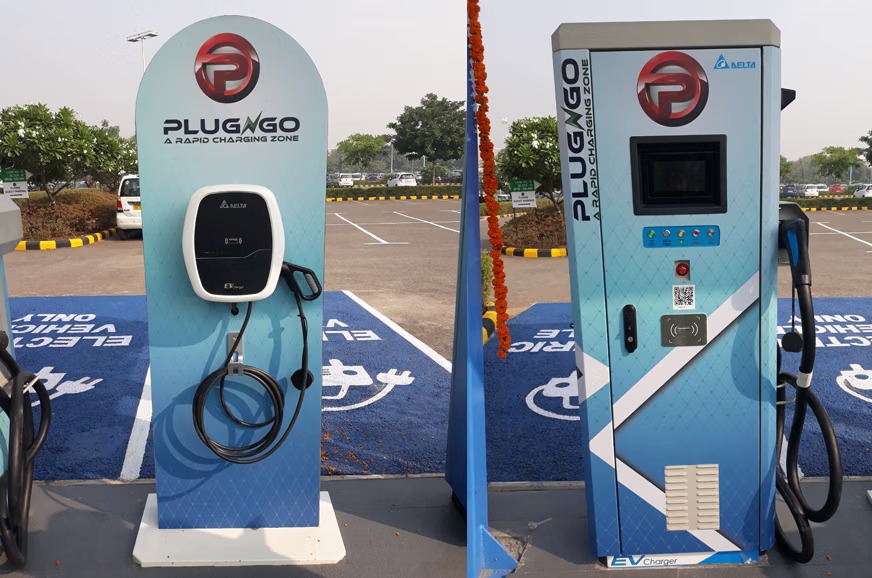
India is scaling up its EV charging ambition with a 72,300-station rollout under PM E-Drive, backed by Rs 2,000 crore, while Minister H.D. Kumaraswamy pushes for a UPI-style unified payment layer that lets any EV driver charge anywhere, with any app, without friction.
Charging Ahead
The Central Government has released operational guidelines for deploying 72,300 public EV charging stations across India under the PM E-Drive scheme, with BHEL designated as the project implementation agency. Union Minister for Heavy Industries H.D. Kumaraswamy has simultaneously championed the idea of a seamless, interoperable charging payment system a UPI equivalent for energy making range anxiety and app overload a thing of the past.
The UPI-For-EV Vision
India's fragmented EV charging ecosystem where every network runs its own app, wallet, and login is being called out as a critical barrier to mass adoption. The proposed Unified Energy Interface (UEI), recommended by the Department of Science and Technology, mirrors UPI's architecture and allows EV drivers to discover chargers, transact, and pay across any network without needing multiple apps. At least 20 energy companies including ChargeZone, Kazam, and Pulse Energy have already joined the UEI alliance to build this open energy network.
The 72,300 Charger Blueprint
The PM E-Drive scheme deploys chargers across 50 national highway corridors, metro cities, airports, railway stations, toll plazas, and fuel retail outlets. Government offices, hospitals, and educational institutions qualify for a 100% subsidy, while high-traffic public hubs receive 80% support on upstream infrastructure and 70% on charging equipment. Subsidies are disbursed in two tranches linked to compliance and performance benchmarks.
Kumaraswamy's LEAF Play
In March 2026, Kumaraswamy inaugurated the Light Electric-Vehicle Acceleration Forum (LEAF), a neutral industry-led consortium bringing together OEMs, charging operators, and tech providers. LEAF is championing the Light Electric Combined Charging System (LECCS), approved by the Bureau of Indian Standards as a Type 7 unified connector supporting both AC and DC charging. The forum's core mandate is interoperability ensuring every charger speaks the same language, regardless of brand.
EV Charging Policy Highlights
- The PM E-Drive scheme carries a total outlay of Rs 10,900 crore, with Rs 2,000 crore earmarked for charging infrastructure
- 72,300 public chargers to be deployed at priority locations across India's major cities and highway corridors
- BHEL is the designated project implementation agency overseeing rollout and compliance
- 100% subsidy for government-owned sites offering free public access; 80% for high-traffic commercial hubs
- Unified Energy Interface (UEI) backed by 20+ energy companies as the UPI-like standard for EV payment interoperability
- NPCI has also initiated an interoperable payment platform for EV charging, signalling institutional momentum
- LECCS connector standard to unify slow and fast charging across all light electric vehicle networks
- Cities with populations above one million, smart cities, and metro-linked satellite towns are priority deployment zones
What It Means For Indian EV Drivers
India's EV journey has long suffered from a classic chicken-and-egg problem consumers hesitate without infrastructure, and investors hesitate without consumers. The combination of a massive government-backed charger rollout and a UPI-style payment layer directly attacks both sides of that equation. If UEI achieves scale the way UPI did, Indian EV drivers could soon charge their vehicles as effortlessly as they pay for chai at a street stall.
Sources: News On Air, PIB India