Mumbai city's air travelers now have a reason to rejoice. Today marks the official opening of a direct foot overbridge (FOB) linking Mumbai Metro Line 3’s underground station with Terminal 2 of Chhatrapati Shivaji Maharaj International Airport (CSMIA), designed to free commuters from ci...
Mumbai city's air travelers now have a reason to rejoice. Today marks the official opening of a direct foot overbridge (FOB) linking Mumbai Metro Line 3’s underground station with Terminal 2 of Chhatrapati Shivaji Maharaj International Airport (CSMIA), designed to free commuters from city traffic and transform last-mile connectivity.
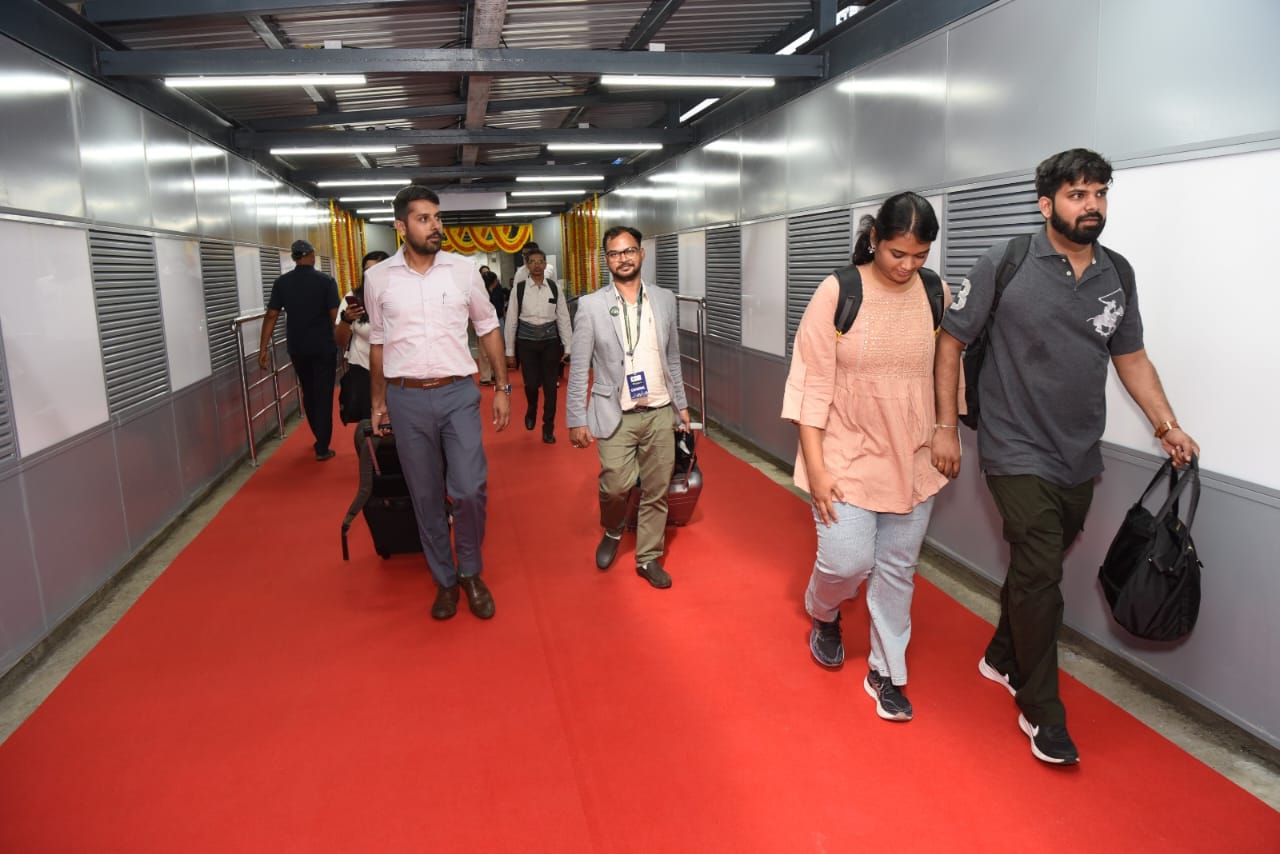
The Mumbai Metropolitan Region Development Authority (MMRDA) unveiled a steel FOB that has been meticulously engineered to provide frictionless, quick access for Metro Line 3 passengers to the airport terminal. Inaugurated on Saturday, the bridge drastically reduces the walking distance for air passengers by bypassing the hectic roadways, making seamless multimodal travel a daily reality.
Key Highlights of the New Bridge
The bridge stretches 88m in length, is 4.3m wide, and sits at a height of 3m above ground level.
Its construction, completed 23m above the under-construction Metro Line 7A, involved intricate planning and stringent safety standards.
Walking distance for Metro-Airport passengers slashed from 450m to 118m.
How the Bridge Improves Commuter Experience
Elimination of Road Crossings:
Air passengers no longer need to carry luggage across major roadways or look for shuttle vehicles. The FOB connects Lift Entry/Exit A1 of the CSMIA–T2 Metro Station straight to the terminal.
Reduced Travel Time and Stress:
Direct access means commuters can now avoid traffic jams and uncertainty outside the airport, arriving for flights with greater predictability.
Hassle-Free Integration:
The bridge forms part of MMRDA’s larger effort to integrate Mumbai Metro Line 3 (Aqua Line) and the city's key transport hubs. This strategic merger aims to ease commutes for thousands of daily travelers, making multi-modal journeys far more practical.
Metro Line 3: The Backbone of Mumbai’s New Urban Commute
Metro Line 3 is Mumbai’s first fully underground corridor, stretching 33.5km from Cuffe Parade (Colaba) to Aarey, with 27 stations including two at the airport (T1 & T2).
The line operates between 6:00AM-11:00PM with peak hours seeing trains every 4–5 minutes.
Current partial operations cover Aarey JVLR to Worli, with full connectivity expected by late 2025.
Engineering Marvel and Urban Integration
The bridge was built without disrupting parallel infrastructure work, showcasing a highly coordinated urban development model.
Precision planning ensured the structure’s stability, especially at the considerable elevation above an active metro station. The choice of steel reflects strong durability and a lower environmental footprint than conventional concrete.
Accessibility improvements are underway across Mumbai; similar integrated pedestrian projects are in development for other high-density hubs, signaling a future of convenient, green urban mobility.
Environmental and Urban Impact
By eliminating the need for taxi or rideshare transfers for air travelers, the bridge will reduce carbon emissions and promote sustainable travel choices.
The new connection encourages greener habits, reducing overall vehicular congestion around the airport zone.
What Commuters Need to Know
Access: Use Lift Entry/Exit A1 at the Metro station for the easiest transition to the terminal.
Safety: The bridge features modern safety engineering and accessibility for luggage carriers, disabled, and elderly travelers.
Fare and Convenience: Metro Line 3 fare slabs range from ₹10 up to ₹60 depending on distance, with tourist and monthly passes available.
Conclusion
With this bridge, Mumbai leaps forward in urban transit, offering global-grade convenience for air passengers. The coordination between the Metro and Airport authorities has delivered a structure that does more than just connect two points—it promises an experience where traffic jams and last-minute rushes are stories from another era.
Source: Times of India, Indian Express, News18, MMRDA and MMRCL official releases.