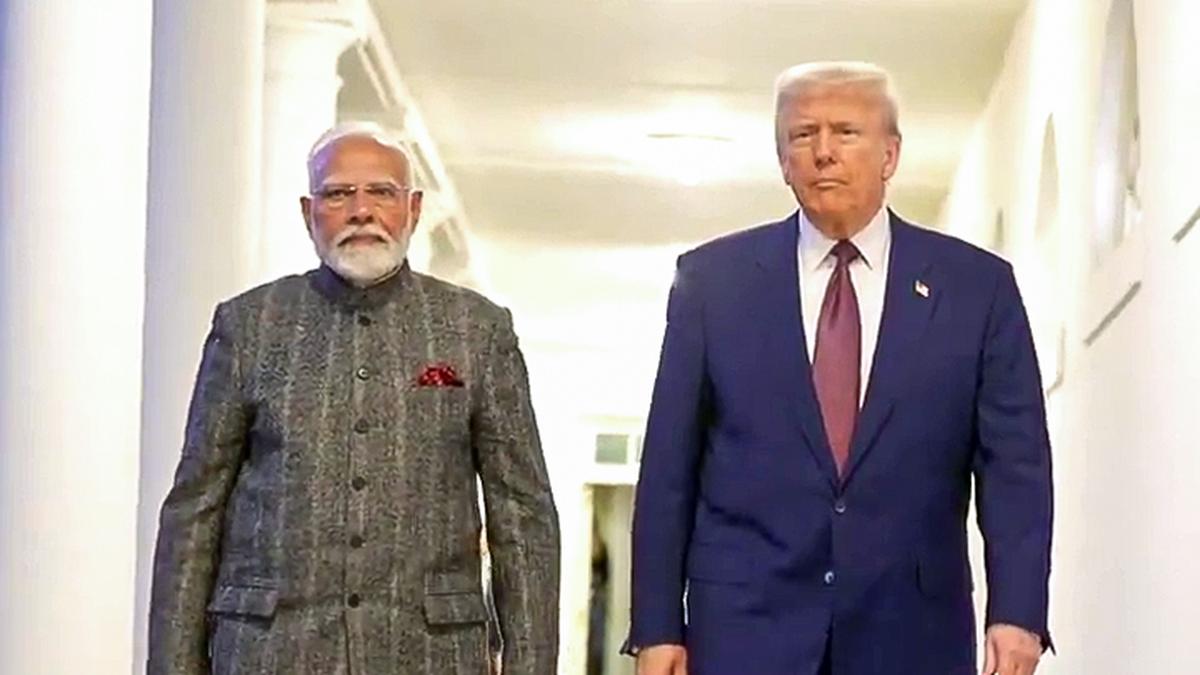
The upcoming G7 Summit in France offers Indian Prime Minister Narendra Modi and U.S. President Donald Trump a vital opportunity to repair bilateral relations. Ties deteriorated sharply following a U.S. military missile strike on an Iran-linked oil tanker in the Gulf of Oman, which killed three civilian Indian seafarers.
EVIAN, France — Indian Prime Minister Narendra Modi and U.S. President Donald Trump are expected to hold a high-stakes bilateral meeting on the sidelines of the 52nd G7 Summit in Evian, France. The anticipated face-to-face meeting arrives during a severe diplomatic crisis between New Delhi and Washington, triggered by a U.S. military strike in the Gulf of Oman that killed three Indian civilian sailors. The diplomatic encounter presents a vital opportunity for both heads of state to stabilize bilateral trade negotiations and reset security ties currently strained by the lethal enforcement of Washington’s naval blockade against Iran.
Escalating Tensions Over Lethal Gulf of Oman Strikes
The scheduled diplomatic meeting follows a formal diplomatic protest lodged by New Delhi. The geopolitical crisis erupted when U.S. military aircraft fired two Hellfire missiles directly into the engine room of the Palau-flagged oil products tanker M/T Settebello near the strategic Strait of Hormuz.
U.S. Central Command (CENTCOM) defended the operational engagement, asserting that the vessel was actively violating an ongoing American maritime blockade designed to choke off Iranian petroleum revenues. According to a formal statement from CENTCOM, the commercial vessel’s operators "repeatedly failed to comply with directions from American forces" before the precision kinetic strike was authorized. While 21 Indian mariners were safely rescued from the burning vessel by responding Omani naval assets, three crew members initially reported missing were later confirmed dead.
India Demands Halt to Commercial Shipping Visuals
The deaths represent the first civilian fatalities recorded since the United States began aggressively enforcing its strict ports blockade. The incident sparked intense political domestic pressure within India, prompting the Ministry of External Affairs (MEA) to swiftly summon the U.S. deputy chief of mission in New Delhi to lodge a "strong protest."
Maritime labor organizations in India have voiced alarm over the vulnerability of commercial crews navigating the region's highly militarized chokepoints. Union leaders contend that international seafarers are being caught in the crossfire of asymmetric enforcement actions targeting the global "shadow fleet" of older, un-insured tankers used to transport sanctioned crude oil.
High-Stakes Agenda Awaiting Evian Bilateral Talks
Despite the diplomatic friction, both administrations view the upcoming G7 outreach sessions in Evian as an essential platform to prevent a long-term rupture in the broader U.S.-India strategic partnership. Beyond resolving the immediate maritime crisis, negotiators are racing to advance a comprehensive bilateral trade pact that has remained frozen under the current U.S. administration's tariff policies.
The scheduled meeting will mark the first personal interaction between Prime Minister Modi and President Trump since their high-profile bilateral assembly in Washington DC. According to Indian diplomatic sources, the two leaders will attempt to compartmentalize the maritime tragedy to preserve critical joint initiatives, including the India-Middle East-Europe Economic Corridor (IMEC) and critical mineral supply chain resilience treaties.
Official Sources Section
According to official administrative briefings released by the Ministry of External Affairs of India, Prime Minister Modi is conducting a multi-nation tour that includes targeted innovation conferences alongside French President Emmanuel Macron before arriving at the G7 Summit. Operational data verified by the U.S. Department of Defense confirms that the U.S. Navy blockade has disabled eight non-compliant vessels and redirected over 130 merchant ships since operations commenced.
Quote Section
"Sadly, three Indian seafarers initially reported missing are now confirmed dead after bodies have been located and identified," stated Sarbananda Sonowal, India's Union Minister for Ports, Shipping, and Waterways. "This is a profound loss to our maritime family."
"The continuing incidents of attacks on shipping in the region are deeply worrisome. The targeting of commercial shipping and civilian infrastructure in the region must end," said Ministry of External Affairs Spokesperson Randhir Jaiswal. "These attacks must cease and end. We also call for dialogue and diplomacy so that we can have an early return to peace and stability."
"The crew repeatedly failed to comply with directions from American forces," stated U.S. Central Command in an official military brief detailing the engagement. "The vessel violated the ongoing blockade by attempting to transport oil from Iran."
Why It Matters
The outcome of the Modi-Trump dialogue holds massive structural implications for international commerce, global oil shipping routes, and multinational defense agreements. India provides more than 10% of the global seafaring workforce; consequently, any permanent shift toward the weaponization of trade blockades directly threatens Indian nationals operating commercial fleets. If the bilateral talks fail to yield robust maritime safety protocols, it could force New Delhi to re-evaluate its defense alignment within the Quadrilateral Security Dialogue (Quad) and seek alternative security mechanisms to safeguard its vital energy supply lines.
Key Facts at a Glance
Lethal Kinetic Strike: A U.S. military aircraft targeted the M/T Settebello oil tanker in the Gulf of Oman, resulting in the deaths of three Indian mariners.
Blockade Enforcement: U.S. CENTCOM confirmed the vessel was targeted for violating an active American blockade on Iranian energy exports and ignoring naval warnings.
Diplomatic Protest: New Delhi officially summoned a senior U.S. diplomat to demand an immediate end to military strikes on civilian-manned commercial vessels.
Summit Side Meetings: The upcoming G7 Summit in Evian, France, serves as the first direct forum for Modi and Trump to address the security rupture and unfreeze stall trade pact negotiations.
FAQ Section
Q1: Who were the Indian citizens killed in the U.S. military strike?
A1: The three deceased Indian seafarers have been officially identified as Chief Engineer Patnala Suresh, Deck Cadet Aditya Sharma, and Fitter Shivanand Chaurashiya.
Q2: Why did the United States military target a commercial merchant vessel?
A2: U.S. Central Command stated that the ship was operating under a Palau flag of convenience to bypass international sanctions, violating an active U.S. naval blockade aimed at stopping Iranian oil exports.
Q3: What is India's official position regarding the Gulf of Oman incident?
A3: India’s Ministry of External Affairs has strongly condemned the use of force against civilian maritime crews, demanding that all parties halt attacks on commercial infrastructure and return to diplomatic negotiations.
Source: Official diplomatic transcripts from the Ministry of External Affairs of India, formal military operational briefings from U.S. Central Command, and field reports filed by The Guardian and The Hindu.