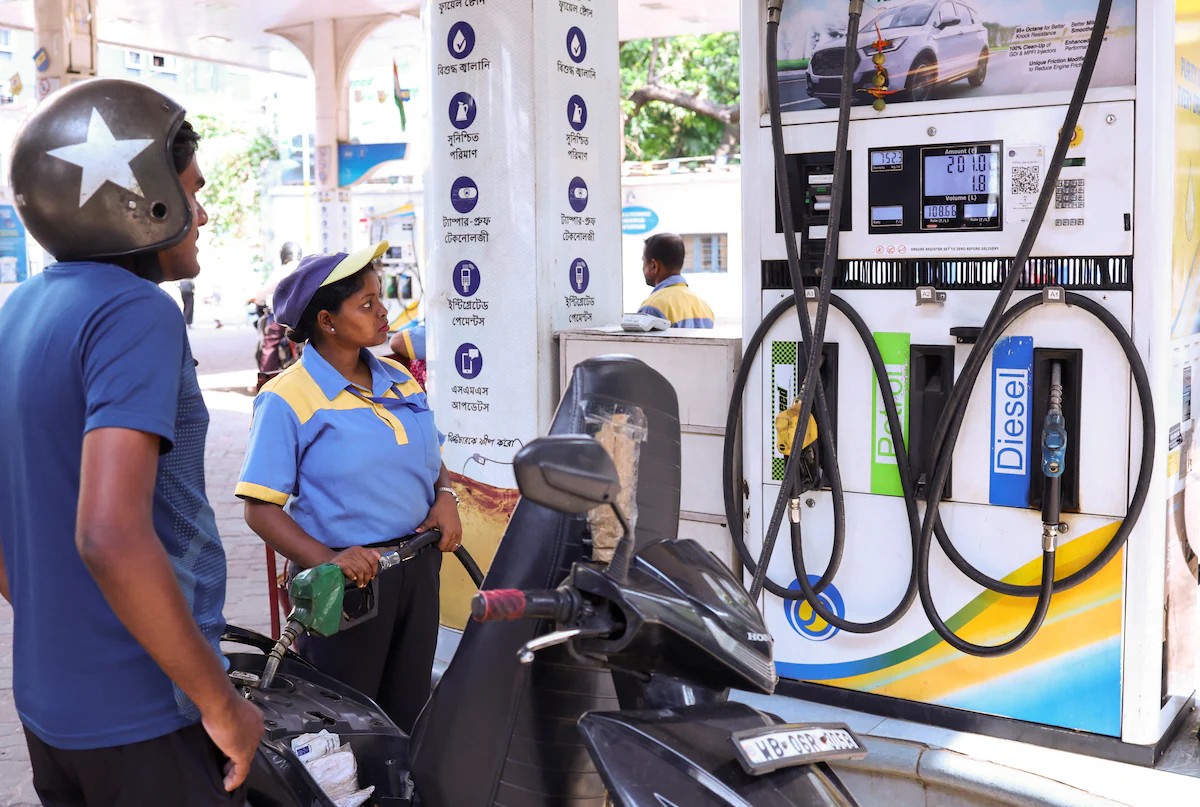
The Maharashtra government has capped daily retail diesel sales at 200 liters per vehicle and banned fuel resale. The preventative 90-day order stops commercial and industrial buyers from exploiting a $\text{Rs } 40$ per liter discount at retail pumps, protecting fuel availability for ordinary citizens.
MUMBAI — The Maharashtra state government has introduced sweeping restrictions on the retail distribution of petroleum products, imposing a strict daily cap of 200 liters on diesel purchases per customer and enforcing an absolute ban on fuel resale. The directive, issued through a formal government resolution by the Food and Civil Supplies Department, aligns with a central mandate targeting the diversion of subsidized fuel. Effective immediately across Maharashtra, the emergency measures aim to eradicate widespread hoarding and black marketing fueled by a massive $\text{Rs } 40$ per liter price disparity between retail and bulk fuel rates.
State Crackdown Targets Bulk Fuel Diversion
The regulatory intervention follows the invocation of federal powers under the Essential Commodities Act, 1955. Authorities in Mumbai detected a systematic shift where industrial, commercial, and institutional consumers abandoned bulk procurement channels to source cheaper fuel from retail fuel stations.
According to senior officials within the Food and Civil Supplies Department, large contractors, transport undertakings, and manufacturing units were found buying fuel meant for ordinary motorists. This unexpected surge in demand depleted retail inventories, causing artificial queues and localized dry-outs at multiple fuel outlets across several districts in Maharashtra.
Retail Fuel Pricing Arbitrage Map
The structural driver behind this market disruption is a stark pricing arbitrage between retail stations and bulk-supply depots. While public-sector oil marketing companies maintain regulated pricing at the pump to insulate common citizens, bulk users face open-market rates directly exposed to volatile international crude shifts.
This economic imbalance incentivized commercial entities to purchase vast quantities of fuel in unauthorized jerry cans and industrial containers, completely bypassing their designated consumer pumps.
Strict Enforcement and Compliance Directives
Under the newly issued state guidelines, retail fuel stations are strictly prohibited from dispensing petrol or diesel into any unauthorized containers. Fuel can now only be pumped directly into vehicle fuel tanks or containers formally certified by the Petroleum and Explosives Safety Organisation (PESO).
The government resolution outlines strict punitive action for non-compliance. Public-sector oil marketing companies and independent dealers have been ordered to audit daily transaction logs. Any retail station found violating the 200-liter daily cap or facilitating bulk commercial sales faces immediate license suspension and criminal prosecution.
Official Sources Section
According to official administrative notifications from the Ministry of Petroleum and Natural Gas, the federal framework is governed by the Motor Spirit and High Speed Diesel (Temporary Regulation of Supply through Retail Outlets) Order, 2026. State-level deployment orders finalized by the Food and Civil Supplies Department of Maharashtra confirm that these emergency supply provisions will remain in force for an initial period of 90 days.
Quote Section
"We detected a nexus involving oil companies, petrol pump operators and bulk consumers, which resulted in fuel queues in some districts," stated a senior official from the Maharashtra Food and Civil Supplies Department. "The restrictions are precautionary, and Maharashtra currently has adequate fuel stocks to meet regular citizen requirements."
"The bulk procurement through retail stations could divert supplies intended for ordinary consumers and create the potential for localised shortages," the Ministry of Petroleum and Natural Gas noted in its statutory order. "The measures are aimed at ensuring the equitable availability of petrol and diesel."
Why It Matters
The implementation of a 200-liter cap protects ordinary motorists and agricultural consumers from fuel rationing or sudden retail shortages. However, for industrial sectors, logistics corporations, and infrastructure firms, the strict enforcement means an immediate and substantial escalation in operational energy costs.
Businesses that previously exploited the retail pump pricing loophole must now buy fuel exclusively via bulk-supply channels at market rates, which will likely raise transport overheads across western India.
Key Facts at a Glance
Daily Purchase Cap: Diesel sales at all retail pumps across Maharashtra are legally restricted to a maximum of 200 liters per vehicle or customer per day.
Resale Prohibition: The unauthorized storage, diversion, and resale of petrol or diesel sourced from retail stations is completely banned.
Bulk Consumer Ban: Industrial, commercial, and institutional consumers are barred from retail pumps and must use authorized bulk depots.
PESO Certification Required: Fuel dispensing into external containers is strictly limited to vessels explicitly approved by the Petroleum and Explosives Safety Organisation.
Legal Penalties: Violations of the 90-day temporary order will invite immediate prosecution under the Essential Commodities Act, 1955.
FAQ Section
Q1: Will the 200-liter daily diesel cap affect private car owners in Maharashtra?
A1: No. The 200-liter daily cap is far higher than the fuel tank capacity of standard passenger cars and private vehicles, meaning ordinary motorists will experience zero disruptions.
Q2: Can I still buy petrol or diesel in a jerry can for emergency use?
A2: Fuel can only be dispensed into vehicle tanks or external containers that carry an official certification from the Petroleum and Explosives Safety Organisation (PESO). Standard, unapproved jerry cans are banned.
Q3: Why is there such a massive price difference between bulk and retail diesel?
A3: Retail fuel prices are kept stable by state-run oil marketing companies to protect citizens, whereas bulk fuel rates for industries are tied to global oil supply lines and international market rates.
Source: Official regulatory notifications from the Ministry of Petroleum and Natural Gas, statutory government resolutions from the Food and Civil Supplies Department of Maharashtra, and commercial distribution records published by The Hindustan Times and ET Auto.