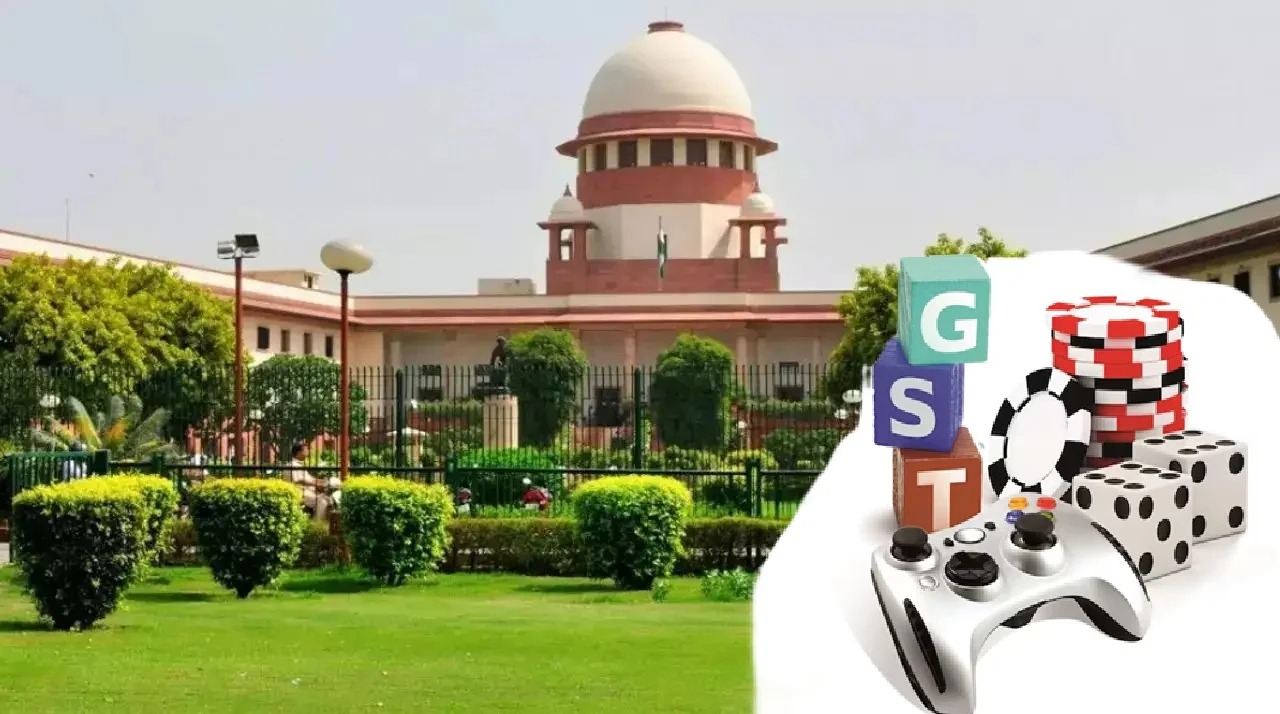
As the Supreme Court enters the final week of hearings on the contentious issue of online gaming taxation and state-level regulation, the stakes couldn’t be higher. With over Rs 2 lakh crore in retrospective tax demands and constitutional questions on the table, this case could redefine the...
As the Supreme Court enters the final week of hearings on the contentious issue of online gaming taxation and state-level regulation, the stakes couldn’t be higher. With over Rs 2 lakh crore in retrospective tax demands and constitutional questions on the table, this case could redefine the future of India’s booming digital gaming sector.
Key developments from the courtroom
1. The apex court is hearing arguments from Karnataka and Tamil Nadu on their respective laws banning or restricting online gaming
2. Over 100 online gaming firms and casinos are involved, including Gameskraft, Baazi Networks, and First Games Technology
3. The central issue is whether games like rummy and fantasy sports are games of skill or games of chance
4. The court is also examining whether GST should be levied on the full face value of bets or only on the actual transaction value
Taxation tug-of-war
The heart of the dispute lies in the interpretation of GST laws. In October 2023, the central government clarified that a 28 percent GST would apply to online gaming on the full face value of bets. This move eliminated the earlier distinction between games of skill and games of chance, sparking industry-wide backlash.
Gaming companies argue that GST should only apply to their commission or platform fee—the actual transaction value—rather than the entire amount wagered. For example, if a player deposits Rs 1,000, the platform earns a small service fee, while the rest goes into the prize pool. Taxing the full Rs 1,000, they say, unfairly inflates the burden.
Legal and constitutional challenges
1. Karnataka and Tamil Nadu are defending their right to regulate online gaming under state laws, citing public health and social order
2. Karnataka’s submission emphasized its duty to curb gaming addiction and economic harm caused by betting
3. The states are appealing High Court rulings that struck down their previous attempts to ban skill-based games played for stakes
4. The Supreme Court is also reviewing the constitutional validity of retrospective GST notices issued to gaming firms
Industry impact and existential concerns
The gaming sector warns that the retrospective tax demands—estimated at Rs 1.5 to 2 lakh crore—are several times higher than the industry’s total revenue. Companies say they cannot survive such financial pressure, and a lack of judicial clarity could lead to mass closures, job losses, and a freeze on innovation.
Casinos have also joined the fray, arguing that betting is neither a good nor a service and should not be taxed under GST. They insist that GST, if applicable, should be levied only on the transaction value, not the entire value of chips purchased.
Social implications and regulatory urgency
Beyond the financial and legal dimensions, the case has sparked debate on broader social concerns. Issues like money laundering, gambling addiction, and mental health risks—including reported suicidal tendencies—have prompted calls for a balanced regulatory framework.
The Supreme Court’s verdict is expected to address not just taxation, but also the role of states in regulating online gaming, and the need for national guidelines that distinguish between skill-based and chance-based games.
Looking ahead
With final arguments underway, the gaming industry, legal experts, and policymakers are watching closely. The outcome will shape the future of online entertainment, digital taxation, and federal regulatory powers in India.
Whether the court upholds the government’s aggressive tax stance or sides with the industry’s plea for fairness, the decision will be a landmark moment for India’s digital economy.
Sources: Moneycontrol, Business Standard, TaxGuru, SCC Online, CAClubIndia, eFileTax