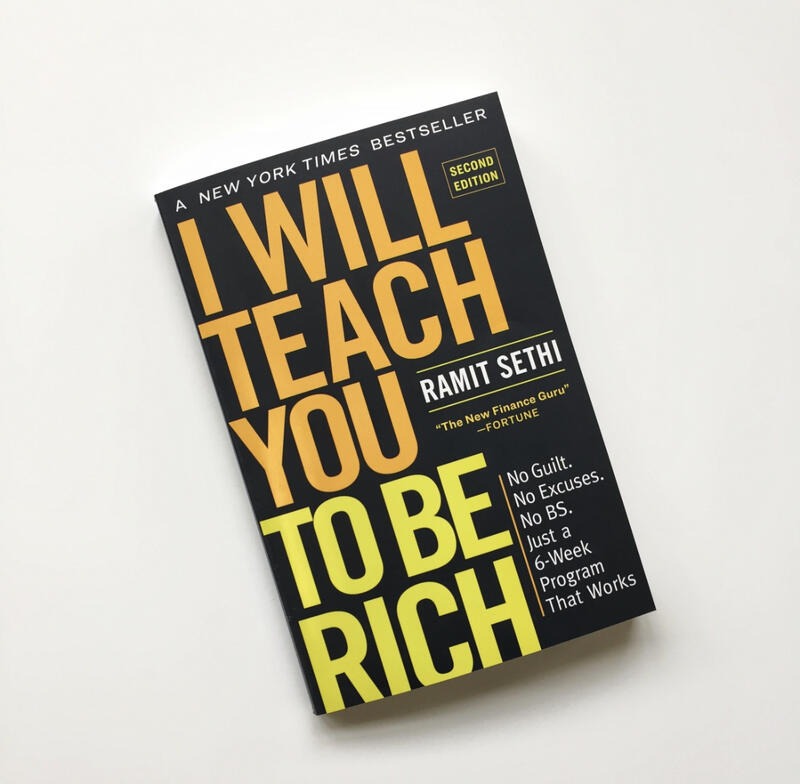
Indian-origin millionaire Ramit Sethi emphasizes that getting started immediately is the single most important factor in building wealth. Through his four-bucket conscious spending plan and automated index fund investing, Sethi shows how early, automated execution outperforms complex financial expertise in creating long-term personal independence and financial security.
NEW DELHI, July 25, 2026 — Self-made Indian-origin millionaire and author Ramit Sethi has asserted that the single most critical factor in achieving long-term wealth is initiating financial action rather than possessing superior intelligence or waiting for perfect market conditions. In updated releases of his best-selling personal finance work I Will Teach You To Be Rich, Sethi argues that delaying investments due to perfectionism, fear, or over-analysis remains the largest structural barrier to financial freedom for middle-class households.
The personal finance framework challenges traditional views that financial success requires complex mathematical modeling or expert-level market timing, emphasizing instead early market entry, behavioral psychology, and automated asset building.
The Behavioral Psychology of Delaying Execution
A central premise of Sethi’s framework is that prospective investors lose far more wealth to psychological inertia than to poor stock selection or market downturns. Financial modeling demonstrates that waiting even five years to begin investing can reduce total retirement accumulation by nearly 30 to 40 percent due to lost compounding cycles, regardless of subsequent income growth.
Sethi points out that the vast majority of people fail to build wealth because they get trapped in "information overload" reading endless articles, analyzing individual stocks, or worrying about minor banking fees instead of setting up a simple, scalable system.
Core Pillars of the 'Rich Life' Philosophy
Sethi’s financial philosophy centers on the concept of living a "Rich Life," which defines wealth as personal freedom and targeted spending rather than endless capital hoarding. His strategy breaks down wealth accumulation into practical operational steps designed to eliminate decision fatigue.
1. The Conscious Spending Plan
Rather than enforcing restrictive, guilt-inducing budgets that track every cup of coffee, Sethi advocates for a forward-looking Conscious Spending Plan. This model categorizes net income into four distinct operational buckets:
Fixed Costs (50% – 60%): Essential living expenses including rent or mortgage, utilities, groceries, debt payments, and basic transport.
Investments (10% – 15%): Long-term wealth drivers routed directly into low-cost index funds, tax-advantaged accounts, or retirement funds.
Savings Goals (5% – 10%): Target funds for short-to-medium term milestones such as vacations, down payments, or an emergency buffer.
Guilt-Free Spending (20% – 35%): Unrestricted money allocated for dining out, hobbies, and entertainment, spent without financial anxiety.
| Personal Finance Bucket | Allocation Range | Core Focus / Objective |
| Fixed Costs | 50% – 60% of net pay | Essential survival & mandatory obligations |
| Investments | 10% – 15% of net pay | Automated index funds & long-term wealth compounding |
| Savings Goals | 5% – 10% of net pay | Short-term liquidity & emergency reserve buffer |
| Guilt-Free Spending | 20% – 35% of net pay | Discretionary enjoyment without financial regret |
Automation and Low-Cost Compounding
To ensure long-term consistency, Sethi emphasizes building an "Automated Money System." Once set up, income flows automatically from a primary checking account to savings, investment, and billing platforms within days of payday. This removes human willpower and emotional hesitation from the process.
Furthermore, Sethi strongly cautions against actively managed mutual funds with high expense ratios, which can quietly consume up to 50 percent of an investor's potential returns over a 30-year period. Instead, he recommends broad-market, low-cost index funds or target-date funds, which deliver consistent market returns at minimal cost.
Official Sources Section
According to official published excerpts and financial guidance released by Ramit Sethi:
"The single most important factor to getting rich is getting started, not being the smartest person in the room," writes Sethi in I Will Teach You To Be Rich. "The point of money is not to accumulate it forever. It's to live a Rich Life where you spend extravagantly on the things you love, and cut costs ruthlessly on the things you don't."
Statements and methodology details are documented in published editions of I Will Teach You To Be Rich and distributed via major global publishing networks.
Why It Matters
Sethi's actionable approach holds direct practical implications for retail investors navigating modern economic pressures:
For Young Professionals: Removes the intimidation barrier to investing, proving that small, automated contributions via index funds outperform delayed large investments.
For Household Budgeting: Replaces restrictive traditional budgets with a four-bucket conscious spending plan, reducing domestic financial friction and decision fatigue.
For Banking Consumers: Encourages active optimization of bank accounts, negotiation of credit card fees, and elimination of unnecessary financial intermediary charges.
Key Facts at a Glance
Primary Driver: Taking immediate action is identified as the single most critical factor in building wealth.
Conscious Allocation: Replaces traditional budgeting with four clear buckets: fixed costs, investments, savings, and guilt-free spending.
Automated Systems: Recommends setting up automatic bank transfers to eliminate emotional hesitation and ensure consistent investing.
Focus on Compounding: Prioritizes early market exposure via low-cost index funds over stock-picking or financial intellect.
Frequently Asked Questions (FAQ)
What is the single most important factor to getting rich according to Ramit Sethi?
According to Ramit Sethi, the single most important factor is getting started early with investing and managing money, rather than waiting to become an expert or attempting to time the market perfectly.
What is "Conscious Spending" and how does it differ from traditional budgeting?
Conscious spending encourages you to spend extravagantly on the things you care about most, while cutting costs ruthlessly on the things you don't care about avoiding line-item tracking of minor daily expenses.
Why is automation crucial in wealth building?
Automating your finances ensures that money flows into savings, investments, and bill payments automatically every month, removing human error, friction, excuses, and emotional hesitation.
Why does Ramit Sethi favor index funds over active stock picking?
Low-cost index funds capture broad market compounding with minimal management fees, outperforming the vast majority of professional stock-pickers over long investment horizons after accounting for fees and taxes.
Source: Official releases from I Will Teach You To Be Rich, publication details via Workman Publishing, and financial coverage reported by The Economic Times.