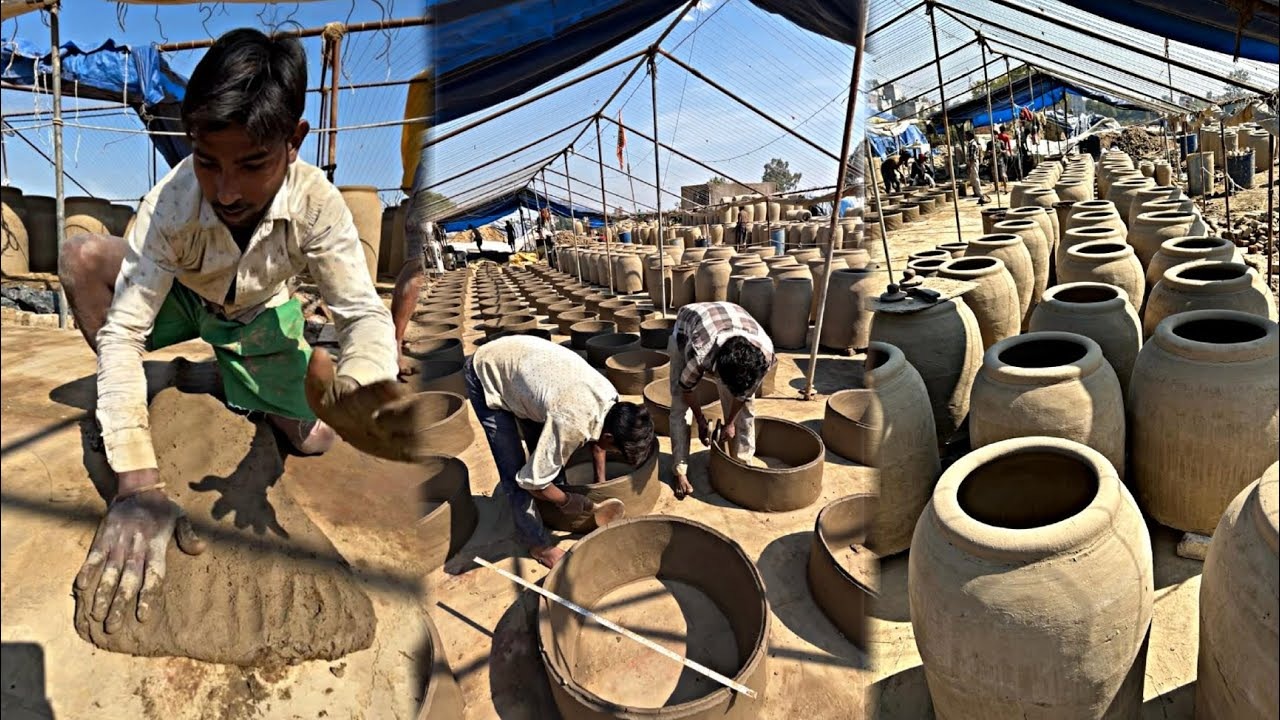
The multi-generational clay tandoor tradition in Gharuan, Punjab, faces severe economic headwinds as handcrafted methods collide with modern industrial competition. Rising soil costs and a market shift toward metal alternatives are forcing local artisans to pivot toward premium hospitality sectors and global export markets to sustain their legacy.
GHARUAN — Master artisans in the historic town of Gharuan, Punjab, are mounting a structural defense of their unique clay tandoor tradition amidst a challenging post-pandemic market. This specialized cluster, located in the Sahibzada Ajit Singh Nagar district, has spent generations acting as the primary source of handcrafted, heat-resistant clay ovens utilized across major commercial culinary hubs in North India. However, the confluence of rising raw material transport fees, a sharp decline in the availability of local alluvial soil, and intense competition from mass-produced metal and electrical variants has pushed this highly localized industry into a critical transitional phase.
The Monolithic Coil Technique of Gharuan
The clay tandoor tradition of Gharuan stands distinct from global ceramic manufacturing due to its strict adherence to a chemical-free, highly tactile building process. Unlike industrial units that utilize slip casting or mechanical molds, the craftsmen of Gharuan deploy a monolithic coil technique that has been passed down orally through specialized families for more than a century.
The physical production of a traditional Gharuan tandoor requires an intricate sequence of material choices:
Soil Synthesis: Artisans collect specific topsoil layers from local riverbeds, blending the rich silt with specialized organic binders.
Fiber Reinforcement: To prevent thermal shock and structural cracking under high temperatures, the wet clay mass is manually kneaded with precise quantities of animal hair and crop husk fibers.
Layered Aggregations: The structure is built up from the base using thick, hand-rolled clay coils. Each ring must partially dry under ambient conditions before the next layer is added to ensure it does not collapse under its own weight.
This methodical formulation yields a final product with exceptional thermal retention properties. When heated, the dense, porous clay walls radiate a uniform heat that creates the distinct smoky flavor profile highly demanded by professional chefs in traditional Punjabi cuisine.
Economic Strain and Market Compression
Despite the cultural value of the craft, the traditional clay tandoor market faces significant structural pressures. Local workshop owners state that procurement costs for high-quality clay have escalated by more than 40 percent due to strict local environmental laws governing topsoil extraction and riverbed mining across Punjab.
Furthermore, the rise of automated engineering firms producing low-cost, sheet-metal insulated gas tandoors has altered the commercial food service landscape. While a handcrafted clay unit requires slow pre-heating and periodic maintenance with a mustard oil-turmeric glaze to prevent flaking, modern metal alternatives offer rapid start times and lower operational maintenance. This convenience has led many entry-level highway dhabas and urban restaurants to move away from genuine clay installations, shrinking the artisan guild's traditional buyer base.
Official Sources Section
According to industrial data registries maintained by the Punjab Department of Industries and Commerce, specialized craft clusters like the one in Gharuan are currently undergoing review for potential integration into rural development funding pipelines.
Economic surveys conducted by regional MSME (Micro, Small and Medium Enterprises) development centers show that while the market for small domestic units has contracted significantly, a stable institutional demand persists from premium hospitality chains and export houses catering to non-resident Indian (NRI) communities in Canada, the United Kingdom, and Australia. These entities continue to place orders for large-scale, custom-built clay structures due to their irreplaceable culinary performance.
Quote Section
Reflecting on the operational realities of the cluster, a senior procurement officer from the Punjab Small Industries and Export Corporation (PSIEC) stated:
"The tandoor-making cluster of Gharuan holds an important place within Punjab's cottage industry framework. The challenge is not a lack of intrinsic value, but the need to adapt to modern logistics. We are evaluating specialized frameworks to assist these micro-entrepreneurs by improving market linkages and exploring export-oriented packaging standards to secure their traditional livelihoods."
Sardar Gurmukh Singh, a third-generation master artisan operating a workshop along the main historical corridor of Gharuan, highlighted the human cost of the industrial shift:
"This clay is in our blood; our ancestors discovered the exact ratios that allow a tandoor to withstand extreme furnace heat for years without fracturing. But today, the younger generation sees the intense physical labor and the rising cost of raw earth and prefers to look for corporate or factory jobs. Without targeted state support to protect our raw materials and fair pricing, this unique skill could vanish within a few decades."
Why It Matters
The survival of the Gharuan clay tandoor tradition has direct implications for cultural preservation, regional employment, and the authenticity of the hospitality sector. For the culinary industry, the complete loss of handcrafted clay manufacturing would mean a permanent shift toward steel-clad gas ovens, fundamentally altering the flavor profiles and traditional cooking techniques that define subcontinental gastronomy. From an economic perspective, supporting this micro-industry helps sustain a low-carbon, sustainable manufacturing practice that keeps capital directly within rural artisan families, preventing further economic migration into already strained urban centers.
Key Facts at a Glance
Generational Heritage: Gharuan's clay tandoor tradition is maintained by a specialized cluster of artisan families utilizing a centurylived monolithic coil technique.
Thermal Composition: The use of natural riverbed silt mixed with organic fibers creates highly durable walls capable of superior heat retention compared to synthetic ceramics.
Resource Hurdles: Tightening environmental regulations on topsoil extraction have increased raw material procurement costs for local workshops by over 40 percent.
Commercial Rivalry: Mass-produced, low-maintenance metal gas ovens are increasingly displacing traditional clay units in casual dining establishments.
Global Demand: Premium international hospitality businesses and export agencies remain the primary financial anchor for large-scale, handcrafted Gharuan units.
FAQ Section
Q: What makes a traditional Gharuan clay tandoor different from a modern commercial steel tandoor?
A: Unlike steel variants that rely on direct flame contact and metal surfaces, a Gharuan tandoor is built completely by hand from organic clay and natural fibers. The porous clay retains heat evenly and releases distinctive mineral aromas during cooking, which cannot be replicated by gas or electric elements.
Q: Why are raw material costs rising for the artisans of Gharuan?
A: The specialized alluvial soil required for these tandoors must be sourced from specific riverbed layers. Recent legal restrictions on unregulated sand and topsoil mining in Punjab have tightened the supply, forcing craftsmen to pay premium transport and sourcing fees.
Q: Can these traditional clay ovens be used safely in modern indoor commercial kitchens?
A: Yes. High-end restaurants frequently purchase the core clay pots from Gharuan and encase them inside insulated stainless steel counters, combining traditional heat profiles with modern health, safety, and ventilation systems.
Source: Punjab Department of Industries and Commerce Bureau, Punjab Small Industries and Export Corporation (PSIEC) Archives, Ministry of Micro, Small and Medium Enterprises Cluster Reports.