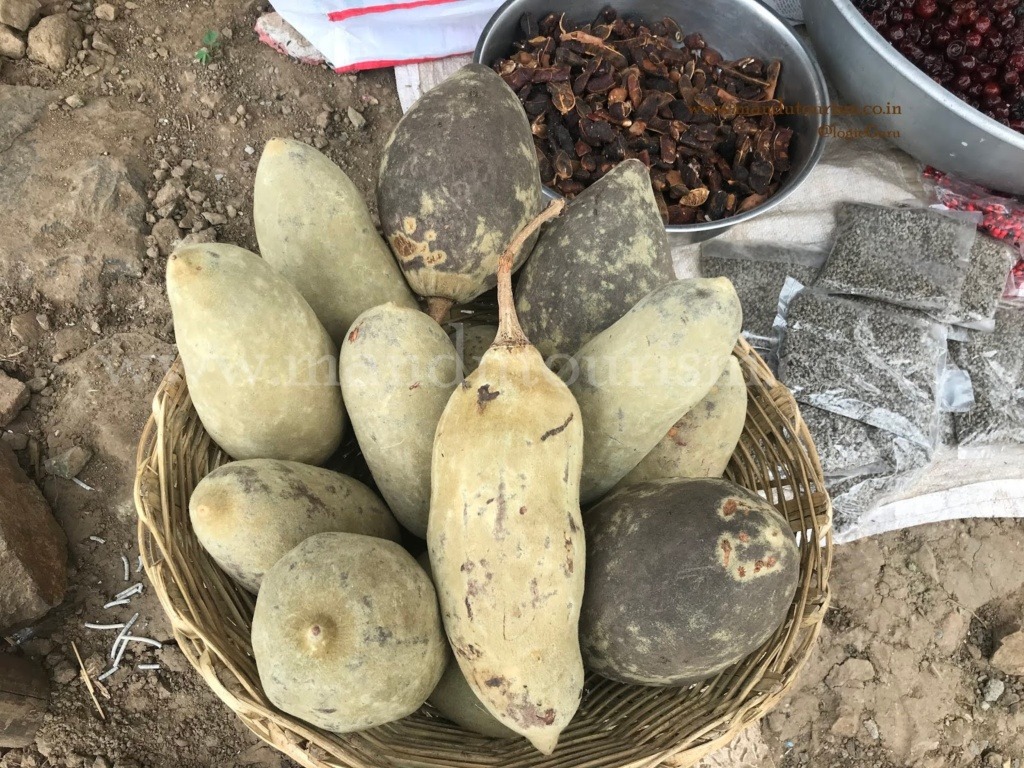
The article covers the granting of a Geographical Indication (GI) tag to Mandu's Khurasani Imli, the historic fruit of the region's 600-year-old African Baobab trees. The official designation protects this unique regional asset, helps prevent tree cutting, and creates structured, higher-income cooperative opportunities for local tribal communities.
MANDU, INDIA — The unique Khurasani Imli, the exotic fruit of Mandu’s historic Baobab trees, has officially been awarded a Geographical Indication (GI) tag. Issued under the Geographical Indications of Goods (Registration and Protection) Act, 1999, the statutory protection certifies the fruit’s specific geographic origin and unique nutritional characteristics.
The declaration marks a major milestone today for the agricultural and cultural landscape of Madhya Pradesh. It establishes formal intellectual property rights that prevent unauthorized commercial reproduction outside the region while setting the stage for global branding.
Tracing a 600-Year Heritage Rooted in Ancient Trade
Unlike standard Indian tamarind (Tamarindus indica), Khurasani Imli is the fruit of the African Baobab tree (Adansonia digitata). Historical and genetic records show that these giant trees reached the Mandu plateau over 600 years ago via ancient trade networks traversed by Afghan rulers and Arab merchants. One prominent historical account notes that the Sultan of Delhi, Alauddin Khilji, was presented with the first Baobab saplings by the Sultan of Khurasan, giving the regional fruit its distinct name.
While Baobab trees exist in small, scattered groups across parts of Gujarat and Maharashtra, the elevated topography and distinct soil composition of Dhar district host India's largest natural cluster, with an estimated 1,000 to 1,200 thriving trees. These ancient trees, some estimated to be up to 500 years old, feature massive, bottle-shaped trunks capable of storing up to 120,000 liters of water. This unique adaptation allows them to stay green and produce fruit even during severe droughts.
Boosting Income and Opportunities for Tribal Communities
For generations, marginalized indigenous groups, particularly the Bhil and Bhilala tribes, have acted as the primary guardians of these slow-growing trees. Before receiving the GI tag, tribal families largely relied on selling the raw, light-green, velvety pods along roadsides to passing tourists for minimal returns.
The newly granted legal status completely alters this economic dynamic. To organize production, the state horticulture and agriculture departments have begun forming rural cooperative societies. These bodies will streamline harvesting, enforce quality standards, and introduce official packaging that clearly highlights the fruit's rich Vitamin C, mineral, and antioxidant values. Organized processing will allow local communities to move beyond raw fruit sales, establishing value-added industries for products like:
Khurasani Imli Pulp & Powder: Used as a natural, tangy culinary souring agent.
Health Supplements: Formulated to leverage the fruit's high concentration of natural antioxidants.
Traditional Remedies: Supporting tribal healers who use the dried bark and seeds to manage digestive ailments, fatigue, and blood sugar levels.
Strengthening Conservation and Regional Tourism
Beyond its direct economic benefits, the GI tag provides a strong framework for environmental conservation. Because no dedicated government preservation schemes previously existed for the Baobab tree in India, several ancient specimens were historically lost to agricultural land clearing or infrastructure expansion. Local administrative bodies and the Forest Department can now utilize the product's elevated global profile to implement stricter local protection guidelines and fund specialized research initiatives.
The recognition is also expected to boost Mandu's heritage tourism. Often called the "City of Joy," Mandu is famous for its striking Afghan architecture, including the Jahaz Mahal and Hoshang Shah's Tomb. Local tour operators note that the unusual "upside-down" appearance of the leafless Baobab trees is already a staple feature on travel itineraries. Labeling the fruit as an official regional specialty creates a unique culinary tourism draw, encouraging visitors to purchase certified local products directly from tribal cooperatives.
Official Sources Section
The filing details, geographical definitions, and institutional approvals for the application (No. 1169) are fully documented in the public registry of the Intellectual Property India Office under the Ministry of Commerce and Industry. Field assessments regarding tree populations and cooperative setups are verified by official statements from the Dhar District Horticulture Department.
Quote Section
Highlighting the international marketing potential of the new designation, Dhar Collector Rajeev Ranjan Meena stated:
"With the GI tag given to Khurasani Imli, the fruit has received recognition and its peculiarities, origin, uses and everything about it will be known to the whole world. This will be very helpful in its branding and marketing, because till now, a few tribal people were selling this Imli on roadsides. Now, those products will be sold with official marking regarding their vitamin and nutrient values."
Why It Matters
For global consumers and health-conscious shoppers, the GI tag guarantees the absolute authenticity and nutritional quality of true Khurasani Imli. For the regional economy, it shifts a informal roadside trade into a structured, sustainable industry. This protects an endangered historical species while channeling revenues directly back to the tribal families who have protected these ancient trees for centuries.
Key Facts at a Glance
Official Recognition: Khurasani Imli, the fruit of Mandu's ancient Baobab trees, has officially secured a Geographical Indication (GI) tag.
Historical Origins: The parent trees (Adansonia digitata) were brought to Central India from Africa by traders roughly 600 years ago.
Unique Botany: Known as "upside-down trees," these plants feature massive trunks that can store up to 120,000 liters of water to survive droughts.
Largest Cluster: The Mandu plateau holds India's largest natural concentration of Baobabs, with an estimated population of 1,000 to 1,200 trees.
Economic Goal: The state is establishing cooperative societies to help local Bhil and Bhilala tribal families organize the processing and sale of the fruit.
FAQ Section
Q: Is Khurasani Imli the same as regular Indian tamarind?
A: No. Regular tamarind comes from the Tamarindus indica tree, whereas Khurasani Imli is the large, velvety, light-green fruit pod of the African Baobab tree (Adansonia digitata), featuring a milder, sour-sweet taste.
Q: How does a GI tag help the tribal communities of Mandu?
A: The GI tag legally protects the product name from misuse, increases its market value, and transitions roadside selling into structured cooperative marketing, directly boosting incomes for local tribal collectors.
Q: What are the primary health and medicinal benefits of the fruit?
A: Khurasani Imli is packed with Vitamin C, essential minerals, and antioxidants. It is traditionally used to treat digestive disorders, counter fatigue, and manage sugar levels.
Source: Intellectual Property India GI Registry, Directorate of Horticulture and Farm Forestry Madhya Pradesh, Times of India Indore Bureau Report.