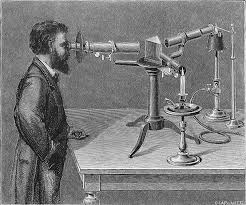
In 1868, astronomers discovered helium by analyzing the Sun's light during a solar eclipse, naming it after the Greek word for the Sun. Unfound on Earth for 27 years, it was finally isolated in 1895 and has since become a critical, irreplaceable asset for global semiconductor and medical manufacturing.
LONDON — A collaborative audit of historical astronomical records released by the Royal Astronomical Society on June 30, 2026, has highlighted the profound global impact of the 1868 discovery of helium. In August 1868, astronomers tracking a total solar eclipse identified a unique signature in the Sun's light, subsequently naming the new element helium after "helios," the Greek word for the Sun. For nearly three decades following this celestial breakthrough, the element remained completely undetected on Earth, a historical anomaly that continues to shape modern quantum physics and cryogenic industries today.
The Guntur Eclipse and the Spectral Signature
According to historical logs preserved by the Royal Observatory, Greenwich, the breakthrough occurred on August 18, 1868, during a total solar eclipse visible from Guntur, India. French astronomer Jules Janssen utilized a spectroscope to analyze the solar chromosphere, observing a bright yellow spectral line with a wavelength of 587.49 nanometers.
Initially misidentified by some as sodium, the distinct line did not match any known terrestrial substance. Concurrently, English astronomer Norman Lockyer observed the same distinct line from London without an eclipse, confirming that the signature belonged to a completely novel chemical element. Lockyer, alongside chemist Edward Frankland, proposed the name "helium" to denote its seemingly exclusive solar existence.
The Terrestrial Void: Three Decades of Search
For twenty-seven years following the solar observations, the scientific community faced a unique conundrum: an element abundant in stellar bodies but seemingly nonexistent on Earth. Archival papers from the British Science Association indicate that researchers across Europe unsuccessfully scanned atmospheric samples and volcanic gases for traces of the gas.
The mystery was resolved in March 1895 when Scottish chemist Sir William Ramsay successfully isolated the gas on Earth. Ramsay treated a uranium-bearing mineral known as cleveite with mineral acids, expecting to extract argon. Instead, spectral analysis revealed the exact same 587.49-nanometer yellow line observed by Lockyer and Janssen in the Sun's light, proving that helium was trapped within terrestrial radioactive minerals through alpha decay.
From Solar Curiosity to Critical Global Supply Chain
What began as a niche spectroscopic observation has evolved into an indispensable component of the modern global economy. Because helium is chemically inert, non-toxic, and possesses the lowest boiling point of any element ($4.22\text{ K}$ or $-268.93^\circ\text{C}$), it cannot be artificially synthesized or substituted in high-tech manufacturing.
Medical Diagnostics: The healthcare sector relies on liquid helium to cool the superconducting magnets inside Magnetic Resonance Imaging (MRI) scanners.
Aerospace and Defense: Aerospace agencies use the gas to pressurize rocket propulsion systems, notably purging fuel tanks containing liquid oxygen and hydrogen.
Semiconductor Fabrication: The global technology sector utilizes helium atmospheres to manufacture advanced microchips, computer processors, and fiber-optic cables.
Official Sources Section
The historical timelines, spectral wavelengths, and institutional data cited in this report are verified by documents from:
Quote Section
"The 1868 discovery of helium fundamentally altered our understanding of matter, demonstrating that spectroscopy could identify cosmic elements before they were ever touched on Earth," the Royal Astronomical Society noted in its historical review.
"According to officials at global helium distribution agencies, the transition of this element from a solar phenomenon to a critical industrial resource underpins nearly all modern cryogenic technology."
Why It Matters
The historical trajectory of helium highlights the profound practical implications of pure, curiosity-driven scientific research. Without the 1868 solar observations, the development of modern low-temperature physics would have been delayed by decades. Today, global tech sectors face periodic supply constraints because helium is a non-renewable resource that escapes the Earth's gravity once released into the atmosphere. Understanding its unique origins and extraction history allows modern tech firms and sovereign nations to develop more efficient recycling systems to preserve this finite celestial element.
Key Facts at a Glance
Celestial Discovery: Astronomers first detected the unique spectral line of helium in the Sun's light during a total solar eclipse on August 18, 1868.
Etymology: The element was named after "Helios," the ancient Greek word for the Sun, reflecting the belief that it existed only in space.
Terrestrial Isolation: Sir William Ramsay discovered the first physical trace of helium on Earth 27 years later, in 1895, while analyzing the mineral cleveite.
Industrial Standard: Helium remains a critical, non-renewable component required to operate MRI machines and manufacture advanced semiconductors globally.
FAQ Section
Q1: Why did it take so long to find helium on Earth after its discovery in the Sun's light? A1: Helium is exceptionally light and chemically inert, meaning it does not easily react with other elements to form compounds. Any free helium in the atmosphere escapes directly into space, leaving it trapped on Earth only inside specific radioactive minerals where it is continually produced by alpha decay.
Q2: Who are the primary scientists credited with the discovery of helium? A2: French astronomer Jules Janssen and English astronomer Norman Lockyer are jointly credited with discovering the element in solar light in 1868. Scottish chemist Sir William Ramsay is credited with isolating it on Earth in 1895.
Q3: Can helium be manufactured synthetically to prevent shortages? A3: No, helium cannot be synthesized artificially in commercial quantities. It is a finite, non-renewable resource extracted primarily as a byproduct of natural gas mining, where it has accumulated underground over millions of years.
Source: Royal Astronomical Society, Royal Observatory, Greenwich, and the International Union of Pure and Applied Chemistry (IUPAC).