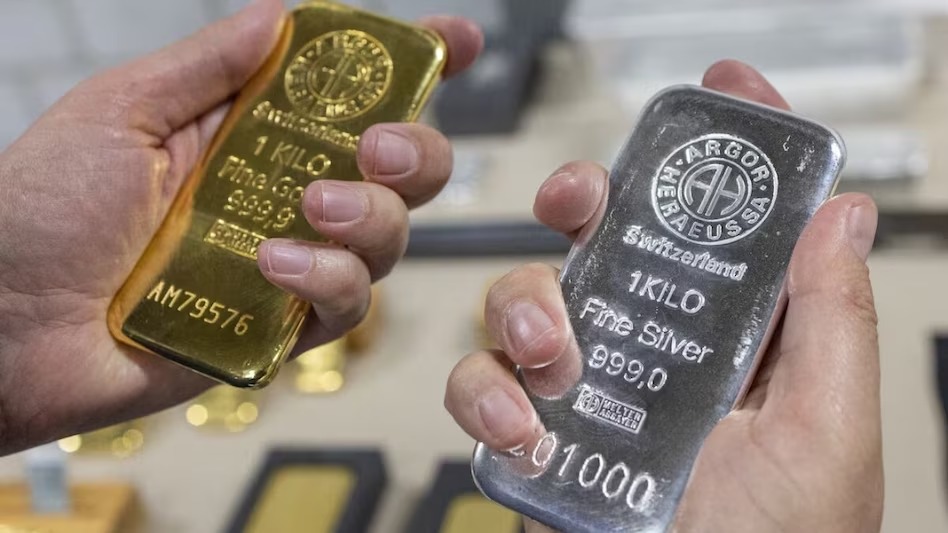
Retail gold and silver prices across India observed a minor correction on Tuesday, July 7, 2026, with 24-karat gold settling at ₹146,610 per 10 grams in Mumbai. Driven by a recovering US dollar and routine profit booking, the subtle dip offers a brief pause following recent multi-week highs.
MUMBAI, India — Retail gold and silver prices across Indian metropolitan hubs eased marginally on Tuesday, July 7, 2026, driven by a minor correction in international bullion markets and active profit booking by domestic traders.
According to daily market data updates published by the India Bullion and Jewellers Association (IBJA), the retail price for 24-karat spot gold (99.9% purity) slipped by ₹110 to settle at ₹146,610 per 10 grams. This mild downward adjustment follows a spectacular two-session rally where the precious metal surged by nearly ₹6,000 per 10 grams. Financial tracking models indicate that despite the subtle intraday pullback, structural consumer demand across retail jewelers remains robust as buyers prepare for upcoming wedding allocations and seasonal festivals.
Technical Multi-City Retail Pricing Breakdown
Domestic retail rates fluctuate between different Indian states due to varying localized parameters, including municipal octave taxes, regional freight overheads, and the individual volume margins set by prominent jewelry showrooms.
Data logged on Tuesday morning outlines the specific multi-city retail pricing configurations for 10 grams of gold across both 22-karat (91.6% purity) and 24-karat (99.9% purity) segments:
Delhi: 24-karat gold settled at ₹147,110 per 10 grams, while the jewelry-grade 22-karat counterpart held steady at ₹134,850.
Mumbai: 24-karat gold was quoted at ₹146,610 per 10 grams, with 22-karat gold priced at ₹134,390.
Kolkata: 24-karat retail gold hovered at ₹146,660, while 22-karat options traded at ₹134,440.
Chennai: 24-karat gold commanded a slight regional premium at ₹147,110, with 22-karat bars trading at ₹134,850.
Macro Factors Impacting Bullion Metrics
Commodity desks note that Tuesday's brief correction is heavily tied to the recovery of the US Dollar Index, which clawed back territory to hover between the 100.7 and 101.0 marks. Because global bullion is denominated in greenbacks, a stronger dollar increases the relative cost of precious metals for international buyers, temporarily dampening spot demand.
However, the long-term floor for precious metals remains highly insulated. Bullion rebounded sharply over the previous week after a weaker-than-expected US employment dataset shifted interest rate cut projections. Furthermore, escalating supply chain concerns along critical maritime shipping lanes, particularly the Strait of Hormuz, have injected a permanent geopolitical risk premium into the market. This environment has prompted sovereign central banks to accelerate physical gold accumulation as a defensive hedge against inflation.
Silver Corrects Across Major Industrial Hubs
In tandem with the gold market, silver prices registered a sharper percentage pullback on Tuesday morning. Market trackers at the Multi Commodity Exchange (MCX) reported that spot silver prices dropped by approximately ₹5,000 per kilogram to settle at ₹245,000 in Delhi and Mumbai.
The metal is observing enhanced volatility due to a unique dual-demand profile. While silver mirrors gold as a traditional store of value, more than 50% of global silver supply is consumed by heavy industry. Surging integration across electronics manufacturing, automotive circuit prints, and green technology infrastructure like photovoltaic solar panels has created tight physical market deficits. Analysts indicate that while retail buyers may pause during these sharp price swings, long-term industrial demand will keep the commodity highly valued.
Official Sources Section
The underlying price variables, regional distribution tables, and macroeconomic metrics cited throughout this report correspond directly with live transaction feeds managed by the India Bullion and Jewellers Association (IBJA) and official spot trading indices at the Multi Commodity Exchange (MCX).
Quote Section
"According to officials and commodity tracking desks on Tuesday morning, the minor contraction in retail bullion prices represents a healthy market consolidation after last week's explosive macro-driven breakout, allowing the physical retail market to absorb the new baseline values ahead of seasonal inventory stocking cycles," noted regional bullion council representatives.
Why It Matters
For everyday consumers planning jewelry purchases and private investors managing wealth portfolios, tracking daily city-wise rates prevents overpaying for localized premiums. The minor pullback below recent multi-week highs offers a tactical entry window for retail buyers. For macro-investors, understanding the balance between a fluctuating US dollar and central bank gold buying provides a reliable indicator of broader market inflation and currency stability trends.
Key Facts at a Glance
Gold Retraction: 24-karat spot gold eased by ₹110 to settle at ₹146,610 per 10 grams.
Silver Pullback: Industrial silver fell by roughly ₹5,000 per kilogram to trade at ₹245,000.
Currency Drag: A recovering US Dollar Index hovering between 100.7 and 101.0 put mild pressure on bullion.
Macro Cushion: Sustained physical accumulation by global central banks preserves a strong long-term floor.
Frequently Asked Questions
Why do gold and silver rates differ across various Indian cities?
Final retail rates vary by location because each state levies individual transport costs, local octroi taxes, and varying retail association premiums on top of the uniform national base price.
What is the legal GST requirement on physical bullion purchases?
Under current Indian tax codes regulated by the Ministry of Finance, all physical gold and silver purchases are subject to a flat 3% Goods and Services Tax (GST), which must be listed separately on the consumer's invoice.
Is it better to invest in 22-karat or 24-karat gold?
For investment purposes, 24-karat gold (99.9% purity) is preferred via coins or bars because it retains maximum melting value. 22-karat gold (91.6% purity) includes alloys to add structural strength, making it the ideal choice for intricate jewelry fabrication.
Source: Daily price tracking sheets published by the India Bullion and Jewellers Association (IBJA), commodity indices from the Multi Commodity Exchange of India (MCX), and regulatory policy updates from the Ministry of Finance.