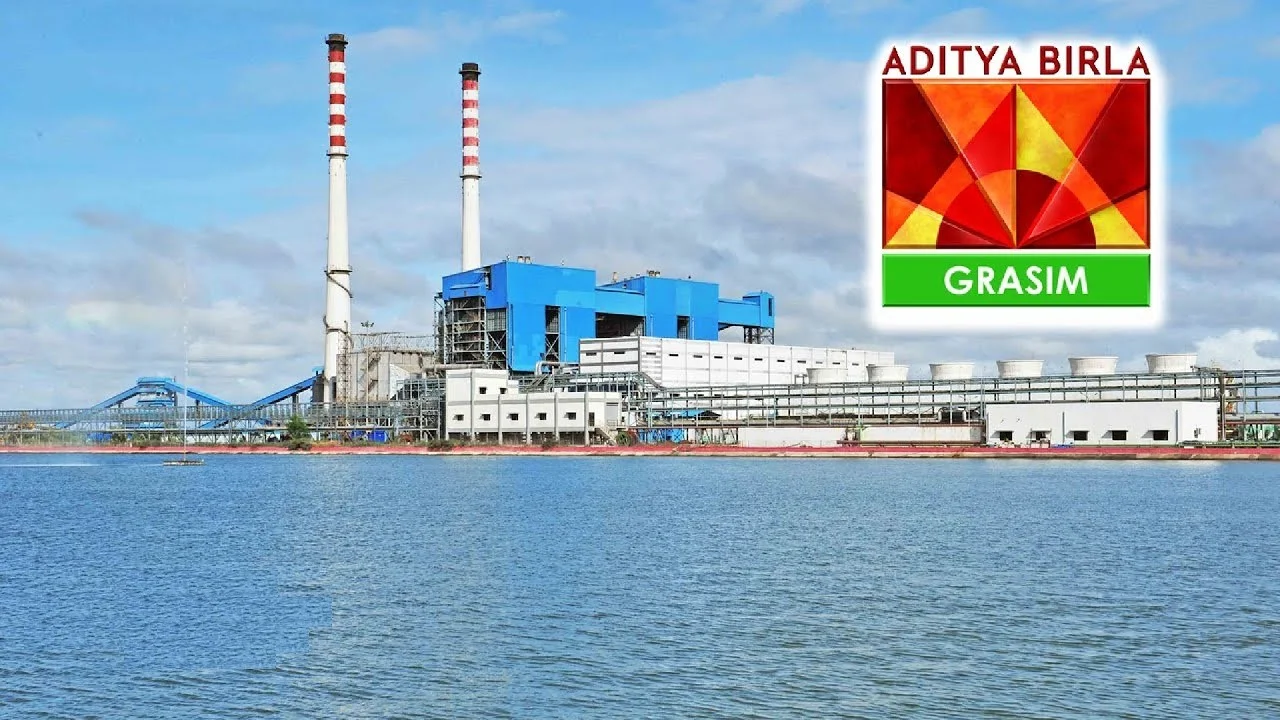
Grasim Industries Limited has approved a ₹30.94 billion capital expenditure to expand its Lyocell fiber capacity at Harihar, Karnataka. The Phase II project will add 110,000 TPA across two production lines scheduled for commissioning in 2028 and 2030, boosting the company's total cellulosic fiber capacity past 1 million TPA.
MUMBAI — June 8, 2026 : The Board of Directors of Grasim Industries Limited (NSE: GRASIM) approved a major capital expenditure of ₹30.94 billion (₹3,094 crore) today to expand its Lyocell capacity at its manufacturing facility in Harihar, Karnataka. The Phase II structural expansion will add 110,000 tonnes per annum (TPA) of capacity, positioning the Aditya Birla Group flagship company to capture rising international demand for sustainable, high-performance textile materials.
The multi-billion rupee investment arrives as international apparel brands face intensive legislative and regulatory pressure to eliminate microplastics and reduce emissions across their supply chains. Lyocell, a third-generation semi-synthetic cellulosic fiber manufactured through an environmentally friendly closed-loop solvent system, has emerged as a premium, highly durable alternative to traditional cotton and polyester. By executing this industrial expansion, Grasim will solidify its standing as a major player in the global man-made cellulosic fiber market.
Phased Commissioning and Financial Framework
According to regulatory corporate updates filed with national bourses, the Phase II Lyocell capacity expansion will consist of two distinct production lines, each rated at 55,000 TPA (or approximately 150 tons per day). Grasim will deploy a structured, multi-year execution framework to bring the new capacity online:
Line 1 (55,000 TPA): Expected to be fully commissioned by mid-2028.
Line 2 (55,000 TPA): Scheduled for commercial commissioning by mid-2030.
The new industrial assets will complement the company’s Phase I Lyocell plant, a 55,000 TPA facility currently under active construction at the same Harihar site, which remains on track to begin production by mid-2027. Upon complete realization of both expansion phases by 2030, Grasim’s total localized Lyocell capacity will scale to nearly 210,000 TPA, making it one of the largest single-source Lyocell manufacturing installations globally.
To maintain baseline balance sheet stability, the board confirmed that the ₹30.94 billion capital blueprint will be financed through a balanced combination of internal corporate cash accruals and external borrowed funds. The capital layout follows strong full-year operational metrics for the fiscal year ended March 31, 2026, wherein Grasim reported consolidated net revenue of ₹1,75,431 crore, driven in part by a 97% capacity utilization rate across its core cellulosic staple fiber units.
Long-Term Market Impact on the Textile Supply Chain
The substantial capacity addition will have a direct impact on domestic weavers, international fashion labels, and retail consumers. The massive influx of high-grade Lyocell will significantly increase the domestic availability of eco-friendly raw materials, helping Indian textile mills reduce their reliance on imported specialty yarns.
Furthermore, the expansion will structurally alter Grasim’s product portfolio. The company intends to push its premium specialty product portfolio share which encompasses Lyocell, Modal, dope-dyed, and recycled fibers to roughly 35% of its total output by 2030. For consumers, the increased commercial scale is expected to lower retail price premiums for sustainable garments, making clothing, home textiles, and technical non-woven medical fabrics much more accessible globally.
Official Sources Section
The detailed capex parameters and project delivery milestones were officially finalized during a scheduled meeting of the Board of Directors on Monday, June 8, 2026. The material event information was subsequently communicated to the public via official corporate press updates and regulatory filings submitted to the National Stock Exchange of India and the BSE Limited under standard statutory listing regulations.
Executive and Industrial Commentary
Commenting on the strategic scale of the project, leadership emphasized India's strengthening role within the international textile ecosystem.
"The Aditya Birla Group has consistently shown a commitment to investing in emerging sectors that are critical to strengthening India's long-term economic growth and global competitiveness," stated Kumar Mangalam Birla, Chairman of the Aditya Birla Group. "This investment reflects that vision, underscores confidence in the vast potential of the Indian market, supports the objectives of the Make in India initiative, and is expected to enhance the country's position as a stronger and more resilient player in the global textile value chain."
Highlighting the shifting operational landscape, Vadiraj Kulkarni, Business Head of Grasim Pulp & Fiber, added:
"This expansion strengthens our position in the evolving man-made cellulosic fiber landscape by scaling a high-value, future-ready fiber segment. It allows us to meet the growing global demand for high-performance textile materials while reinforcing our commitment to sustainable industrial production."
Why It Matters
Grasim's multi-billion rupee investment carries profound practical implications for global industrial manufacturing. By pushing its total cellulosic fiber capacity beyond 1 million tonnes per annum by 2030, the conglomerate provides a major boost to the Government of India’s "Make in India" manufacturing mandate. The move demonstrates that large industrial enterprises can effectively transition toward circular economy principles recycles solvents at a 99% recovery rate while scaling up production volumes to protect long-term margins against volatile fossil-fuel-based synthetic material costs.
Key Facts at a Glance
Capital Commitment: Grasim has approved a capital expenditure of ₹30.94 billion (₹3,094 crore) for Phase II Lyocell expansion.
Geographic Target: The project will be constructed at the company's existing industrial site in Harihar, Karnataka.
Capacity Scaling: Phase II adds 110,000 TPA across two lines, driving total Lyocell capacity to nearly 210,000 TPA by 2030.
Commissioning Plan: Line 1 will come online in 2028, followed by Line 2 in 2030, building on Phase I's mid-2027 launch.
Funding Mix: The expansion will be funded through a calculated combination of internal corporate accruals and debt.
Frequently Asked Questions (FAQ)
What is Lyocell, and why is it considered sustainable?
Lyocell is a semi-synthetic cellulosic fiber produced from sustainably sourced wood pulp using an advanced closed-loop organic solvent process. The manufacturing method recycles more than 99% of the water and solvents used, minimizing chemical waste and environmental impact compared to traditional rayon or polyester production.
How will this investment alter Grasim's overall production capacity?
The Phase II project will lift Grasim's overall annual cellulosic fiber production capacity beyond the 1 million metric tonne threshold by 2030, solidifying its position as a global leader in sustainable man-made cellulosic fibers.
Will this multi-crore project dilute existing shareholder equity?
No equity dilution has been announced. Grasim confirmed that the required capital will be drawn from accumulated internal operational cash flows and structured corporate borrowings.
Source: Official investor relations press notifications published by Grasim Industries Limited, formal material corporate action disclosures submitted to the National Stock Exchange of India, and corporate strategy data books compiled by the Aditya Birla Group media desk.